
To scare a bear away, make yourself look big, stay calm, and be loud and firm without screaming. Raise your arms, speak in a low steady voice, group up with others if you can, and give the bear a clear escape route so it can leave. Never run and never climb, and keep bear spray ready in case the bear keeps coming. The right response changes with the situation and the species, so knowing those differences ahead of time is what keeps a scare from becoming an attack.
If you hike or camp in bear country, you will eventually meet one. Bears are magnificent animals, and seeing one in the wild is unforgettable. Most bears want nothing to do with people and will leave on their own. But a startled, cornered, or food-motivated bear can be dangerous, so knowing how to react calmly and correctly matters.
The good news is that serious bear attacks remain rare, and the large majority are preventable. Most come down to a surprised bear, a bear guarding food or cubs, or a person who ran, crowded the animal, or left food out. Learn the steps below and you tilt the odds heavily in your favor.
Editors note : Article updated September 2026
First, Read the Encounter: Distance and Awareness
Your first move depends on two things, which are how far away the bear is and whether it has noticed you. Size up both before you do anything.
The bear hasn’t seen you and is far off (100+ yards)
If you spot the bear before it spots you, and you’re more than about 100 yards (100 m) away, quietly keep it that way. Do not announce yourself. If you can, back away slowly and leave the area, giving the bear a wide berth and taking a different route. If you must continue the same way, wait and give the bear time to move off first. The goal here is to slip away unnoticed.
The bear has seen you but is still far off
Now your goal flips. You want the bear to recognize you as a human and as no threat. Speak in a calm, low voice so it can identify you, since bears have relatively poor eyesight and rely heavily on sound and smell. Wave your arms slowly. Most bears will move off once they realize what you are. Back away slowly while keeping an eye on it, and if practical, detour so your scent drifts toward the bear to help it place you.
How to Prevent an Encounter in the First Place
The best encounter is the one that never happens. Nearly every safe trip in bear country comes down to avoidance, not confrontation.
Make noise as you move. Talk, sing, or call out regularly, especially near streams, in dense brush, or around blind corners where you might surprise a bear at close range. Bear bells are better than silence but carry poorly, so your voice is more reliable.
Travel in a group. Bears very rarely approach groups of people. There are few recorded attacks on tight groups of three or more, so stick together and don’t spread out on the trail.
Watch for bear sign and detour around it. Fresh tracks, scat, torn-up logs, and rub marks all mean bears are active nearby. Change your route or turn back rather than pushing through.
Never approach a bear, especially a cub. A cub that looks alone almost always has a protective mother close by, and getting between them is one of the most dangerous situations in the wild. Keep your distance even if a bear looks sick or injured, and report it to a ranger.
Stay away from carcasses. Bears fiercely defend a fresh kill. If you find a carcass, leave immediately and give it a very wide berth.
Leave the dog at home. A loose or leashed dog can provoke a bear and then lead it straight back to you. Even a well-trained dog is a liability in bear country.
Store food and scented items properly. Bears are drawn to food, garbage, and even toiletries. Use a bear canister or a proper hang, and never keep food or scented items in your tent. Our full guide on how to keep bears away from your campsite covers the three-zone camp setup in detail.
Carry bear spray and know how to use it. Keep it on your hip or chest where you can reach it in seconds, not buried in your pack, and practice pulling it from the holster before your trip.
Check in with a ranger station. Local offices track recent sightings and post advisories. A two-minute conversation can tell you exactly where bears have been active.
Understand Bear Behavior and Body Language
Bears aren’t the unpredictable monsters of legend. Like any animal, they telegraph their intentions, and reading them helps you respond correctly.
- Standing on hind legs is usually curiosity, not aggression. The bear is trying to see and smell you better.
- Huffing, jaw-popping, swatting the ground, or a bluff charge are stress signals. The bear feels crowded and wants you to back off, not necessarily to fight. Stay calm and give it room.
- Ears back, head low, and a direct, focused approach are more concerning signs that the bear is committed.
- A bear that keeps appearing, circling, or silently following you may be treating you as prey, which calls for a very different response (see below).
How to Scare Off a Bear Without Escalating
Once a bear is aware of you and close, your job is to look big and non-threatening at the same time, and to avoid anything that reads as either prey or a challenge.
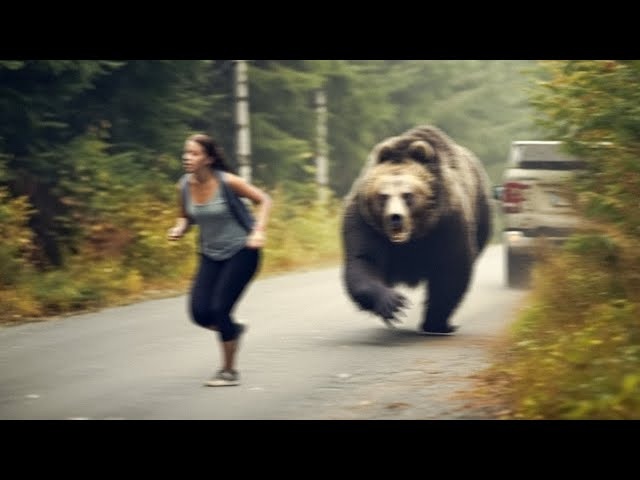
Stay calm and do not run. Running can trigger a chase, and no human outruns a bear, which can hit 30 mph. Hold your ground or back away slowly.
Make yourself look as large as possible. Raise your arms overhead, open your jacket, and stand tall. If you’re in a group, gather close together to present one big shape. Larger targets look far less appealing to a bear.
Use a firm, calm voice. Talk to the bear in a low, steady tone. Pick a simple phrase and repeat it. Do not scream, shriek, or make high-pitched noises, which can sound like a prey animal in distress.
Back away slowly and give it an escape route. Move sideways or backward without turning your back, watching your footing so you don’t trip. Never corner a bear, because a bear with no way out is far more likely to attack. Make sure it always has a clear path away from you.
Match escalating aggression only if needed. If the bear presses in and you’re confident it sees you as prey, get bigger and louder. Stamp your feet, wave a trekking pole, clap, or bang objects together. Do not strike the bear unless it actually makes contact.
Handling a Charge
Most charges are bluffs. A bluffing bear often runs at you, then veers away or stops short. It’s terrifying, but the correct move is usually to hold your ground.
Stand your ground during a bluff charge. Do not run and do not drop to the ground. If you stand firm, the bear will very often break off at the last moment. Running almost guarantees a chase.
Ready your bear spray. As the bear charges, take the safety off and prepare to spray. Aim slightly downward and deploy a wide cloud when the bear is roughly 30 to 60 feet away, adjusting for wind so it doesn’t blow back into your face. Bear spray is proven to reduce injuries in encounters, often more effectively than a firearm.
Sidestep if it closes in. Bears have a wide center of gravity and struggle with sharp turns. In the open, moving laterally rather than straight back can make a committed bear overshoot.
If the Bear Makes Contact: Black Bear vs. Grizzly
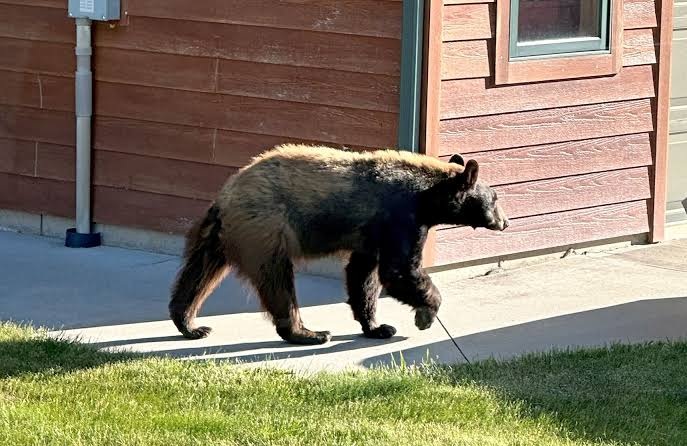
This is the most important distinction in this entire guide, because the right response is opposite for each species. Learn to tell them apart before you go. Grizzlies (brown bears) have a pronounced shoulder hump, a dished facial profile, and short rounded ears. Black bears (which come in black, brown, and cinnamon) have no shoulder hump, a straighter face, and taller ears. Color alone is not reliable.
| Situation | Black bear | Grizzly / brown bear |
|---|---|---|
| Defensive attack (surprised, cubs, carcass) | Do NOT play dead. Fight back. | Play dead. |
| How to play dead | Not recommended | Lie flat on stomach, hands over neck, legs spread, pack on |
| Predatory attack (stalking, silent, entering tent) | Fight back hard | Fight back hard |
| Where to strike when fighting | Face, eyes, muzzle | Face, eyes, muzzle |
| Always | Bear spray, don’t run, don’t climb | Bear spray, don’t run, don’t climb |
Grizzly, defensive attack: play dead. Drop to the ground face-down, spread your legs so the bear can’t flip you, and clasp your hands behind your neck. Keep your pack on to shield your back. Stay still and quiet. Once the bear leaves, wait several minutes before moving, since it may linger nearby. Fighting a defensive grizzly usually makes things worse.
Black bear, any attack: do not play dead. Try to escape to a hard shelter or vehicle if one is close. If you can’t, fight back with everything you have, concentrating blows on the face, eyes, and muzzle with rocks, sticks, or your fists.
Any predatory attack, either species: if a bear stalks you, attacks at night, or keeps attacking after you’ve played dead, it is treating you as prey. Fight back aggressively and do not stop. Target the face and eyes.
Bear Spray: How to Use It Correctly
Bear spray is the most effective deterrent you can carry, and studies of real encounters have found it reduces injury rates more reliably than firearms. It only works if you carry it accessibly and know how to use it.
- Carry it on your belt or chest harness, never inside your pack.
- When a bear approaches or charges, remove the safety clip.
- Aim slightly downward toward the bear and account for wind direction.
- Deploy a sustained cloud when the bear is about 30 to 60 feet out, creating a barrier it must pass through.
- Spray again if it keeps coming, then move away to safety once it retreats.
Do not spray your gear, tent, or campsite as a repellent. Dried bear-spray residue can actually attract bears rather than deter them, so it is strictly a last-line defense aimed at the animal itself.
Common Mistakes That Turn a Scare Into an Attack
- Running or turning your back, which triggers a chase.
- Climbing a tree, since black bears climb well and grizzlies can too.
- Screaming in a high pitch, which can sound like prey.
- Cornering the bear or blocking its only escape route.
- Playing dead against a black bear, or against any predatory attack.
- Approaching for a photo, or getting between a sow and her cubs.
- Burying bear spray in your pack where you can’t reach it in time.
Frequently Asked Questions
What is the best way to scare a bear away?
Make yourself look large by raising your arms, stand your ground, and speak firmly in a low voice while giving the bear room to leave. If it keeps approaching, get louder, bang objects together, and ready your bear spray. Never run or climb, since both can trigger a chase.
Should you look a bear in the eye?
Avoid hard, direct eye contact, which a bear can read as a threat or challenge. Instead, keep the bear in your view while angling your body slightly sideways and backing away slowly and calmly.
Do loud noises scare bears away?
Yes, in most cases. A firm human voice, clapping, and banging objects will send the average bear off, because they prefer to avoid people. Avoid high-pitched screaming, though, which can sound like a prey animal. Air horns can also help.
When should you play dead with a bear?
Only during a defensive attack by a grizzly or brown bear, such as when you’ve surprised it or it’s protecting cubs. Lie face-down with your hands behind your neck. For black bears, or for any predatory attack, do not play dead. Fight back and target the face.
How close do you let a bear get before using bear spray?
Deploy a cloud of bear spray when a charging or approaching bear is roughly 30 to 60 feet away, adjusting for wind. That range lets the cloud form a barrier the bear has to pass through before reaching you.
The Bottom Line
The safest bear encounter is the one you prevent. Make noise, travel in groups, store food properly, watch for bear sign, and carry bear spray you can reach instantly. If you do meet a bear, stay calm, make yourself big, speak firmly, and give it space to leave rather than forcing a confrontation.
If it comes down to contact, remember the one rule that matters most: fight back against a black bear or any predatory attack, and play dead only for a defensive grizzly. Know your bears, know your gear, and a bear encounter stays what it should be, which is a story you tell later rather than an emergency.
Have you ever had to scare off a bear on the trail? Share what happened in the comments so other readers can learn from it.
Keep reading: how to keep bears away from your campsite, how to prevent wild animal attacks, and the best bear canisters for safe food storage.

Mark Foster loves to push his limits when it comes to survival in the wilderness. He might go for a 30-days adventure without any food or equipment except for a survival kit and a knife. We should mention that his survival kit has 122 items in it, so he know what he is doing. Mark is working on his book to share with the world all his experience gained during those brave adventures.