
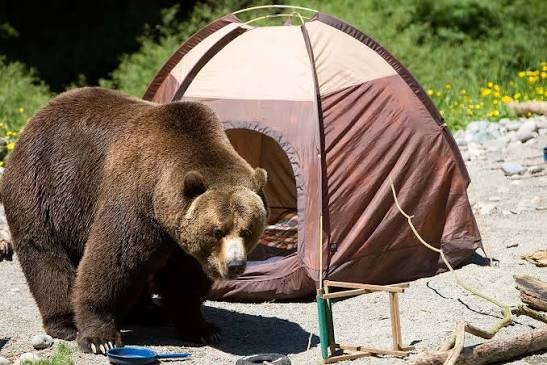
To keep bears away from your campsite, control food odors and store all food, trash, and scented items in a bear canister or hung well out of reach, camp in an open area away from game trails and bear sign, and keep your sleeping, cooking, and food-storage zones about 100 yards apart. Bears come to camp for one reason, which is food, so removing the smell of food removes the reason.
Communing with nature is one of the best parts of camping. The catch is that you don’t always get to choose what you commune with. Some trips it’s a few harmless squirrels in the trees. Other trips it’s a 600-pound bear tearing apart a cooler. Knowing how to keep bears away from your campsite is what keeps you firmly in the first category.
If you camp in bear country often enough, you will eventually cross paths with one. There are more than half a million black bears in North America, plus healthy populations of brown bears and grizzlies across the western states, Canada, and Alaska.
Most encounters end without harm. Fatal bear attacks are genuinely rare, averaging only a handful across North America in a typical year, and the large majority involve preventable human mistakes like leaving food out or surprising a bear at close range. With good planning and smart campsite selection, you can push your risk down to almost nothing.
Editors note – Article updated September 2026.
First, Read the Land: Signs You’re in Bear Territory
The best defense starts before your tent is even out of the pack. Bears are large animals, and where they travel and feed, they leave obvious evidence. Scan any prospective site for these clues, and if you find them, move on.
Rub marks on trees. Bears rub against trees to scratch and to mark territory. If you see bark worn smooth or stripped between roughly two and six feet off the ground, a bear has been using that trunk as a scratching post.
Torn-up logs and stumps. Rotten logs are packed with grubs and insects, which are a favorite bear snack. Shredded logs mean you’re standing in a feeding area.
Game trails. The easiest route through dense forest is a game trail, and animals reuse the same paths for generations. Camping on or beside one is like pitching your tent on the shoulder of a freeway and being surprised when traffic comes through.
Scat. Bear droppings are large and hard to miss. Fresh scat nearby is a strong sign that a visit is likely.
Tracks, diggings, and claw marks. Large paw prints near water or mud, fresh diggings, and claw marks on trees all point to recent bear activity.
Choosing a Bear-Safe Campsite
When you pick a spot, look for wide-open ground away from dense vegetation and berry patches. Bears are quiet and will happily approach under the cover of brush. By the time you notice one, a confrontation is hard to avoid.
An open site forces any approaching bear to cross exposed ground, which makes it tentative and gives you early warning. Avoid camping near streams choked with spawning fish, berry thickets, animal carcasses, or obvious food sources, since these are exactly where bears spend their time.
Why Bears Come to Camp in the First Place
To keep bears away, it helps to understand what draws them in. Adult bears have no natural predators, and they spend their days doing essentially one thing, which is searching for calories. When they find food, they eat it, and they are used to nothing standing in their way.
Bears are relentless and fearless about food. They will muscle wolves and mountain lions off a fresh kill when it suits them, so a cooler or a backpack is nothing to hesitate over.
They find you by smell. A bear’s sense of smell is estimated to be many times sharper than a bloodhound’s, capable of detecting food from well over a mile away. The longer food odor lingers in the air, and the more of it there is, the more likely a bear is to track it to its source. That is why odor control, not bravery, is the real key to a bear-free camp.
Pack Smart: Odor Control Starts at Home
A surprising amount of bear avoidance happens while you’re packing. Since smell is what attracts bears, choose low-odor and unscented products wherever you can.
Scented hand sanitizer, deodorant, soap, sunscreen, toothpaste, and lip balm all broadcast your location. Unscented versions do the same job without acting as a dinner bell. Remember that toiletries, gum, and even scented wipes count as “food smells” to a bear and need to be stored with your food, not in your tent.
Bring a way to seal odors in after items are used. Heavy-duty resealable bags and odor-proof liner bags (such as OPSAK or similar) are excellent for this, and plain plastic garbage sacks help with waste. Planning a menu that avoids wet, smelly garbage goes a long way too.
Pack each food item in its own sealable bag before it goes into your main food container. That double layer keeps odors from escaping and keeps your other gear from picking up food smells.
Store Your Food the Right Way: Canister vs. Hang
How you store food overnight is the most important decision you’ll make in bear country. You have two main options.
Bear canisters (the recommended standard). A hard-sided bear canister is now the gold standard, and in many national parks and popular wilderness areas it is legally required. Canisters are simple, reliable, and don’t depend on finding the perfect tree. Load your food and scented items inside, seal it, and place it on the ground at least 100 feet downwind of your tent, away from cliffs or water where a bear could bat it out of reach. Never tie it to anything, since a bear can use the line to carry it off.
Hanging your food (the backup method). Where canisters aren’t required and no food-storage lockers are provided, a proper bear hang can work. Find a sturdy branch at least 15 feet off the ground, throw a rope over it, and hoist your food bag so it hangs at least 12 feet high and 6 feet out from the trunk and any other branch. Tie the rope off securely. Bears are strong climbers and have been seen leaping impressive heights, but they are not good with knots or with reaching a bag suspended in open air.
A quick reality check on hangs: they are harder to do well than they look, and a bad hang is worse than none because it can teach a bear to associate your setup with a reward. When in doubt, use a canister.
Always check the specific regulations for the area you’re visiting before you go, since food-storage rules vary by park and forest and are often mandatory.
Set Up the Bear Triangle: Three Zones, 100 Yards Apart
You can’t eliminate every smell, so the smart move is to physically separate the smelly activities from where you sleep. In the backcountry, that means three zones, each about 100 yards (roughly 100 meters) apart, arranged in a triangle.
Zone 1: The Sleeping Camp
Pitch your tent on flat, comfortable ground with plenty of open space around it, not pressed against thick vegetation. This is where you’ll spend most of your time, so make it comfortable and build a fire if it’s permitted. If your plan works, a bear will never have a reason to visit here.
Zone 2: The Cooking Camp
About 100 yards away, set up where you’ll prepare and eat all your meals. No food travels from here back to your tent. Ideally, change into different clothes to cook and change back before returning to camp, because cooking clothes absorb food odor. After every meal, clean the area thoroughly and pack out all scraps. It sounds like overkill, but a bear’s nose doesn’t grade on effort.
Zone 3: The Food Cache
About 100 yards from both other zones, store your food, either in your canister or in a proper hang. Trash and food waste go here too, sealed and stored the same way. Before you turn in, everything a bear might find appetizing should be locked in a canister or swaying in the breeze, well away from where you sleep.
With this layout, even if a bear finds your food overnight, it’s doing so at a safe distance from your tent, and once it realizes the smell leads to an unreachable canister or a bag out of reach, it typically moves on.
What to Do If a Bear Comes to Camp
There will always be a window, usually at mealtime, when you and your food are in the same place. If a bear wanders in during that window, stay calm and remember it’s there for the food, not for you.
Do not run. Bears are fast, capable of 30 mph, and running can trigger a chase response. You cannot outrun a bear.
Do not climb a tree. Black bears are excellent climbers, and grizzlies can climb too. You won’t make it up in time, and it doesn’t help.
Do not feed the bear or throw food at it. This is a common piece of old advice that experts now warn against. Deliberately giving a bear your food rewards the approach and teaches it that people mean an easy meal, which makes it far more dangerous to the next campers and often leads to the bear being killed. Do not toss your pack or your dinner to a bear to appease it.
Make yourself known and back away. Speak in a firm, low, calm voice so the bear identifies you as human. Stand tall, make yourself look large, and slowly back away toward your sleeping camp while keeping the bear in view. Give it a clear escape route and space to leave.
Keep retreating and stay alert. Don’t assume you’re safe just because the bear hasn’t charged. Back off as far as you safely can and keep watching until it’s gone.
If a bear is simply raiding your hung food or canister from a distance, let it. No meal is worth putting yourself between a bear and food.
If a Bear Actually Attacks: Black Bear vs. Grizzly
This is where knowing your bear matters, because the correct response is different for each species, and getting it wrong can be dangerous. Learn to tell them apart before your trip. Grizzlies (brown bears) have a distinct shoulder hump, a dished face, and shorter, rounded ears. Black bears (which can be black, brown, or cinnamon) have no shoulder hump, a straighter face profile, and taller ears.
| Situation | Black bear | Grizzly / brown bear |
|---|---|---|
| Bear attacks you | Do NOT play dead. Fight back hard. | If it’s a defensive/surprise attack, play dead. |
| How to fight | Hit the face and muzzle with anything you have. | Fight back only if the attack is predatory or won’t stop. |
| How to “play dead” | Not recommended for black bears. | Lie flat on your stomach, hands over neck, legs spread, stay still. |
| Either species | Use bear spray, don’t run, don’t climb. | Use bear spray, don’t run, don’t climb. |
For a black bear attack: do not play dead. Try to escape to a car or building if one is close. If you can’t, fight back aggressively, concentrating your blows on the bear’s face and muzzle with rocks, sticks, fists, or gear.
For a grizzly attack that’s defensive (you surprised it, or it’s protecting cubs or a food source): play dead. Lie flat on your stomach with your hands clasped behind your neck and your legs spread to make it harder to flip you. Stay still and quiet until the bear leaves. Fighting a defensive grizzly usually makes it worse.
For any attack that is predatory (a bear that stalks you, or a grizzly that keeps attacking after you’ve played dead): stop playing dead and fight back with everything you have, targeting the face and eyes.
In all cases, bear spray is your first line of defense before it ever comes to physical contact.
Bear Deterrents Worth Carrying
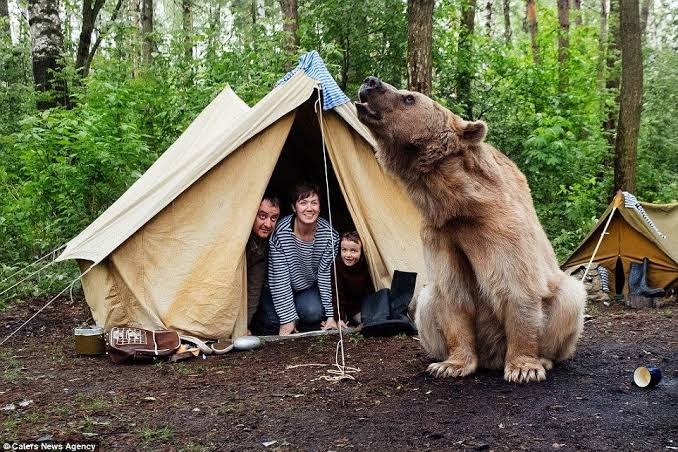
Even with perfect planning, bears are wild and unpredictable. A few items belong in any bear-country pack.
Bear spray. This is the single most effective deterrent available. Research on bear encounters has found that people using bear spray came away with fewer and less severe injuries than those relying on firearms. Carry it where you can reach it instantly, not buried in your pack, and know how to use it. Aim slightly downward at a charging bear and spray a cloud when it’s within about 30 to 60 feet, adjusting for wind.
Electric camp fencing. For longer stays or base camps in bear territory, portable electric fencing encircles your site and delivers a harmless but memorable shock to any animal that gets too close.
Bear-proof coolers and lockers. Certified bear-resistant coolers use reinforced construction and locking latches to keep even determined bears out. Where campgrounds provide steel bear lockers, use them.
Noise while hiking. Most attacks come from surprising a bear at close range. Talking, singing, or clapping in dense brush or near loud streams gives bears advance warning so they can avoid you.
Common Mistakes to Avoid
- Storing food, trash, or toiletries in your tent, or sleeping in the clothes you cooked in.
- Leaving coolers, dishes, or scraps out overnight.
- A lazy bear hang that’s too low or too close to the trunk.
- Running or climbing during an encounter.
- Feeding or throwing food to a bear to make it leave.
- Approaching a bear, or a cub, for a photo. A nearby sow is one of the most dangerous situations in the wild.
Frequently Asked Questions
What smells keep bears away from a campsite?
There is no reliable smell that repels bears, and this is a common myth. Ammonia, mothballs, pine cleaner, and similar strong scents do not dependably deter a hungry bear and can even attract curious ones. The proven approach is removing food odor through sealed storage, not masking it.
Does a campfire keep bears away?
Not reliably. A fire may make a bear cautious, but it will not stop one that has smelled food. Never count on a campfire as bear protection, and always store food properly regardless.
How far should food be stored from your tent?
At least 100 yards (about 100 meters) in the backcountry, ideally as part of a three-zone triangle separating sleeping, cooking, and food storage. A bear canister should sit at least 100 feet away at a minimum, on the ground and away from cliffs or water.
Should you play dead if a bear attacks?
Only for a defensive grizzly attack. For a black bear, do not play dead. Fight back and target the face. For a predatory bear of either species, also fight back. Correctly identifying the bear and the type of attack is essential.
Is bear spray better than a gun?
Studies of real encounters suggest bear spray leads to fewer injuries than firearms and is easier to deploy effectively under stress. Many wildlife agencies recommend it as the primary deterrent for hikers and campers.
Wrapping Up
Camping in bear country is far from impossible. Tens of thousands of people do it every year without a single encounter, and the ones who stay safest are rarely just lucky. They pack for odor control, choose their sites carefully, store food in a canister or a proper hang, and set up a three-zone camp that keeps food smells far from where they sleep.
Learn to identify the bears in your region, carry bear spray and know how to use it, and remember that the right response to an attack depends on the species. Do those things and a bear is unlikely to ever become a problem on your trip.
Bears are magnificent animals, and they’re best enjoyed from a respectful distance.
Have you encountered a bear while camping? Share your story or your own bear-proofing tips in the comments so other readers can learn from your experience.
For more, see our guides on, how to prevent wild animal attacks, the best bear canisters, and our camping safety tips for the whole family.

Mark Foster loves to push his limits when it comes to survival in the wilderness. He might go for a 30-days adventure without any food or equipment except for a survival kit and a knife. We should mention that his survival kit has 122 items in it, so he know what he is doing. Mark is working on his book to share with the world all his experience gained during those brave adventures.