
Note: We get commissions for purchases made through links in this article.
Finding the best mosquito repellent for camping can save a trip. Every camper knows the misery of lying in a tent at dusk while that high-pitched whine circles your head. I’ve cut trips short over bugs. I’ve also learned that swatting is a losing strategy. The only way to win is to stop the bugs from finding you in the first place.
And they will find you. Mosquitoes track you using the carbon dioxide you exhale, your body heat and the chemistry of your sweat. That’s why some people get devoured while their tentmate barely gets touched. We dug into the science in our guide to how far mosquitoes travel and how they detect you.
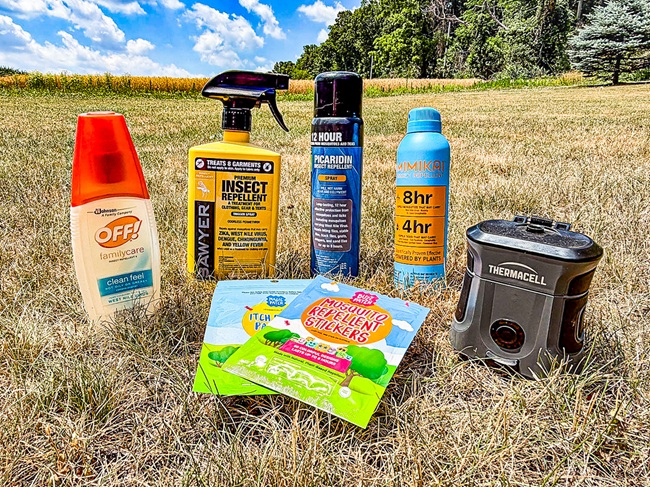
The good news is that you don’t need to outsmart them. You just need the right layers of defense. After more buggy nights than I can count, this is the gear I rely on, organized as a system that works together rather than a random list of sprays.
Quick Picks: The Best Insect Repellent and Bug Protection for Camping
- Best Overall Repellent: Sawyer 20% Picaridin
- Best Long-Lasting Lotion: 3M Ultrathon (34% DEET)
- Best for Brutal Conditions: Repel 100 (98% DEET)
- Best Area Protection: Thermacell Backpacker
- Best for Clothing and Gear: Sawyer Permethrin
- Best Natural Repellent: Repel Plant-Based Lemon Eucalyptus
- Best Physical Barrier: Mosquito Head Net
The Layered Defense System
Most bug spray articles hand you a list and stop there. Campers who actually stay bite-free think in layers, because no single product covers every situation. The rest of this guide follows this framework:
- Skin layer: a topical repellent (picaridin, DEET or oil of lemon eucalyptus) on exposed skin.
- Clothing layer: permethrin-treated clothing and gear, which repels and kills bugs on contact for weeks.
- Air layer: an area device like a Thermacell, which creates a bug-free zone around camp so you can skip the spray while sitting still.
- Physical layer: a head net for when the swarm is so thick that nothing chemical keeps up.
Use one layer for a mellow evening. Stack all four when you’re camped next to a swamp in peak season.
Why Bug Protection Matters Outdoors
Beyond the misery, biting insects are a genuine health risk. Mosquitoes can carry West Nile, Zika, dengue and other viruses, while ticks transmit Lyme disease, Rocky Mountain spotted fever and several other illnesses. University of Rhode Island research cited by Sawyer found that treating shoes and socks with permethrin made tick bites 73.6 times less likely. That’s real protection, not just comfort.
Even a harmless bite is unpleasant. The itchy red bump is your immune system reacting to proteins in mosquito saliva, and scratching it only makes things worse.
Good bug defense also lets you enjoy the best parts of a trip: cooking dinner, watching the sunset and sitting around the fire. Those moments all happen at dusk, which is exactly when mosquitoes are most aggressive.
Prefer to mix your own? Our homemade insect repellent recipe is worth a look, although the products below will outlast a homemade batch in serious mosquito country.
How We Chose the Best Mosquito Repellent for Camping
These picks come from real use in real bug country, judged on:
- Effectiveness: how reliably it keeps bugs off, and for how long.
- Active ingredient: we only recommend skin repellents with EPA-registered active ingredients.
- Protection time: hours per application or per charge.
- Gear safety: whether it will damage your sunglasses and jacket.
- Ease of use: the best repellent is the one you’ll actually carry and apply.
- Value: most of these cost less than a restaurant meal.
Best Bug Protection for Camping, Reviewed
 1. Sawyer 20% Picaridin: Best Overall Repellent
 1. Sawyer 20% Picaridin: Best Overall Repellent
If you buy one thing from this list, make it picaridin. It’s my default skin repellent and the one I recommend to almost everyone. It works much like DEET without the biggest downside: it won’t damage your gear. DEET can dissolve plastics, synthetic fabrics and watch crystals, while picaridin is safe on clothing, sunglasses, pack straps and fishing line.
Sawyer’s formula uses 20% picaridin, the concentration that gives long-lasting protection. The spray works for up to 12 hours against mosquitoes and ticks, and up to 8 hours against biting flies, gnats, chiggers and sand flies. It’s fragrance-free and dries without a greasy feel. Picaridin is also one of the active ingredients the CDC recommends.
There’s very little to complain about. It isn’t quite as long-lasting as high-strength DEET in a swamp at peak season, but for most camping and hiking it’s the smartest choice.
Pros
- Up to 12 hours of protection against mosquitoes and ticks
- Won’t damage gear, plastics or synthetics
- Fragrance-free and non-greasy
- CDC-recommended active ingredient
Cons
- Slightly less staying power than maximum-strength DEET
- Some users report pump sprayer issues
Key facts
- Active ingredient: 20% picaridin
- Protection: up to 12 hours (mosquitoes and ticks)
- Gear safe: Yes
- Price: about $8 to $12
Verdict: The best all-round skin repellent for campers. Start here.

 2. 3M Ultrathon Insect Repellent Lotion: Best Long-Lasting Lotion
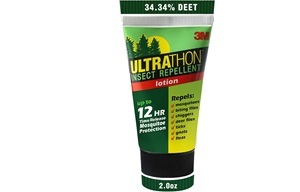
Ultrathon sits in the sweet spot between picaridin and maximum-strength DEET. It was originally developed for the U.S. military, and it uses a controlled-release polymer that traps DEET and releases it slowly over your skin. The result is up to 12 hours of mosquito protection from a 34.34% DEET lotion, without the greasy, overpowering feel of 98% DEET.
The lotion format is a real advantage for long trips. You can apply it precisely to your face, neck and ears without spraying it into the air or onto your gear. It also repels ticks, biting flies, chiggers, gnats and fleas, and the stable formula keeps for years, so an old tube in your first aid kit is still good next season. The 2 oz tube is also small enough for carry-on bags.
The trade-offs are price and DEET’s usual habits. It costs more per ounce than most sprays, it has a mild chemical smell, and you should still keep it off plastics and synthetics until it dries.
Pros
- Up to 12 hours of mosquito protection
- Controlled release means less DEET on your skin at once
- Easy, precise lotion application
- Long shelf life and carry-on friendly
Cons
- Expensive for a 2 oz tube
- Mild chemical smell
- Can still affect plastics before it dries
Key facts
- Active ingredient: 34.34% DEET (controlled release)
- Protection: up to 12 hours (mosquitoes)
- Gear safe: Use care until dry
- Price: about $10 to $15
Verdict: The best choice for long days in serious bug country when you want DEET’s power without the mess of max strength.
 3. Repel 100 (98% DEET): Best for Brutal Conditions
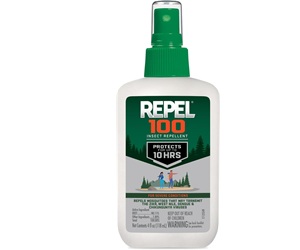
When bug pressure is extreme, think northern Minnesota in June, Alaskan tundra or any swampy lowland at dusk, you want the strongest option available. Repel 100 contains 98.11% DEET and delivers up to 10 hours of protection from a single application. DEET is the most studied repellent there is, and at this concentration it simply doesn’t quit.
The trade-offs are real, which is why this is a specialist pick. High-concentration DEET feels greasy and has a strong smell. More importantly, it damages plastics and synthetics. Get it on your sunglasses, watch face, rain jacket or trekking pole grips and you may ruin them. Apply it to skin only, then wash your hands.
For most trips, picaridin or Ultrathon is the better call. For that one swampy nightmare where you’re being eaten alive, though, nothing beats maximum-strength DEET.
Pros
- Maximum strength with up to 10 hours of protection
- The most proven repellent ingredient available
- Inexpensive
Cons
- Damages plastics, synthetics and coatings
- Greasy feel and strong smell
- Too strong for everyday use or children
Key facts
- Active ingredient: 98.11% DEET
- Protection: up to 10 hours
- Gear safe: No
- Price: about $7 to $10
Verdict: Overkill for a normal weekend, but essential for the worst bug conditions. Keep a small bottle in reserve.
 4. Thermacell: Best Area Protection
 4. Thermacell: Best Area Protection
This one feels like magic the first time you use it. Instead of putting chemicals on your skin, a Thermacell heats a repellent mat and diffuses it into the air, creating a protected zone around you. The fuel models cover about 15 feet and the rechargeable E-Series covers about 20 feet. Set it on the picnic table, give it 15 minutes, and the bugs stop showing up.
Three versions are worth knowing:
- Thermacell Backpacker: screws onto a standard isobutane backpacking stove canister, so it adds almost no weight. A 4 oz canister runs it for up to 90 hours. This is the backpacker’s pick.
- Thermacell MR300: runs on small butane cartridges that last about 12 hours each. Great for car camping on a budget.
- Thermacell E-Series: USB-rechargeable, with a 20-foot zone and no cartridges to manage. Best if you hate dealing with fuel.
The key limitation is wind. A stiff breeze disperses the repellent, so it works best in calm, sheltered spots. Place it upwind of your seating area for the best results. Also note that the Backpacker needs isobutane blend canisters and won’t run on pure propane.
Pros
- Creates a hands-free, scent-free protected zone
- No chemicals on your skin
- Backpacker model runs on stove fuel you already carry
- Ideal for relaxing at camp
Cons
- Loses effectiveness in wind
- Takes about 15 minutes to establish the zone
- Ongoing cost for repellent mats
Key facts
- Active ingredient: heat-diffused repellent (DEET-free, scent-free)
- Coverage: 15 feet (fuel models) or 20 feet (E-Series)
- Mats: about 4 hours each
- Price: about $25 to $50, depending on model
Verdict: The single best upgrade to camp comfort. It won’t replace skin repellent on the move, but for relaxing at camp it’s a revelation.
 5. Sawyer Permethrin: Best for Treating Clothing and Gear
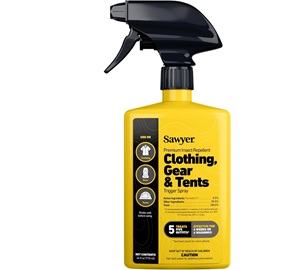
Permethrin is the layer most campers skip, yet it quietly does the heaviest lifting, especially against ticks. You don’t put it on your skin. Instead, you treat your clothing and gear. It bonds to fabric, repels and kills insects that land on it, and lasts up to 6 weeks or 6 washes per treatment.
Spray your shirts, pants, socks, shoes, tent and sleeping bag the day before your trip and let them dry. You now have a barrier that works around the clock with no reapplication. It’s odorless once dry and won’t stain or damage gear. Sawyer’s formula is 0.5% permethrin, the correct concentration for clothing.
One important warning: permethrin is highly toxic to cats while wet. Treat gear outdoors, away from pets, and keep cats clear until everything is completely dry.
Pros
- Protects clothing and gear for weeks
- Dramatically reduces tick bites
- Odorless and gear-safe once dry
- One bottle treats about five outfits
Cons
- Fabric only, never apply to skin
- Must be applied and dried in advance
- Toxic to cats until dry
Key facts
- Active ingredient: 0.5% permethrin (clothing and gear only)
- Duration: up to 6 weeks or 6 washes
- Skin safe: No, fabric only
- Price: about $15 to $20 (24 oz)
Verdict: The secret weapon against ticks. Treat your hiking clothes before the season and forget about it.
 6. Repel Plant-Based Lemon Eucalyptus: Best Natural Option
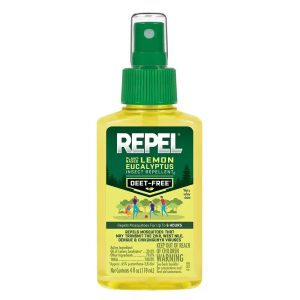
If you’d rather skip synthetic chemicals, oil of lemon eucalyptus (OLE) is the plant-based active ingredient the CDC recommends. That sets it apart from the many essential-oil sprays that smell nice but do little. Repel’s version provides up to 6 hours of mosquito protection, which is competitive with mid-strength synthetic repellents.
It’s DEET-free, won’t damage gear and has a fresh citrus scent instead of the usual bug spray smell. The catches are a shorter protection time than picaridin or DEET and a strong scent that not everyone enjoys. It’s also not for use on children under three, and it isn’t meant for pets.
For a relaxed weekend with moderate bug pressure, it’s the natural repellent I trust.
Pros
- CDC-recommended plant-based active ingredient
- DEET-free and gear-safe
- Pleasant scent and non-greasy
Cons
- Shorter protection (up to 6 hours)
- Strong scent isn’t for everyone
- Not for children under 3
Key facts
- Active ingredient: oil of lemon eucalyptus
- Protection: up to 6 hours (mosquitoes)
- Gear safe: Yes
- Price: about $5 to $10
Verdict: The legitimate natural choice, backed by the CDC. Great for moderate conditions.
 7. Mosquito Head Net: Best Physical Barrier
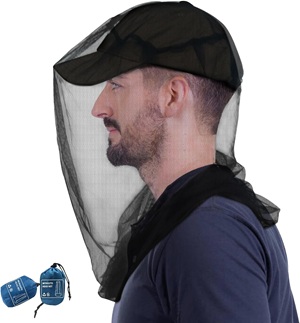
Sometimes the bugs win the chemistry battle. In peak black fly or mosquito swarms, when a Thermacell can’t keep up and they’re crawling into your ears, a simple mesh head net is the most effective tool you own. It weighs almost nothing, costs a few dollars and blocks what no repellent can fully stop.
It isn’t glamorous, and you won’t wear it all the time. In severe conditions, though, it’s the difference between a salvageable evening and packing up early. Pair it with a long-sleeve permethrin-treated shirt and you’re nearly untouchable.
Pros
- Complete physical barrier for your face and neck
- Ultralight and very cheap
- No chemicals and never wears off
Cons
- Only protects your head and neck
- Mildly inconvenient to wear
- Slightly reduces visibility
Key facts
- Type: fine-mesh net
- Coverage: head and neck
- Price: about $8 to $15
Verdict: The one item here that always works. Cheap, light and a trip saver when the swarm is unbearable.
Bug Protection Comparison Table
| Product | Type | Active Ingredient | Protection | Gear Safe | Best For | Price |
|---|---|---|---|---|---|---|
| Sawyer Picaridin | Skin spray | 20% picaridin | Up to 12 hrs | Yes | Everyday use | $8 to $12 |
| 3M Ultrathon | Skin lotion | 34.34% DEET (controlled release) | Up to 12 hrs | Care until dry | Long days, travel | $10 to $15 |
| Repel 100 | Skin spray | 98.11% DEET | Up to 10 hrs | No | Brutal conditions | $7 to $10 |
| Thermacell | Area device | Diffused repellent | 4 hrs per mat | Yes | Relaxing at camp | $25 to $50 |
| Sawyer Permethrin | Clothing treatment | 0.5% permethrin | 6 weeks or 6 washes | Yes (fabric) | Ticks and gear | $15 to $20 |
| Repel Lemon Eucalyptus | Skin spray | Oil of lemon eucalyptus | Up to 6 hrs | Yes | DEET-free option | $5 to $10 |
| Head Net | Physical barrier | None | Unlimited | Yes | Severe swarms | $8 to $15 |
Prices are approximate and change often. Tap any link above for the current price.
DEET vs Picaridin vs Permethrin vs OLE: Which Should You Use?
This question trips up most buyers, so here’s a plain-English breakdown.
DEET is the original and most proven repellent, used in the United States since the 1950s. Higher concentrations mostly last longer rather than working harder, which is why 30% to 35% suits most trips and 98% is only for extreme conditions. It can damage plastics and synthetics.
Picaridin matches DEET’s effectiveness in most situations without harming your gear. It’s also odorless and pleasant to wear, which makes it the best default for skin.
Permethrin belongs to a different category. It goes on clothing, not skin, and both repels and kills bugs on contact. It’s unbeaten for tick protection, but use it alongside a skin repellent, never instead of one.
Oil of lemon eucalyptus (OLE) is the plant-based ingredient the CDC recommends. It’s a legitimate DEET-free option for moderate conditions, though it lasts less time and smells stronger.
The simple strategy: treat your clothing with permethrin before the trip, wear picaridin on your skin, run a Thermacell at camp and keep a head net for emergencies. That four-layer system handles almost anything the outdoors throws at you.
Are Natural Insect Repellents Worth It?
Many “natural” sprays use blends of peppermint, cedar, lemongrass or citronella oil. These essential oils are often exempt from EPA registration, which means the EPA hasn’t reviewed data proving they work or how long they last. In practice, most offer short and patchy protection and need frequent reapplication.
The exception is oil of lemon eucalyptus, which is EPA-registered and CDC-recommended. If you want a plant-based option, choose OLE over essential oil blends. To check any product, look for an EPA registration number on the label or use the EPA’s repellent search tool.
The same caution applies to repellent wristbands, bracelets and clip-on patches. There’s little evidence they protect anything beyond the spot they touch, so don’t rely on them in mosquito country.
How to Choose the Best Mosquito Repellent for Your Trip
- Casual weekend camping: Sawyer Picaridin covers it. Add a Thermacell for evening comfort.
- Long days in buggy country: 3M Ultrathon lotion for 12-hour protection without max-strength DEET.
- Tick country or hiking through brush: permethrin-treated clothing is essential, plus picaridin on skin.
- Peak-season swamps or far-north trips: bring Repel 100 and a head net for the worst of it.
- Backpacking: picaridin spray plus the Thermacell Backpacker, which runs on your stove fuel.
- Families with young kids: choose picaridin or DEET at 30% or less, avoid OLE on children under 3 and follow every label.
- Chemical-averse campers: lemon eucalyptus on skin, permethrin on clothing and a head net as backup.
Still building your kit? Our camping gear checklist covers everything else you’ll need.
Traveling abroad
If you’re camping or trekking in regions with malaria, dengue or Zika, repellent is only one part of your protection. Combine a strong skin repellent with permethrin-treated clothing and a bed net, and check whether you need preventive medication. The CDC Travelers’ Health site lists current health notices and recommendations by destination.
Bug Protection Safety Tips
- Apply repellent to exposed skin and clothing only. Never apply it under clothing or over cuts and irritated skin.
- Keep DEET away from your gear. Apply it to skin, wash your hands and let it dry before touching sunglasses or synthetics.
- Don’t use combined sunscreen and repellent products. Apply sunscreen first, let it absorb, then apply repellent.
- Never use repellent on babies under 2 months. Use mosquito netting over strollers and carriers instead.
- For kids, use picaridin or DEET at 30% or less, avoid OLE on children under three, and apply repellent to your own hands first, then to the child, avoiding eyes, mouth and hands.
- Keep pets in mind. Don’t use human repellents or essential oils on pets, and keep cats away from permethrin until it’s dry.
- Treat clothing in a ventilated area and let permethrin dry fully before wearing.
- Always read the product label. It’s the legally binding source of safe-use directions.
Frequently Asked Questions
What is the best mosquito repellent for camping?
For most campers, Sawyer 20% Picaridin is the best choice. It’s as effective as DEET in typical conditions, lasts up to 12 hours and won’t damage your gear. For extreme bug pressure, step up to 3M Ultrathon or Repel 100.
What is the best insect repellent overall?
There’s no single best product for every situation, which is why layering works. Picaridin is the best everyday skin repellent, permethrin is the best clothing treatment, and a Thermacell is the best way to protect a campsite.
Is DEET or picaridin better?
For everyday use, picaridin is usually better. It’s comparably effective, doesn’t damage plastics or synthetics, and feels and smells better on skin. DEET pulls ahead in extreme, sustained bug pressure.
Does a higher DEET percentage work better?
Mostly it lasts longer rather than repelling more strongly. Around 30% to 35% DEET covers most trips, especially in a controlled-release lotion like Ultrathon. Save 98% DEET for the worst conditions.
Does permethrin go on skin?
No. Permethrin is only for clothing, gear and tents. It bonds to fabric and lasts about six weeks or six washes. Pair it with a skin repellent like picaridin for the strongest protection.
Do Thermacells actually work?
Yes, in calm conditions. A Thermacell creates a 15 to 20 foot protected zone that works well when you’re sitting still at camp. Wind is its weakness, so place it upwind in a sheltered spot.
Do mosquito repellent bracelets work?
There’s little evidence that they do. Bracelets and patches only release repellent near where they sit, so the rest of your body stays exposed. Use an EPA-registered skin repellent instead.
What is the best natural mosquito repellent?
Oil of lemon eucalyptus is the plant-based ingredient the CDC recommends, offering up to six hours of mosquito protection. Most essential-oil sprays offer shorter, less reliable protection.
How do I keep mosquitoes away from my campsite?
Layer your defenses. Treat clothing with permethrin, wear a skin repellent, run a Thermacell in your seating area, avoid camping near standing water and keep a head net handy. Light-colored clothing helps too.
Final Verdict: What Should You Buy?
If you buy just one item, make it Sawyer 20% Picaridin, the best mosquito repellent for camping in nearly every situation. Then build your layers. Add Sawyer Permethrin for your hiking clothes and a Thermacell for hands-free comfort at camp. For long days in serious bug country, pack 3M Ultrathon, and keep Repel 100 and a head net in reserve for the worst conditions.
Bug protection is some of the cheapest, highest-value gear you’ll ever buy. A few dollars and a little planning make the difference between a trip you cut short and one you remember for the right reasons. Have a repellent you swear by? Share it in the comments.
The information in this guide is for general educational purposes. Always follow product label directions, and consult a pediatrician about repellent use for infants and young children.