
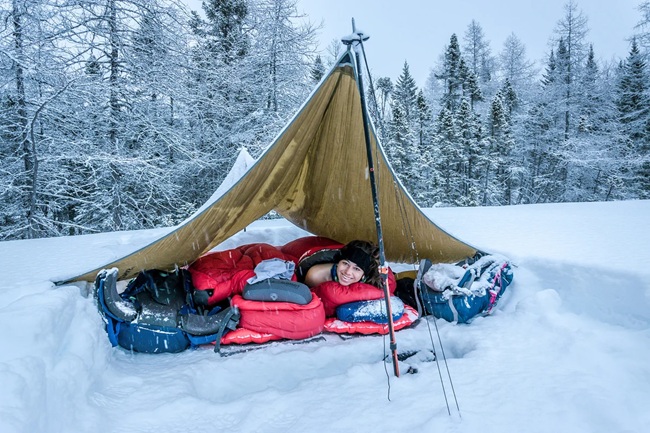
Cold weather camping comes down to three things: staying dry, trapping body heat with the right layered gear and a properly rated sleeping system, and choosing a smart, sun-exposed campsite. Get those right and winter camping is not only safe but genuinely more peaceful than a crowded summer trip, with no bugs, no crowds, and quiet, snow-muffled nights.
Winter takes more planning than a regular summer camping trip, and the margin for error is smaller. Nature is unpredictable, and conditions can turn even before autumn is fully over, so the goal is to never be caught off guard. The 17 tips below walk you through exactly how to prepare, from the gear you pack to the small tricks that make a freezing night comfortable.
Let’s start with the single most important habit, which is knowing what you’re walking into before you leave home.
1. Check the Weather Forecast First
Checking the forecast should be at the top of your cold weather camping checklist. Look specifically for overnight lows, wind chill, and any chance of precipitation in the exact area you’re heading to, not just the nearest town, since mountain and valley temperatures can differ sharply.
Once you know the real low, you can pack the right clothing, sleep system, and backup supplies to stay dry and warm. If the forecast looks severe, there’s no shame in adjusting your plan. Many winter campers book a rented cabin near the campground so they can still enjoy the outdoors while keeping a solid roof and a heat source within reach during the coldest months.
2. Pack Down the Snow Before Pitching
If you’re tent camping on snow, stomp down the ground where your tent will sit before you set up. Pressing the snow firm with your boots or skis creates a stable, level platform in a few minutes, and the effort warms you up fast.
A packed base does two important jobs. It stops your tent floor from being punctured by hidden branches or sharp rocks under the snow, and it gives you a flat, even surface so you actually sleep well instead of sliding or lying on lumps.
3. Choose the Right Campsite
When you pick a winter campsite, think about how you’d choose a summer spot and do the opposite. In summer you want shade and seclusion, but in winter the sun is your best ally.
Keep away from heavily shaded trees and pitch your tent where it will catch as much daylight as possible. Angle the tent so it gets sun from sunrise onward, because waking up to warmth on a cold morning is a genuine boost. Also avoid low hollows where cold air pools overnight, stay clear of spots under heavy snow-laden branches that could drop, and use natural windbreaks like a stand of trees or a ridge to shield you from wind chill.
4. Bring the Right Sleeping Bag
Your sleeping bag is the heart of your winter sleep system, so match it to the conditions. A reliable rule of thumb is to choose a bag rated about 10°F colder than the lowest temperature you expect. For example, if the overnight low could dip to 30°F (-1°C), a bag rated to 20°F gives you a safe margin. It’s always better to have a warmer bag and vent it than to be cold and hope you make it through the night.
Look for a cold weather bag with a down-proof, water-resistant shell that keeps the insulation dry and lofted in damp conditions. Pick a length that fully covers you and a shape that suits how you sleep. Restless sleepers often prefer a roomy rectangular bag, while many winter campers love the heat-trapping snugness of a mummy bag. If you’re not sure which to choose, our guide to the best sleeping bags breaks down the options, and bigger campers can check our picks for the best sleeping bags for big and tall people.
Finally, never sleep directly on the ground. Put an insulated sleeping pad or blanket underneath your bag, because the cold ground will pull body heat straight out of you no matter how good your bag is.
5. Pack Extra Gloves
Keeping your hands warm is not optional in the cold. Pack a spare pair of gloves, because if you lose or soak a glove, a backup can be the difference between comfort and a real emergency.
Hands and fingers lose heat fast and are among the first places frostbite sets in. Disposable or rechargeable hand-warmer packs give a useful heat boost tucked inside your gloves, but keep a layer of fabric between the warmer and your skin, since they can get hot enough to cause burns.
6. Layer Up the Right Way
Layering is the best way to balance warmth and ventilation, so you stay warm at rest but can shed heat before you sweat during activity. Damp clothing from sweat is one of the fastest routes to feeling cold, so managing moisture matters as much as adding warmth.
Start with a form-fitting base layer of breathable merino wool or synthetic fabric that wicks sweat away from your skin. Add an insulating mid layer such as fleece or down, then finish with a lightweight, waterproof, and windproof outer shell. A scarf or neck gaiter is easy to add or remove to fine-tune your temperature.
If you plan to build campfires, a natural-fiber outer layer like wool resists stray embers far better than synthetic fabrics, which can melt. Don’t forget your head and feet, since a wool or fleece hat guards against wind chill and warm socks make a big difference. Choose merino wool or moisture-wicking polyester socks over cotton, and wear water-resistant boots if you’ll be walking through snow. Our full guide on how to layer for winter covers this in more detail, because getting it right really matters.
7. Sleep With Your Boots and Next Day’s Clothes
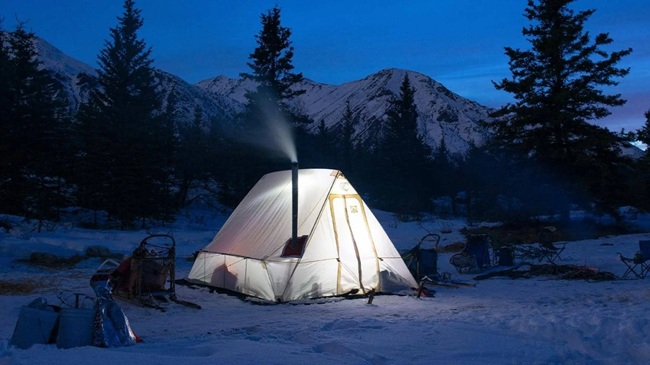
If your boots have removable liners, pull them out and tuck them at the bottom of your sleeping bag overnight so they stay warm. If the liners aren’t removable, seal the boots in a plastic bag and stuff them in the foot of your bag.
The point is to stop your boots from freezing solid outside, so you can slip warm boots on in the morning instead of forcing your feet into stiff, icy ones. The same trick works for the clothes you’ll change into. Pack a clean set in a zip-lock bag and keep it at the bottom of your sleeping bag so it’s dry and toasty at wake-up. If you’re shopping for footwear that handles cold and wet, see our picks for the best hiking boots.
8. Use a Pee Bottle
It sounds odd, but a dedicated pee bottle saves you from leaving a warm tent on a freezing night, which is miserable and can chill you deeply. A wide-mouth bottle with a secure, leak-proof lid does the job.
Keep it well away from your water bottles and clearly different in shape or color so there’s zero chance of a mix-up in the dark. Store it where you won’t knock it over.
9. Stay Hydrated
Staying hydrated is just as important in winter as in summer, and arguably easier to neglect. Cold weather suppresses your sense of thirst, so dehydration can creep up without the usual warning signs. Set a reminder to drink regularly throughout the day.
Warm drinks like tea, broth, or hot chocolate count toward your fluid intake and add welcome calories, which your body burns to generate heat. Avoid letting alcohol do the “warming,” since it actually increases heat loss and impairs judgment in the cold.
10. Air Out Your Tent
As you sleep in a warm tent on a cold night, your breath and body moisture create condensation on the inside walls. You can’t eliminate it entirely, but you can reduce it by venting your tent before you settle in, cracking the vents or a window to let moist air escape.
Condensation also collects on the top of your sleeping bag, where it can freeze. Keep all your gear as dry as possible, because frozen moisture inside your tent is both uncomfortable and a safety issue. Wipe down interior walls in the morning and dry everything out when you can.
11. Dry Your Sleeping Bag
Moisture builds up in your sleeping bag over multiple nights and steadily reduces its warmth, so dry it whenever conditions allow. If it isn’t snowing, turn your damp bag inside out and drape it over your tent during the day to air and dry in the sun.
A bag with a dark-colored interior dries more efficiently because it absorbs solar heat better, which is a small but useful thing to look for when buying a winter sleeping bag.
12. Prevent Condensation With a Vapor Barrier Liner
Condensation forms inside your sleeping bag when warm body moisture meets the freezing air at the bag’s outer layers. On long cold trips, a vapor barrier liner (VBL) placed inside your bag stops that moisture from reaching and soaking the insulation.
A VBL adds warmth by trapping a layer of air and cutting evaporative heat loss, which is genuinely useful if you’re camping in the cold for more than a week. It can feel a little clammy to sleep in, so it’s best reserved for extended or extreme-cold trips. For everyday comfort and warmth, a standard fleece or thermal liner also adds heat and keeps your bag clean. See our guide to the best sleeping bag liners to choose one.
13. Start the Fire First
As soon as you reach camp, get your campfire going before anything else, since it provides warmth, light, and morale while you set up. If the snow is light, shovel it aside to reach solid ground. If it’s deep, pack it down hard to create a stable platform for your fire.
For fuel, start by gathering fallen branches, which can still be dry enough to burn even under a thin layer of snow. After heavy snow, your best bet for dry wood is beneath thick vegetation or standing deadwood. A fire starter from an outdoor shop makes ignition far easier, and pine cones, pine needles, and bark all make excellent kindling.
Keep the fire going as long as you can, and stack unused logs and branches around it so the radiant heat dries them out, giving you a ready supply of fuel through the night.
14. Try Candle Lantern Camping
If a campfire proves too difficult in deep winter, a candle lantern is a cozy backup. Hung safely inside your tent, it adds a surprising amount of gentle warmth and helps cut condensation.
Safety is essential here. Keep the lantern well away from you, your sleeping bag, and the tent walls and ceiling to avoid any fire hazard, and never leave it burning while you sleep. Pair it with proper ventilation, since any open flame in an enclosed space produces carbon monoxide, which is why a flame should never be your only heat plan in a sealed tent.
15. Pack Lithium Batteries, Not Alkaline
Lithium batteries are far better suited to winter than standard alkaline ones. They perform more reliably in the cold, weigh less, and last significantly longer, which matters when your headlamp, GPS, or camera is draining fast in low temperatures.
Keep spare batteries and devices in an inside pocket close to your body during the day, since even lithium cells lose some capacity when deeply chilled.
16. Invert Your Water Containers
Store your water bottles and containers upside down overnight. Water freezes from the top down, so flipping the bottle means any ice forms at the bottom rather than sealing the cap shut, leaving you able to drink from it in the morning.
For longer trips, an insulated bottle or a bottle parka helps too, and keeping water inside your tent rather than outside slows freezing considerably.
17. Use Vaseline on Exposed Skin
A heavy moisturizer like petroleum jelly is a lifesaver in biting wind. Smear it generously on your face, lips, ears, neck, wrists, and any other exposed skin to create a protective barrier.
Freezing wind can cause painful windburn and contribute to frostbite, and this simple layer helps shield the skin that’s most exposed when you’re moving around camp.
How Cold Is Too Cold for Camping?
For most campers, nighttime temperatures around 30 to 40°F (roughly -1 to 4°C) are the point where tent camping starts to require real cold-weather preparation. These temperatures aren’t dangerous with the right gear, but they’re where an unprepared camper gets genuinely uncomfortable or at risk.
Experienced winter campers routinely sleep in temperatures well below freezing using four-season tents, cold-rated bags, and insulated pads. The honest answer is that “too cold” depends far less on the number and far more on your gear, skills, and experience. If you’re new to cold camping, build up gradually and don’t push into deep cold until your system is dialed in.
Is Sleeping in a Car Warmer Than a Tent?
A car and a tent each have trade-offs, and neither is automatically warmer. A car shelters you completely from wind and precipitation, which is a real advantage, but its metal body and large glass area conduct heat away quickly and hold almost no insulation.
A good tent, especially a smaller four-season one, traps your body heat in a compact space and its fabric breathes better than a sealed car, which reduces condensation. With a proper sleeping bag and insulated pad, many campers sleep just as warm or warmer in a tent. Whichever you choose, the insulation underneath you matters most, so never sleep directly on a car seat or the bare ground without a pad.
Can You Get Sick From Sleeping in the Cold?
Cold temperatures alone don’t give you a cold or the flu. Those illnesses are caused by viruses, not by chilly air, so simply being cold doesn’t infect you.
That said, cold and dry conditions can make it easier for some viruses to spread and may stress your immune system, and more time indoors in close quarters raises exposure. The real danger of sleeping in the cold isn’t catching a cold but cold-related conditions like hypothermia and frostbite, which is exactly why the gear and habits in this guide matter so much.
Frequently Asked Questions
What temperature sleeping bag do I need for winter camping?
Choose a bag rated about 10°F colder than the lowest temperature you expect. If overnight lows could hit 20°F, a bag rated to 10°F gives you a safe margin. It’s easier to vent a too-warm bag than to survive a too-cold one.
How do you stay warm in a tent in cold weather?
Insulate underneath you with a high R-value sleeping pad, use a cold-rated bag and a liner, wear dry base layers and a hat to bed, eat a snack and hydrate before sleep, and vent the tent to cut condensation. Pre-warming the foot box with a bottle of warm water helps too.
What should you not do when winter camping?
Don’t sleep directly on the ground, don’t wear sweaty or cotton clothing to bed, don’t run an unvented flame or heater inside a sealed tent, and don’t rely on alcohol to warm you. Each of these either steals heat or creates a genuine safety risk.
Is it safe to use a heater or candle in a tent?
Only with great care and ventilation. Any flame or fuel-burning heater produces carbon monoxide, which can be deadly in an enclosed tent. Keep flames away from fabric, never leave them unattended, and never use them as your only warmth source while sleeping.
How do you keep water from freezing while camping?
Store bottles upside down so ice forms at the base instead of the cap, keep water inside your tent or sleeping bag rather than outside, and use insulated bottles or bottle parkas. For drinking water on the move, insulate the bottle and keep it close to your body.
Conclusion
You can never be too prepared for time in the freezing outdoors. Winter camping rewards planning more than any other kind of trip, and the campers who stay warm and safe are the ones who check the forecast, pack the right layered clothing and sleep system, choose a sheltered sunny site, and keep their gear dry.
Work through these 17 tips before you head out, build your cold-weather experience gradually, and you’ll find that winter camping offers some of the most peaceful nights you can spend outdoors.
Got a winter camping adventure or a hard-won tip of your own? Share it in the comments below so other readers can learn from it.

Daniel is a gear freak when it comes to hiking, climbing and camping. He went to REI Outdoor School to meet new people and learn best practices. Don’t even try to argue with him about the latest backpack or ice axe, he tried most of them. Daniel’s dream is to climb Mount Everest.
These tips will be a huge help to make a fire during winter camping. I always bring a kettle to boil water for hot chocolate and coffee. I also like to wrap wet clothing around a Nalgene bottle filled with boiling water – the heat will dry the clothes – but leave it in your vestibule to avoid condensation inside the tent.
Hi Chynna and thanks for your tip. I hope you get to use most of the tips here so you’ll be more comfortable camping. Line your sleeping bag with a VBL if you’re staying for longer days.
We will try camping on Mt Hood National Forest during the winter season for the very first time. All the information here is great and helpful for us. We’ve asked others as well on stories of their experience. Thermorests are quite good too, like the sleeping pad or blanket under the sleeping bag and they say that these roll-up mats get you a little bit off the cold ground.
That would be fun Annie! I know you’ll have lots of fun and memorable experiences to bring back. Just invest in quality gear from reputable manufacturers and you’ll all do great. The products I’ve listed above are all excellent and I’ve had the chance to use them in my trips.