
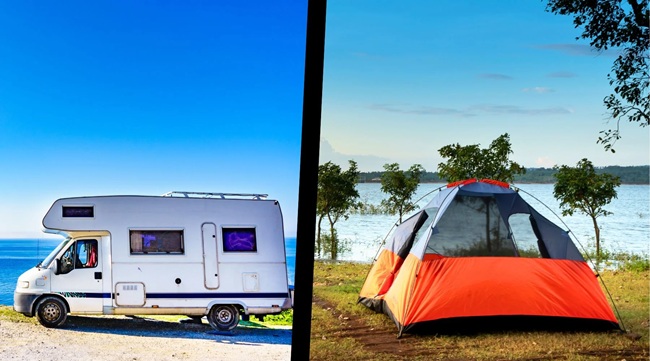
If you’re weighing tent vs. motorhome camping for your next trip, you’re in good company, because camping is one of the most popular ways Americans get outside and a big part of the appeal is how many ways there are to do it. One of the first real decisions you’ll face is how you want to camp: roughing it in a tent, or rolling up in a motorhome with a bed, a kitchen, and a bathroom already inside.
There’s no single right answer. The best choice depends on your budget, how much comfort you need, where you want to go, and honestly, what kind of experience you’re chasing. Some people want to fall asleep hearing the wind in the trees with nothing but nylon between them and the stars.
Others want the adventure of the open road without giving up a hot shower and a real mattress. Both are camping, and both are great. Below, I’ll walk you through the real pros, cons, and costs of each, plus the whole middle ground between them that most “tent vs. RV” articles completely ignore, so you can figure out which fits your outdoor life.
Note: As an Amazon Associate, we earn from qualifying purchases made through links in this article, at no extra cost to you.
First, Ask Yourself These Questions
Before comparing gear and price tags, get honest about what you actually want, because your answers point straight to the right setup:
- What’s my budget, both for the trip and for gear I’ll keep using?
- How much comfort do I need to actually enjoy myself? (There’s no shame in liking a real bed.)
- Where do I want to go, remote backcountry or established campgrounds with hookups?
- How often will I camp? A few weekends a year is a different calculation than full-time travel.
- Who’s coming, solo, a couple, or a family with kids and a dog?
- How do I feel about setup and driving a large vehicle?
Keep these in mind as you read, since the “best” option is simply the one that matches your answers.
Tent Camping: Closest to the Outdoors
The appeal
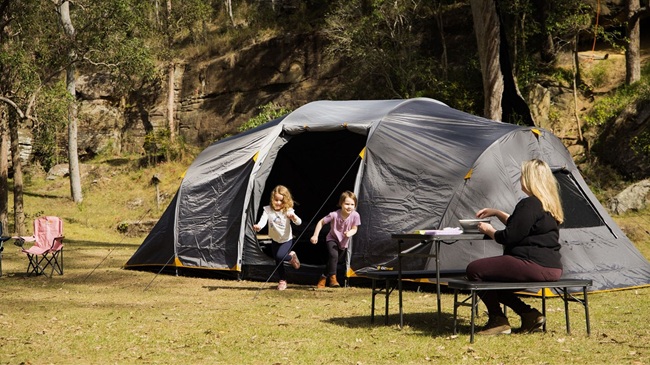
Tent camping is the purest version of the experience, because you’re in it, surrounded by the fresh air, the campfire, and the sounds at night. It’s also by far the most affordable and the most flexible way to camp. A tent fits in a closet, packs into a car trunk, and can go places no RV will ever reach, including backcountry sites, walk-in spots, festival fields, and a friend’s backyard. If you want that genuine “out in nature” feeling, nothing beats a tent. It’s also the easiest way to start. You can put together a complete, comfortable tent setup for a few hundred dollars and be camping this weekend.
The downsides
The trade-off is comfort and exposure. You’re at the mercy of the weather, and a cheap tent in a thunderstorm is a miserable, soggy lesson. You sleep on the ground (a good pad fixes most of that), there’s no bathroom, no climate control, and you’ll set up and tear down camp every time. For some people that is the fun. For others, after one cold, wet night, it’s the reason they start browsing campervans.
Who it’s for
Tent camping suits first-timers, budget campers, backpackers, solo adventurers, and couples, along with anyone who prioritizes getting deep into nature and families who want an affordable, screen-free weekend.
What it costs
- Gear: a solid starter kit (tent, sleeping bags, pads, stove, light, chairs) runs roughly $300 to $700 total, a one-time cost you reuse for years.
- Campsite fees: tent sites typically run $15 to $40 per night, and dispersed camping on public land is often free.
The tent-camping gear you’ll actually want
You don’t need much, but a few good pieces make the difference between loving it and never going again:
- A quality tent. Get one rated for the weather you’ll face. The Coleman Sundome is a reliable budget pick for beginners, while a Coleman cabin tent gives families standing room. (Browse more options in our tents reviews.)
- A warm sleeping bag rated for your lowest expected temperature. See our sleeping bag picks, or grab a versatile 3-season sleeping bag.
- A sleeping pad or air mattress, which is the single biggest comfort upgrade. A camping sleeping pad insulates you from the cold ground, while an air mattress is plush for car camping. There’s more in our sleeping pad reviews.
- A camp stove for real meals. The classic Coleman 2-burner propane stove is a campground staple.
- Light, meaning a rechargeable camping lantern for the tent and a headlamp for hands-free tasks.
- Camp chairs, such as a couple of folding camp chairs for around the fire.
- A good cooler to keep food and drinks cold (and your desserts intact). See our guide to the best camping coolers.
- Bug protection, which you shouldn’t skip. Layered repellent and a Thermacell make summer evenings bearable, and here’s our full bug-protection guide.
- A way to keep devices charged off-grid. A portable solar charger covers phones and lights.
Motorhome & RV Camping: Comfort on Wheels
The appeal
A motorhome is basically a small apartment you can park in the woods. Many come with a real bed, a working kitchen, a bathroom with a shower, climate control, and even a TV. You’re weatherproof too, so when it pours, you’re warm and dry inside. There’s no setup beyond parking and plugging in, no sleeping on the ground, and you can cover serious distance, turning your lodging into your transportation. For families, older campers, longer trips, or anyone who loves the outdoors but not the discomfort, an RV is a game-changer.
The downsides
Cost is the big one. Motorhomes are expensive to buy, thirsty on fuel, and they come with ongoing maintenance, insurance, and storage. They’re also limited by their size, because big rigs simply won’t fit many state and national park campsites, and driving and parking a 30-foot vehicle takes some nerve at first. And while there’s no tent to pitch, there is a hookup routine: water, power, and yes, dumping the sewage tank.
The good news: you don’t have to buy one
This is the part the old advice misses. You absolutely do not need to drop six figures to try RV camping. Renting is the smart way in, since peer-to-peer platforms like Outdoorsy, RVshare, and RVezy let you rent someone’s rig for a weekend, and traditional companies like Cruise America rent fleet motorhomes. Renting lets you test the lifestyle (and the specific type) before committing a dime to ownership.
Types of RV (a quick map)
“RV” covers a big spectrum, running roughly from biggest and priciest to smallest:
- Class A motorhome: the big bus-style rigs, offering maximum space and luxury.
- Class C motorhome: the popular family choice, built on a truck or van chassis with a bed over the cab. It’s the best balance of space and cost.
- Class B campervan: the compact “#vanlife” favorite, nimble and fuel-efficient.
- Travel trailer: towable and budget-friendly, though you need a capable tow vehicle.
- Pop-up & teardrop campers: lightweight towables, a half-step up from a tent.
- Truck camper: a removable shell that drops into a pickup bed, and very versatile.
What it costs
To rent (2026 nightly averages):
- Class A motorhome: $150 to $450/night
- Class C motorhome: $150 to $300/night
- Class B campervan: $100 to $350/night
- Travel trailer: $50 to $200/night (plus a tow vehicle)
- Pop-up / teardrop: $60 to $150/night
The U.S. average across all types is around $198 a night. Remember to budget the all-in cost too, including fuel (big motorhomes get just 6 to 14 mpg), insurance, mileage fees, and RV campsite fees with hookups, which typically run $45 to $80 a night. Peak summer and holiday rates can run 30 to 50% higher, so the shoulder seasons of spring and fall are the sweet spot. To buy (rough new-price ballparks): pop-ups and teardrops around $10k to $20k, travel trailers around $15k to $45k, Class C around $80k to $150k, Class B campervans around $100k to $200k or more, and Class A around $100k to $500k or more. Used rigs cost far less, but factor in maintenance, insurance, and storage year-round.
Handy RV accessories (you’ll need these)
If you rent or buy, a few inexpensive items make RV life smoother and protect your rig:
- RV surge protector: guards your electronics against faulty campground power. It’s cheap insurance.
- Leveling blocks: almost no campsite is perfectly flat.
- Wheel chocks: keep the rig from rolling once parked.
- Sewer hose kit: for emptying the holding tanks, a necessary evil.
- Drinking water hose: a dedicated potable-safe hose, not a garden hose.
- Water pressure regulator: protects your plumbing from high campground pressure.
- RV-safe toilet paper: dissolves properly so it won’t clog the tank.
The Middle Ground: It’s Not Just Tent or Motorhome
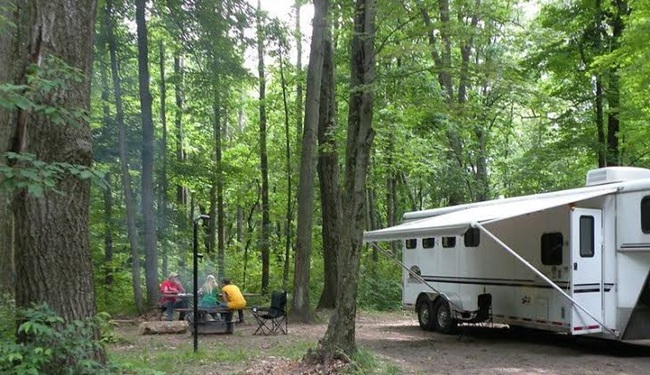
Here’s the secret most beginners don’t realize. Tent and motorhome are just the two ends of a long spectrum, and some of the best options live right in the middle, giving you more comfort than a tent without the cost and bulk of a full motorhome:
- Rooftop tent: mounts on your car or SUV, so you sleep up off the ground, set up in minutes, and keep your existing vehicle.
- Teardrop trailer: a tiny, towable hard-sided camper with a bed and often a small outdoor kitchen. It’s cozy, weatherproof, and easy to tow.
- Pop-up camper: folds down small to tow, then pops up into a surprisingly roomy soft-sided shelter with real beds.
- Truck camper: turns a pickup into a self-contained camper without towing anything.
- Class B campervan: drive-anywhere comfort, a bed, and basic amenities in a vehicle that still fits a normal parking spot.
If a tent feels like too little but a motorhome feels like too much (or too expensive), one of these is very likely your answer. It’s worth renting a couple of different styles before you buy anything.
Tent vs. Motorhome: Side-by-Side
| Factor | Tent | Motorhome / RV |
|---|---|---|
| Upfront cost | Low ($300–$700 in gear) | High to buy; rentals ~$100–$450/night |
| Comfort | Basic; you’re on the ground | High; real bed, kitchen, bathroom |
| Weather protection | Limited | Excellent |
| Setup effort | Pitch & tear down each trip | Park & hook up |
| Where you can go | Almost anywhere, incl. backcountry | Established sites; size limits apply |
| Running costs | Just campsite fees | Fuel, hookups, insurance, maintenance |
| The “in nature” feel | Maximum | Moderate |
| Best for | Budget, backpacking, nature-seekers | Families, comfort, long trips, all-weather |
How to Decide
Choose a tent if you’re on a budget, you’re just getting started, you want to reach remote spots, or you genuinely love being immersed in the outdoors. It’s the lowest-risk, lowest-cost way to camp, and the gear lasts for years. Choose a motorhome or RV if comfort matters to you, you’re camping with family or for longer stretches, you want to be weatherproof, or you like the idea of your lodging and transportation being one and the same.
Not sure? Rent before you commit. Camp a couple of weekends in a tent (cheap to try), then rent an RV or campervan for a weekend. A few hundred dollars of “test driving” will teach you more about what you actually want than any article, including this one, ever could.
A Quick Real-World Cost Comparison
A weekend tent trip: if you already own the gear, your only cost is the campsite, so call it $30 to $80 for two nights, plus food and gas. The gear itself is a one-time cost of around $300 to $700 that you reuse indefinitely. A weekend RV rental: a Class C motorhome at around $200/night is roughly $400 for two nights, plus fuel, an RV campsite with hookups (around $45 to $80/night), and any mileage or insurance fees, which realistically lands at $600 to $900 all in for the weekend.
Neither is objectively “better,” but if you camp often, tent gear pays for itself fast, while RVs deliver comfort and convenience that some campers happily pay for.
Frequently Asked Questions
Is it cheaper to camp in a tent or an RV?
Tent camping is dramatically cheaper. A complete tent kit is a one-time cost of a few hundred dollars, and campsites run $15 to $40 a night. An RV either costs tens of thousands to buy or $100 to $450 or more a night to rent, before fuel and hookup fees.
Should a beginner start with a tent or an RV?
Most beginners are best starting with a tent, because it’s affordable, simple, and low-risk. If you discover you love camping but want more comfort, rent an RV or campervan for a weekend before buying anything.
Do I have to buy a motorhome to camp in one?
No. Renting through platforms like Outdoorsy, RVshare, RVezy, or Cruise America lets you enjoy RV camping for a weekend without the huge cost of ownership, and it’s the smartest way to test which type suits you.
What’s the most comfortable way to camp?
A motorhome or RV, hands down, since you get a real bed, climate control, a kitchen, and a bathroom. Tents win on the “close to nature” feeling but lose on creature comforts.
Can a motorhome go anywhere a tent can?
No. Larger RVs are limited by campsite size, road access, and parking, and many remote or backcountry sites are tent-only. A tent (or a small campervan) reaches places a big motorhome simply can’t.
Conclusion
The beauty of camping is that there’s a version of it for everyone. A tent gets you closest to nature for the least money and reaches the wildest places. A motorhome wraps the outdoors in comfort and weatherproof convenience. And the growing middle ground of campervans, teardrops, pop-ups, and rooftop and truck campers means you don’t have to choose between roughing it and luxury.
Weigh the budget, comfort, and freedom that matter most to you, and when in doubt, rent before you buy. However you end up sleeping under the stars, the important part is simply getting out there. What’s your preferred way to camp, whether a tent, an RV, or something in between? Share it in the comments and help a fellow outdoor lover decide.