
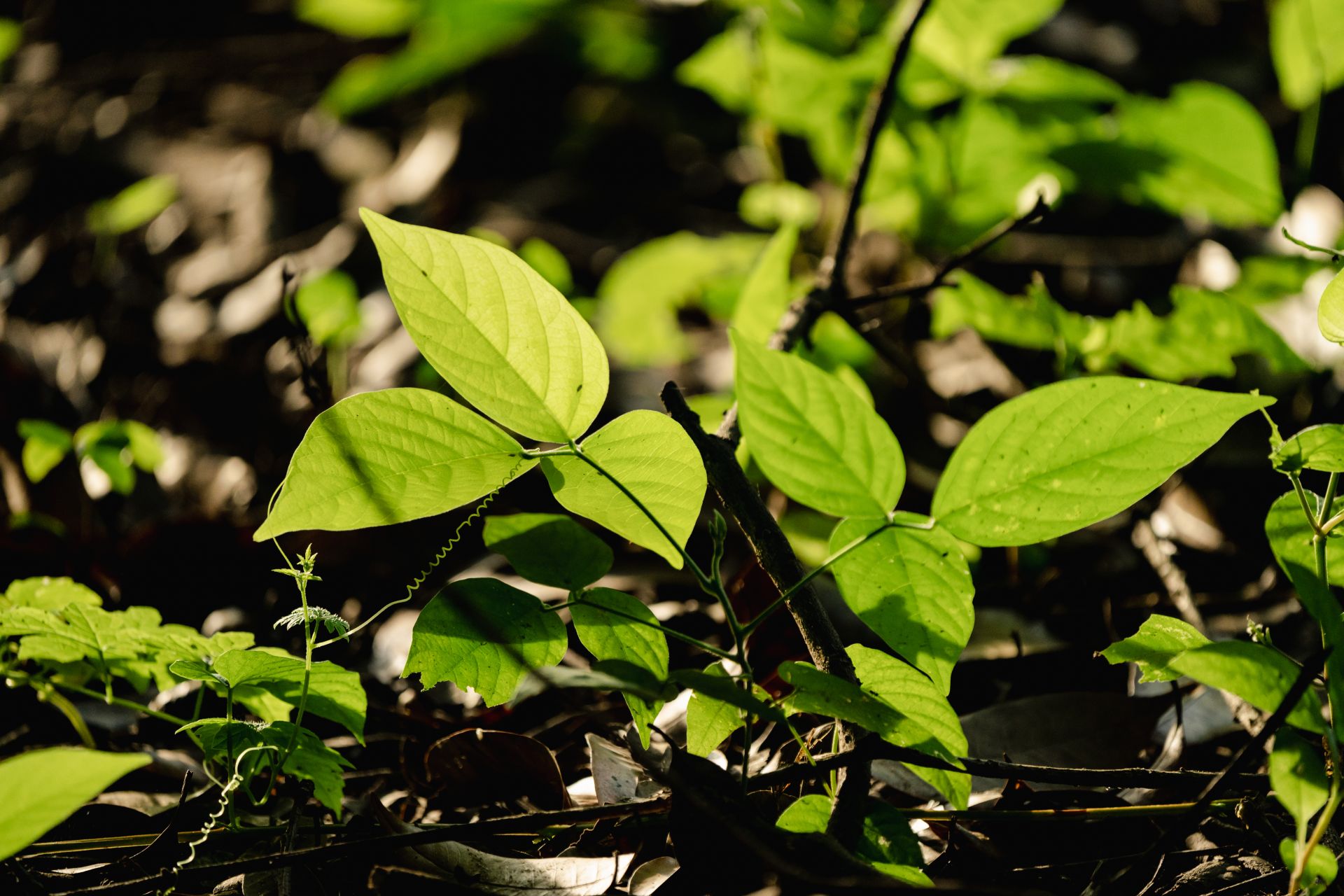
No, you should never eat poison ivy. Swallowing any part of the plant can cause severe, potentially life-threatening swelling in your mouth, throat, and airway, along with painful internal irritation. There is no safe or medically approved way to eat poison ivy or to “build immunity” to it, and doing so can send you to the emergency room. If someone has eaten poison ivy, call Poison Control or seek emergency care immediately.
Medical disclaimer: This article is for general information only and is not medical advice. Never eat poison ivy. For any suspected ingestion or severe reaction, contact Poison Control (1-800-222-1222 in the US) or emergency services right away.
Many of us wonder about edible plants in the wild. What can you eat, and what should you avoid? If you camp or backpack, you might imagine a scenario where you run low on food and start eyeing the vegetation around you. So it’s fair to ask the question directly: can you eat poison ivy?
Maybe you’ve seen a survivalist forum thread, or a friend swears they know someone who “built up immunity” by eating it on purpose. It sounds daring, even tempting, as a test of your survival skills. Before you consider adding poison ivy to a wilderness salad, there are some hard facts and safety warnings you absolutely need to understand.
Key Takeaways (Read This First)
- No, you should not eat poison ivy, ever.
- Even small amounts can cause dangerous internal reactions, not just a rash.
- There is no medically approved way to build immunity by eating it.
- Repeated exposure tends to make reactions worse, not better.
- If you or someone in your care ingests poison ivy, seek medical help immediately.
Also read: Types of Edible Snails
What Is Poison Ivy?
You’ve probably heard of poison ivy (Toxicodendron radicans), even if you’ve never knowingly crossed paths with it. It’s a flowering plant found across North America, with closely related species in parts of Asia, and it has a well-earned reputation for causing itching, irritation, and allergic rashes on contact.
The trouble comes from urushiol, a sticky, oily resin found throughout the plant’s sap, including the leaves, stems, roots, and berries. Many animals, including birds and deer, eat poison ivy with no ill effect, but that tells you nothing about what’s safe for humans. Most people react badly to urushiol, which is exactly why you should treat the plant as something to identify and avoid, not to eat.
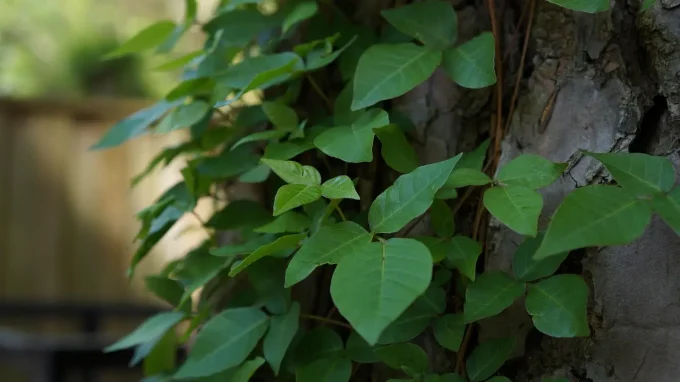
How to Identify Poison Ivy So You Can Avoid It
Knowing how to spot poison ivy in the wild matters, because it can be tricky to tell apart from harmless plants. Here are its key features.
- Leaves in groups of three. “Leaves of three, let it be” is the classic rhyme for a reason. If you see a plant with clusters of three leaflets, give it a wide berth even if you’re not certain.
- Color that shifts with the season. Leaves are reddish when they first emerge in spring, bright to deep green in summer, and red, orange, or yellow in fall.
- Variable shape. It can grow as a vine climbing a tree, a trailing ground cover, or a low shrub. In late summer and fall it may bear clusters of white or cream-colored berries, which are also toxic.
- Leaf surface. Leaflets can look glossy or dull, with edges that are smooth, toothed, or lobed, and the middle leaflet usually sits on a longer stalk than the two side ones. Never touch a plant to test its texture.
Tip: Always check a local plant guide for regional lookalikes such as poison oak and poison sumac, which carry the same urushiol and the same risks.
Also read: UV Index and Tanning Guide
Why Would Anyone Consider Eating Poison Ivy?

It sounds absurd, but every so often survival lore and old anecdotes describe people eating tiny amounts of poison ivy to “build a tolerance,” on the theory that you can train your body not to react to urushiol. Others ask, “If I were stranded with nothing to eat, could poison ivy keep me alive?” or “Animals eat it, so why can’t we?”
The answer is plain. Animals routinely eat things that are dangerous or deadly to humans, and poison ivy is one of them. In any genuine survival situation there are far safer wild foods to seek out, and poison ivy is never the answer.
There is a world of difference between urushiol touching your skin and urushiol going down your throat. On the skin it causes an itchy, blistering rash. Internally it can inflame and swell the tissues of your mouth, throat, esophagus, and digestive tract, and swelling in the airway can become a medical emergency. Severe cases need urgent treatment, so this is not something to experiment with.
There is also no reliable or medically approved protocol for building immunity to urushiol by eating it. If anything, repeated exposure tends to sensitize you further, making future reactions stronger rather than weaker. The real risk of ingestion isn’t a rash. It’s hospitalization, serious internal injury, or worse.
If you, a child, or anyone in your care swallows any part of poison ivy, call Poison Control or go to the nearest emergency room immediately. Do not attempt home remedies for internal exposure.
Also read: Best Boonie Hat
What to Do for a Poison Ivy Skin Reaction

Most people know the misery of a poison ivy rash and never want a repeat. The single most important thing to understand is that urushiol is an oil, and getting it off your skin quickly is what limits the damage.
Wash It Off Fast (The Most Important Step)
As soon as you realize you’ve touched poison ivy, wash the area thoroughly with soap and plenty of cool water. Plain water alone won’t cut it, because water doesn’t break down oil. Dish soap or a dedicated urushiol-removing cleanser works better at lifting the resin off your skin, which reduces how much rash develops and keeps it from spreading to other areas or to other people via the oil. Wash within the first hour or two for the best results, and clean under your nails too. Also wash any clothing, gear, tools, or pet fur that may have brushed the plant, since urushiol can linger on surfaces for a long time.
Soothe the Itch
Once the oil is off and the rash sets in, several remedies can ease the itching while your skin heals. These treat symptoms only and won’t remove urushiol, so do the wash step first.
- Aloe vera gel. Apply a high-quality, pure aloe gel directly to the inflamed skin to cool and calm it. Fresh gel from an aloe plant works too.
- Cool compresses. A cold, damp cloth held against the rash brings quick, simple relief from itching and heat.
- Baking soda paste or bath. Add about half a cup of baking soda to a lukewarm bath, or mix three teaspoons of baking soda with one teaspoon of water into a paste and dab it on the rash.
- Colloidal oatmeal. An oatmeal bath or paste is a well-known skin soother. If you use cooked oatmeal, let it cool to just warm before applying, never hot.
- Witch hazel. Dab a little onto the area to relieve itching and gently cleanse the skin.
- Calamine or hydrocortisone cream. Over-the-counter anti-itch creams and an oral antihistamine can help manage the itch and inflammation of a mild rash.
When to See a Doctor
Get medical care promptly if you have swelling, trouble breathing or swallowing, a rash on your face, eyes, or genitals, widespread blisters, signs of infection, or a reaction that covers a large part of your body. Severe cases often need prescription steroids, and any breathing difficulty is an emergency. For more on the timeline, see our article on how long it takes a poison ivy rash to appear.
Common Poison Ivy Myths, Corrected
Plenty of myths circulate about poison ivy. Here are the ones worth setting straight.
- “The rash is contagious.” Not true. You can’t catch a poison ivy rash from another person’s blisters. Urushiol itself can spread from person to person only while the raw oil is still on skin, clothing, or objects, which is why washing matters.
- “Everyone is allergic to poison ivy.” Most people react to urushiol, and estimates commonly put sensitivity at up to roughly 85% of the population, meaning a minority may not react. But sensitivity can change over time, so this is never something to test on purpose.
- “Once allergic, always equally allergic.” Reactivity varies from person to person and over a lifetime. For many people, repeated exposure actually increases sensitivity, so assume you can react and protect yourself accordingly.
- “Urushiol spreads across your body once it touches you.” The rash can appear in stages, which looks like spreading, but that’s just different areas reacting at different speeds, or spots where more oil landed. The rash doesn’t travel through your body on its own.
- “Poison ivy is only a risk in spring and summer.” The plant carries urushiol year-round, including in bare winter vines and dead stems, so you can get a rash in any season. This is a reason to stay cautious all year, not a reason to go near the plant.
Frequently Asked Questions
Can you eat poison ivy to build immunity?
No. There is no safe or medically approved way to build immunity to urushiol by eating poison ivy. Ingestion can cause dangerous internal swelling and reactions, and repeated exposure usually makes you more sensitive, not less.
What happens if you eat poison ivy?
Urushiol can inflame and swell the tissues of the mouth, throat, and digestive tract, and swelling in the airway can be life-threatening. It can also cause severe gastrointestinal distress. Anyone who has eaten poison ivy should get medical help immediately.
Are poison ivy berries poisonous?
Yes. The white or cream-colored berries, like the rest of the plant, contain urushiol and should never be eaten. Birds can eat them safely, but humans cannot.
How do you get urushiol off your skin?
Wash as soon as possible with soap, ideally dish soap or a dedicated urushiol cleanser, and plenty of cool water, scrubbing gently and cleaning under the nails. Water alone won’t remove the oil because urushiol is oily, so soap is essential.
How long does a poison ivy rash last?
A typical rash lasts one to three weeks, often appearing 12 to 72 hours after contact. Severe or widespread reactions can last longer and may need prescription treatment. Seek care for any swelling or breathing difficulty.
Is poison ivy dangerous to pets?
Most pets are protected by their fur and rarely develop a rash, but urushiol can cling to their coat and then transfer to you. If your pet has been in poison ivy, bathe it with gloves on to remove the oil.
Conclusion
It’s easy to get drawn into stories of people “building immunity” to poison ivy, but the reality is simple. The risks of eating it far outweigh any imagined benefit, and there is no safe way to do it. Being prepared in the outdoors means knowing what to avoid, not daring yourself to swallow something that could put you in the hospital.
When in doubt, err on the side of caution. Learn to recognize those leaves of three, keep your distance, wash fast if you make contact, and leave poison ivy to the squirrels and birds. For more trail-ready knowledge, read on with our guide on how far mosquitoes travel.

Daniel is a gear freak when it comes to hiking, climbing and camping. He went to REI Outdoor School to meet new people and learn best practices. Don’t even try to argue with him about the latest backpack or ice axe, he tried most of them. Daniel’s dream is to climb Mount Everest.
What a great article Jerry. This is really helpful especially for those who love hiking and camping. It is really important to know these kinds of information in case you encounter poison ivy. Thank you also for debunking the most common myths.I really thought that everyone is allergic to it.
I think that it is really crucial to know the basics of various plants if you enjoy camping and hiking. It is nice that you have already summarized all the important details about poison ivy. As for the myths, thank you for clarifying that the plant is actually not contagious and that it is active all-year round.
Always be careful out there!
Thanks! Be careful, friend!
Emergencies can happen suddenly, be careful with this plant it can kill and you are important.
Absolutely. Nobody should eat poison ivy!
To the nay sayer:
Have you tried it?
I wish I knew about this option when I was a young lad when working on a farm 40 some years ago or 3 yrs ago when I found myself pulling it out with gloved hands hoping I would not breakout but did. The rash lasts 14 days for me pretty consistently.
I tried it! Then last summer I learned of this method and tried it prophylactically with very positive results. This spring I got exposed to the oil and after 6 days of itchy rash I took a small leaf (approx. 1/4 leaf) to find the next afternoon it was beginning to dry up. This method will not work for you, oh nay sayer, but it has been very helpful for me.
Jon L,, hey mate.. NEVER NEVER eat it. Just no!!! See a doctor if you do.