
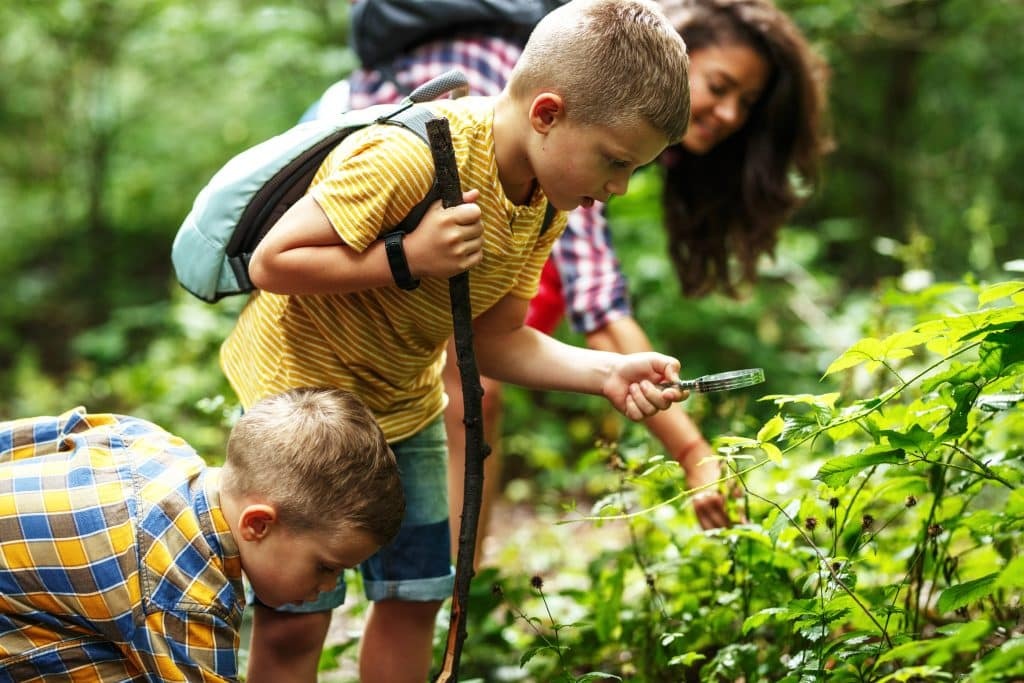
Hiking with kids is one of the most effective, affordable, and genuinely fun ways to swap screen time for fresh air. The secret is to keep outings short and experience-led, bring plenty of snacks, let your kids help decide what you do, and use technology to pull them toward nature rather than banning it outright. Start young, stay patient, and the trail becomes something your children ask for rather than resist.
Disclosure: This article contains affiliate links. If you buy through them, we may earn a small commission at no extra cost to you.
If getting your children outside feels harder than it used to, you’re not imagining it. Screens are woven into childhood now in a way they simply weren’t a decade ago. Recent data from Common Sense Media shows kids aged 5 to 8 average around three and a half hours of screen time every single day, and roughly four in five children under 13 now own their own device. One survey found kids are clocking about 21 hours a week on screens, more than double what their own parents consider ideal.
Meanwhile, time in nature is heading the other direction. A 2025 report on the “nature deficit” found the average child now spends less than an hour a day outdoors, and researchers estimate today’s kids spend roughly half as much time in nature as the previous generation did at the same age. Author Richard Louv famously called this drift away from the natural world “nature deficit disorder” back in 2005, and twenty years on, the gap has only widened.
Hiking with kids is one of the best ways to close that gap. A day on the trail isn’t just another item on the weekend to-do list. It’s the kind of experience that builds lasting memories, burns off restless energy, and reconnects your family with the world beyond the glowing rectangle.
Getting your kids away from what they’ve grown used to takes real effort, no question. But with a little planning and the right strategy, a day outside is far more doable than it looks. This guide walks through everything you need to make hiking with kids a regular, welcome part of family life in 2026, including how to handle the screens rather than wage war against them.
Why Hiking With Kids Matters More Than Ever
Before the practical tips, it’s worth knowing what’s actually at stake, because the benefits go well beyond fresh air.
Time in green space has been repeatedly linked to lower anxiety, depression, and stress in children. Kids who play and explore in natural settings tend to show stronger self-esteem, sharper risk awareness, and more creativity than those who don’t. Regular active outdoor time also helps lower the risk of childhood obesity and type 2 diabetes, conditions that have crept downward into younger and younger age groups.
There’s a mental-health dimension that hits especially hard right now. With teens reporting record levels of anxiety and screen use closely tracking those trends, unstructured time outdoors functions almost like a reset button. Movement, sunlight, novel sights and sounds, and the simple absence of notifications all combine into something no app can replicate.
Here’s the encouraging part: kids notice it too. In surveys, children who spend more time outside and pay more attention to nature are far more likely to say that being outdoors makes them happy. The benefit isn’t something you have to sell them on forever, because once they feel it, they start asking for it.
So the goal of hiking with kids isn’t to win a fight against technology. It’s to give your children regular, positive doses of an experience that’s quietly disappearing from modern childhood. Here’s how to do it well.
1. Start Young
If you grew up running around outside, this may sound strange, but most kids today simply don’t spend much time outdoors on their own. Surveys consistently show that unstructured outdoor play has fallen dramatically, and by some estimates the average child gets only a handful of minutes of it a day. We like to imagine children will naturally gravitate toward the outdoors, but in 2026 that’s rarely how it works without encouragement.
So if you want kids who enjoy a hike, get them out there while they’re tiny. Carrying a baby in a child hiking carrier is a great start, and by the time they can toddle 50 meters on their own, a forest or trail won’t feel foreign or frightening. A child introduced to nature early won’t be rattled by a darting squirrel or a rustle in the bushes, because it’ll just be part of the world they know.
The earlier nature becomes ordinary, the less resistance you’ll face later.
2. Be Realistic About Distance and Pace
Making hiking with kids work means making it genuinely kid-friendly. Young children are far more captivated by experiences than by distance, at least at first.
If you have a four-year-old and you expect a brisk mile through the woods, you’re setting everyone up for misery, and you may never get that child onto a trail again. Instead, find a park where you can have a picnic and take short, wandering walks. Letting your little one crouch over an ant trail or hunt for a squirrel will build far more positive memories than hitting some arbitrary distance you’ve decided equals “success.”
Remember that your child is seeing all of this for the first time. Your job is to encourage that wonder and give them space to soak it in. Do that, and getting them back next weekend becomes much easier. Make sure you’ve also got the right gear for their age and the conditions, since comfortable kids hiking shoes, layers, sun protection, and water make an enormous difference to how the day feels.
As they warm to it, the hikes naturally get longer. Before you know it, they may be the ones pulling you further down the trail.
3. Bring Snacks (and a Little Bribery)
Kids love to eat, and when you’re luring them off the couch and onto a trail, that’s a tool worth using. At home in front of a screen, a child burns almost nothing. On the trail, the opposite is true, and a hungry, depleted kid will make the whole outing wretched.
If all your child remembers is hunger and trees, you’ll struggle to get them outdoors again. So plan for frequent little breaks and bring tasty, energy-dense foods that become part of the adventure. Pull out a surprise treat at the first rest stop, since the “big chocolate bar we finish at the summit” can become a beloved ritual.
Don’t fret too much about the sugar, because an active kid burns through it. The real risk on the trail is running out of steam, not a few extra calories. Snacks keep energy up and build warm associations, so over time “family afternoon in the woods” comes to mean “the good snacks come out,” which is exactly the link you want forming in their heads.
4. Put Your Kids in Charge
Never lose sight of the fact that you’re doing this for them. One of the best ways to get kids excited about a day outdoors is to hand them the reins. Let them help plan the outing and decide what the family does. It makes them feel capable and important, and it guarantees you’re doing things they actually enjoy.
Having fun is the entire point, since a kid who had a great time and got to make choices will want to come back. With more than one child, rotate who plans each trip. Along the way they’ll pick up real lessons in responsibility and in sharing the spotlight.
5. Bring Friends and Other Families
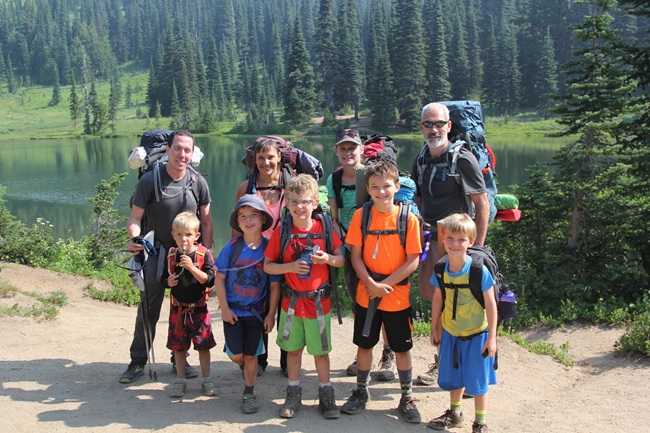
Spending an entire day with only their parents can feel like a chore to a kid, and that’s a fast track to “I don’t want to go again.” Bringing along a friend changes everything, since another child to talk to, race, and discover things with makes the whole day more fun.
It’s even better if you team up with a family who shares your interests and becomes your regular outdoor crew. It lightens the load for everyone and makes outings possible even when one parent can’t come along. Two adults can comfortably manage a small pack of kids, and the children entertain each other.
6. Leave the Schedule at Home
The fastest way to ruin a day outdoors is to run it like a meeting. Kids won’t hurry once they reach the trail, and pushing them to keep your pace, or to be interested in what you find interesting, backfires every time. Children need room to explore and to move through nature on their own terms.
If you’re short on time or can’t relax into the day, it may be better to wait for a day you can. Rushing strips out the very thing that makes nature restorative. The goal is for your kids to have such a good time that they want to do it again, and that only happens when they’re allowed to set the rhythm.
7. Don’t Make the Trail a Screen-Free Battleground
Here’s where 2026 demands a slightly different mindset than the old advice. Screens aren’t going anywhere. By the time most children can talk, devices are already part of their daily lives, and declaring nature a total screen-free zone tends to turn the outdoors into something they resent.
The smarter move is to make technology a companion to the adventure rather than its enemy. The classic example is geocaching, which uses GPS to hunt for hidden “treasure” along a route. It turns a walk into a quest, teaches map-reading and navigation, and ends with a real payoff. Many areas have community-maintained geocaching trails, or you can invent your own by telling your kids there’s a surprise waiting at the destination and stashing something they’ll love at the end.
Plenty of newer tools work the same way. Nature-identification apps let kids photograph a leaf, bug, bird, or flower and instantly learn what it is, turning the trail into a scavenger hunt. Stargazing apps make an evening hike feel like exploring another planet. A kids camera or a phone used to photograph wildlife gives a screen-loving child a reason to look outward instead of down.
There’s also no harm in letting them have their device at the picnic spot once you’ve actually hiked out somewhere. More often than not, you’ll be surprised how completely the outdoors out-competes the screen once they’re in it.
The principle is simple: use the screen to pull kids toward nature, not to keep them inside it.
8. Build Confidence and Stay Safe
Once your kids are too big for the backpack carrier, you may run into some nervousness, and that’s normal. We forget as adults, but to a child without much experience, the outdoors can feel genuinely intimidating. There’s also a real, if small, risk of scrapes and stumbles, which makes a little preparation worthwhile.
Teaching kids basic first aid does double duty, since it eases their anxiety and gives them a life skill. The day before a trip, sit down together and unpack the hiking first-aid kit. Show them what’s inside, what each item does, and where the kit lives in your pack. Talk through what to do in an emergency when you’re away from home, and cover any larger or potentially dangerous animals you might encounter in your area and how to respond calmly.
A few other 2026 safety basics are worth building into your routine. Check the weather and trail conditions before you leave, make sure everyone has sun protection and enough water, agree on a clear “what to do if we get separated” plan, and let someone know your route and expected return time. Kids who feel prepared feel confident, and confident kids enjoy the trail.
9. Be Patient and a Little Stubborn
Accept upfront that there will be complaints, especially if you’ve waited until your kids are walking and talking before introducing the outdoors. The jump from screen to trail is often met with resistance.
This is where you hold the line gently. The things kids grumble about most in the moment frequently become the memories they treasure later. Keep your expectations reasonable, since the first few outings won’t be flawless, and don’t read early griping as failure. Push through the initial friction, because that’s usually where the breakthrough is hiding.
10. Get Creative With Where You Go
Trails aren’t your only option. Botanical gardens, nature reserves, wetlands boardwalks, urban green corridors, and public parks all count as time in nature, and variety keeps things fresh. Don’t box your family into one kind of outing.
Many parks and nature centers run family-focused and kids’ programs, including guided walks, junior ranger activities, night hikes, and wildlife talks, that add a social, educational layer to the day. Kids are naturally curious, so look for programs built around the plants, animals, and landscapes where you actually live. These structured experiences are a brilliant way to get reluctant kids outdoors and engaged, and they often spark interests that carry over into everyday life.
What to Pack for Hiking With Kids
A little gear goes a long way toward keeping the day pleasant. Here’s a simple starting checklist.
- Water: more than you think you’ll need, plus a refill if the trail allows
- Snacks: energy-dense, easy to eat, and at least one “treat” surprise
- Layers: weather shifts fast, and small bodies cool down quickly
- Sun protection: hats, sunscreen, and sunglasses
- A hiking first-aid kit: and the knowledge of how to use it
- Wipes and a spare set of clothes for younger kids
- A kids hiking backpack the child carries themselves: even a near-empty one builds ownership and pride
- A “discovery” tool: a kids bug catcher and magnifying glass set, kids binoculars, or a phone with a nature-ID app
A Rough Guide by Age
Every child is different, but these general expectations can help you plan.
- Babies and toddlers (0 to 2): You carry them. The goal is exposure to sights, sounds, and fresh air. Keep it short and gentle.
- Preschoolers (3 to 5): Short, exploration-led outings. Think one to two kilometers at most, with lots of stops. Distance is not the point.
- Early school age (6 to 9): Capable of a few kilometers with breaks and motivation. Geocaching and scavenger hunts shine here.
- Tweens (10 to 12): Ready for longer, more challenging trails and real responsibility, including planning the route, carrying their own pack, and reading the map.
Let kids progress at their own pace rather than the chart’s, and you’ll keep the experience positive.
Frequently Asked Questions
What age can you start hiking with kids?
You can start from birth by carrying a baby in a child hiking carrier. Toddlers can walk very short distances with lots of stops, and by age 6 to 9 most children can manage a few kilometers with breaks and motivation. The key at every age is matching distance and pace to the child, not the other way around.
How far can a child hike by age?
As a rough guide, preschoolers (3 to 5) do well with one to two kilometers, early school-age kids (6 to 9) can handle a few kilometers with breaks, and tweens (10 to 12) are ready for longer, more challenging trails. Always let the individual child set the real pace.
How do you get kids to enjoy hiking?
Keep outings short and experience-led, bring plenty of snacks and a surprise treat, let kids help plan the trip, invite a friend along, and use tools like geocaching or nature-ID apps to turn the walk into a game. Fun and choice are what make kids want to come back.
Should kids use screens while hiking?
Used the right way, yes. Instead of banning devices, use them to pull kids toward nature with geocaching, nature-identification apps, stargazing apps, or wildlife photography. The aim is to make technology a companion to the adventure, not a replacement for it.
What should I pack when hiking with kids?
Bring plenty of water, energy-dense snacks, extra layers, sun protection, a first-aid kit, wipes and spare clothes for little ones, a small backpack the child carries, and a discovery tool like a magnifying glass, bug catcher, or kids’ binoculars.
It’s Worth the Trouble
Going in, know there will be some struggles. But with a bit of common sense and a willingness to make nature fun rather than dutiful, you can look forward to genuinely great times outside with your family. Even when your kids grumble, there’s a good chance they’re having a better time than they’re letting on.
Don’t expect the first outing to be effortless, but don’t be surprised if it goes better than you feared either. Every child is different, and some take to the outdoors more readily than others. What matters is showing up and trying again.
Above all, remember what you’re really doing. In a year when the average child spends more time on a screen than outdoors. Choosing to hike with your kids is a small, repeated act that pays off in health, attention, mood, and connection, for them and for you. The wide open spaces have so much to offer. We just have to go out and explore them.
Have your own hard-won tips for hiking with kids? The best advice for parents trying to get their families off the couch and onto the trail. Often comes from other parents, so share what’s worked for you in the comments below.



I have always believed that hiking is one of the best bonding activities that a family can do, so thank you for this article. I have a lot of friends who are still deciding whether to take their kids on a hiking adventure so I will be sharing this to them. Great tips by the way.
It might be scary to take the kids, but they have to learn! Just be patient and follow what we said here and things will go great!
We are planning on bringing our kids on a hiking trip that is why I was researching about tips and tricks. Good thing I found this Daniel. I will use this to double check everything that we need to remember. It is a little scary, but the kids are excited.
That’s great. Have fun.