
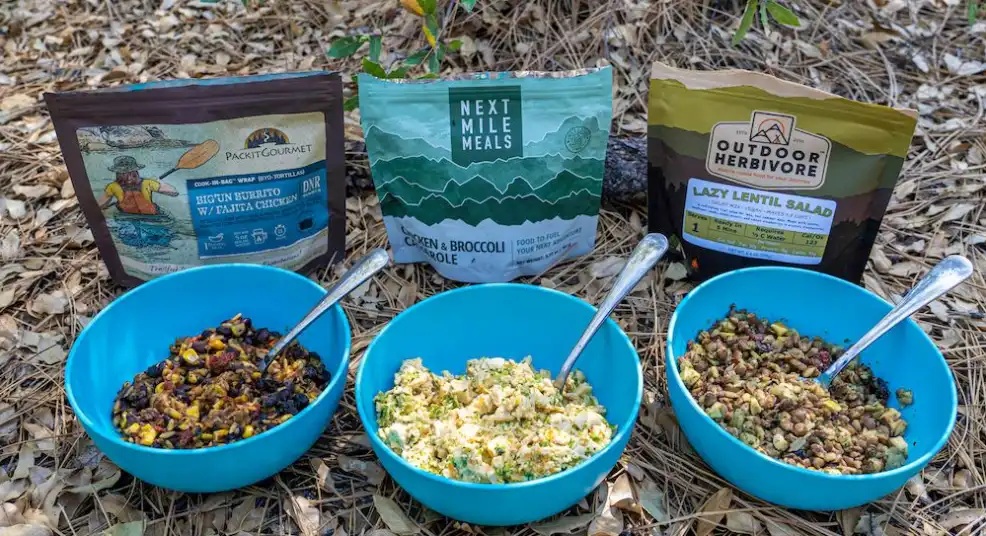
Vegan backpacking food is absolutely doable with a little planning. The key is to pack lightweight, calorie-dense, nutrient-rich foods like dehydrated meals, beans, nut butters, dried fruit, nuts, seeds, whole-grain wraps, and instant hummus, then round them out with a few sturdy fresh vegetables for the first days. Aim for calorie-dense choices (ideally around 100 to 125 calories per ounce), enough plant protein, plenty of healthy fats, and a vitamin B12 source, and you’ll stay well fueled on any trip.
Eating vegan in the city is easy, with a fridge, a full kitchen, and a store down the road. On the trail it takes more forethought, because you can’t carry fresh produce for a week or spend hours cooking, but with the right approach you can eat genuinely well in the backcountry. The trick is planning meals in advance so everything you carry is light, compact, and packed with nutrition.
Whether you’re heading out for a weekend hike or a long-distance trek, this guide walks through exactly what vegan backpacking food to pack, the staple ingredients to build meals around, and six ready-to-go meal ideas that mix fresh and dehydrated foods.
Note: We get commissions for purchases made through links in this article, at no extra cost to you.
What to Consider Before Your Trip
A few things are worth thinking through before you pack, so you fuel your body properly without hauling a grocery store on your back.
Plan Your Meals in Advance
This is the single most important step. Count how many breakfasts, lunches, dinners, and snacks you’ll need for the whole trip, then plan each one so your nutrients, protein, and calories are covered. This keeps your body properly fueled for full days of walking and stops you from over- or under-packing. On longer trips, pack a couple of extra meals and snacks as a buffer, since you never know when you or a hiking partner will need them.
Count Your Calories and Macros
Nobody loves calorie counting, but it’s the best way to be sure your body gets enough energy, especially on a first trip when you have no past experience to compare to. Backpacking burns a lot of energy, often 3,000 to 5,000 calories a day, so you need far more than you’d eat at home. Prioritize complex carbohydrates for sustained energy, enough plant protein to support your muscles, and healthy fats, which pack the most calories per ounce and are a backpacker’s best friend for keeping pack weight down. A good target is calorie-dense food of roughly 100 to 125 calories per ounce.
Don’t Forget Vitamin B12 (and Key Nutrients)
This is the one thing most vegan trail guides skip, and it matters. Vitamin B12 isn’t reliably found in plant foods, so vegans need a supplement or reliably fortified foods, and a trip is no time to fall short. Pack your usual B12 supplement, and lean on fortified foods like nutritional yeast, fortified plant milks, and some energy bars. It’s also worth being mindful of iron, protein, and omega-3s, which you can cover with beans, lentils, nuts, seeds (chia, hemp, flax), and whole grains.
Use Some Fresh Food
You’ll rely on dehydrated food, but mixing in fresh vegetables keeps meals from getting dull day after day and adds a refreshing boost. How much fresh food you bring depends on trip length. Sturdy produce like carrots, celery, peppers, and apples travels well and typically lasts three to four days through varying temperatures, so it’s perfect for the start of a trip.
Choose Dehydrated Food Carefully
Countless companies make dehydrated meals, many designed specifically for backpacking, and they vary widely in price, taste, and quality. Where you can, plan to brighten dehydrated meals with fresh vegetables for flavor and texture. We share some of our favorite ready-made vegan options below.
Keep an Eye on Snacks
You’ll want to snack through the day to keep energy up. You can buy energy bars or make your own mix from dried fruit, nuts, and oats. Either way, aim for snacks with a solid balance of fats, fiber, and protein, since these are what keep you going between meals.

The Essential Vegan Backpacking Ingredients
Whether you prepare meals yourself or buy premade, build them around these staples.
Dehydrated soups and beans. A warm soup or chili is a real morale boost on a chilly day. Corn chowder or black bean chili adds protein and comfort out in the wild.
Sturdy fresh fruits and vegetables. For taste and freshness in the first days, pack hardy produce like apples, celery, peppers, and pears that hold up to trail conditions.
Dehydrated hummus. One of the easiest trail foods going. Just add water and it’s ready as a veggie dip or a wrap spread, delivering plenty of protein and energy in a light package.
Dried fruits and vegetables. A backbone of both meals and snacks. Eat dried fruit with nuts, snack on kale chips, or add dried veggies to noodles and soups. Store-bought can be pricey, so make your own if you’re on a budget.
Noodles. A welcome change from wraps and bread, with options like spelt, oat, or corn noodles.
Seeds and nuts. The best way to add calories and protein for their weight. Eat them straight, or bring nut and seed butters to use as a veggie dip or sandwich spread.
Wraps or bread. Carbohydrate energy for sandwiches and hummus-veggie wraps. Choose whole wheat over white for more nutrients and lasting energy.
Energy bars. For quick snacks, pick bars high in fiber, minerals, and carbohydrates. Clif Bars, LARABAR, and KIND bars all have great vegan options, and many are B12-fortified, so check the label.
Coffee and tea. A warm drink is a perfect morning boost. Instant coffee and tea just need hot water, so as long as you have a stove or another way to heat water, they’re quick and easy.
6 DIY Vegan Backpacking Meals
These mix fresh and dehydrated foods, so you can mix and match to taste.
Casbah Hummus Mix
Hummus is a superb vegan trail food, and while you can make your own ahead of time, Casbah Hummus Mix keeps it simple. Just add water, stir, and it’s ready in minutes. It’s flavorful, comes in varieties like natural and roasted garlic, and pairs perfectly with fresh vegetables for dipping.
Instant Refried Beans
Refried beans are an excellent protein source for vegans and vegetarians, and instant vegan refried beans are ready in about five minutes. They’re typically low in fat, high in fiber, and filling, needing only a little water stirred in. Eat them with a wrap or bread, or top with fresh vegetables. Check the label to confirm there’s no lard, since some traditional refried beans are not vegan.
Koyo Ramen
If you want a change from wraps and bread, try ramen. Koyo Ramen comes in flavors like mushroom, seaweed, and garlic pepper, and it’s a vegan-community favorite for being both plant-based and tasty. Made with organic noodles and no additives or fillers, it’s ready in about four minutes. Add fresh vegetables or eat it as is for a quick hit of carbohydrates and protein.
Harmony House Foods Backpacking Kit
If you’d rather not plan and prep every meal, a backpacking kit does the work for you. The Harmony House Foods backpacking kit has earned recognition from Backpacker Magazine for overall excellence. It’s lightweight and just needs water added, with everything non-GMO, gluten-free, high in protein, vegetarian, vegan, and kosher. The kit includes resealable zip pouches offering dozens of servings, making it a convenient base to build trail meals around.
Kale Chips
When trail mix gets old, organic kale chips are a tasty, light alternative to bars and mixes. They’re low in calories by volume but bring healthy fats and nutrients, and good ones are certified organic, vegan, gluten-free, and non-GMO. They’re very light, so they won’t weigh down your pack, though they can be bulky, so pack them where they won’t get crushed.
Good To-Go Herbed Mushroom Risotto
For a meal that feels a cut above basic trail fare, try Good To-Go Herbed Mushroom Risotto. Add boiling water and it’s ready in minutes, and it’s vegan, gluten-free, low in sodium, and preservative-free. Good To-Go built its reputation on meals that taste homemade rather than basic, and this risotto is genuinely creamy and satisfying, with a colorful, multicultural range of other options to explore.
A Simple One-Day Vegan Backpacking Menu
To show how it comes together, here’s a sample day that balances calories, protein, and fats.
- Breakfast: instant oats with dried fruit, chia seeds, and a nut butter packet, plus instant coffee.
- Morning snack: a handful of trail mix (nuts, seeds, dried fruit) or a vegan energy bar.
- Lunch: whole-wheat wrap with dehydrated hummus and a fresh pepper or carrot.
- Afternoon snack: kale chips and a fortified energy bar for your B12.
- Dinner: Koyo ramen or a dehydrated risotto with added dried vegetables.
- Extras: an electrolyte drink and a square of dark chocolate for morale.
Scale the portions to your calorie needs, and add a nut butter packet or extra olive-oil drizzle to any meal when you need more calories without more bulk.
Frequently Asked Questions
What do vegan backpackers eat?
Vegans backpack on lightweight, calorie-dense foods like dehydrated meals, instant beans and hummus, ramen, nut butters, dried fruit, nuts and seeds, whole-grain wraps, and energy bars, rounded out with sturdy fresh vegetables early in the trip. The goal is enough calories, protein, healthy fats, and a B12 source.
How many calories do you need backpacking as a vegan?
Backpacking commonly burns 3,000 to 5,000 calories a day depending on terrain, pace, and pack weight. Because plant foods can be bulkier, prioritize calorie-dense options around 100 to 125 calories per ounce, leaning on fats like nuts, seeds, and nut butters to hit your targets without excess weight.
How do vegans get enough protein backpacking?
Build meals around beans, lentils, dehydrated hummus, nuts, seeds, nut butters, whole grains, and ramen, and add protein-rich energy bars. Combining legumes with grains across the day gives you a full range of amino acids, so a little variety covers your protein needs.
Do I need a B12 supplement for a vegan backpacking trip?
Yes. Vitamin B12 isn’t reliably available from plant foods, so bring your usual supplement and lean on fortified foods like nutritional yeast and fortified energy bars. Don’t skip it just because it’s a short trip.
Can fresh produce survive a backpacking trip?
Sturdy produce like carrots, celery, peppers, and apples typically lasts three to four days and travels well, so it’s ideal for the first part of a trip. For longer treks, switch to dried and dehydrated fruits and vegetables after the first few days.
Are dehydrated backpacking meals actually vegan?
Many are, but always read the label, since some contain hidden dairy, honey, or animal-derived flavorings. Brands like Harmony House and Good To-Go offer clearly labeled vegan options, and checking the ingredients avoids surprises on the trail.
Final Thoughts
Backpacking as a vegan doesn’t have to be a challenge. As you can see, there’s a wide range of lightweight, nutritious options to build your meals from, and the key is simply planning ahead so you cover your protein, carbohydrates, fats, and B12. Mix dehydrated staples with a few fresh vegetables, pack calorie-dense snacks, and you’ll eat well from the trailhead to the summit.
Have you tried any of these vegan backpacking meals, or do you have a go-to trail recipe of your own? Let us know in the comments below.

Daniel is a gear freak when it comes to hiking, climbing and camping. He went to REI Outdoor School to meet new people and learn best practices. Don’t even try to argue with him about the latest backpack or ice axe, he tried most of them. Daniel’s dream is to climb Mount Everest.