
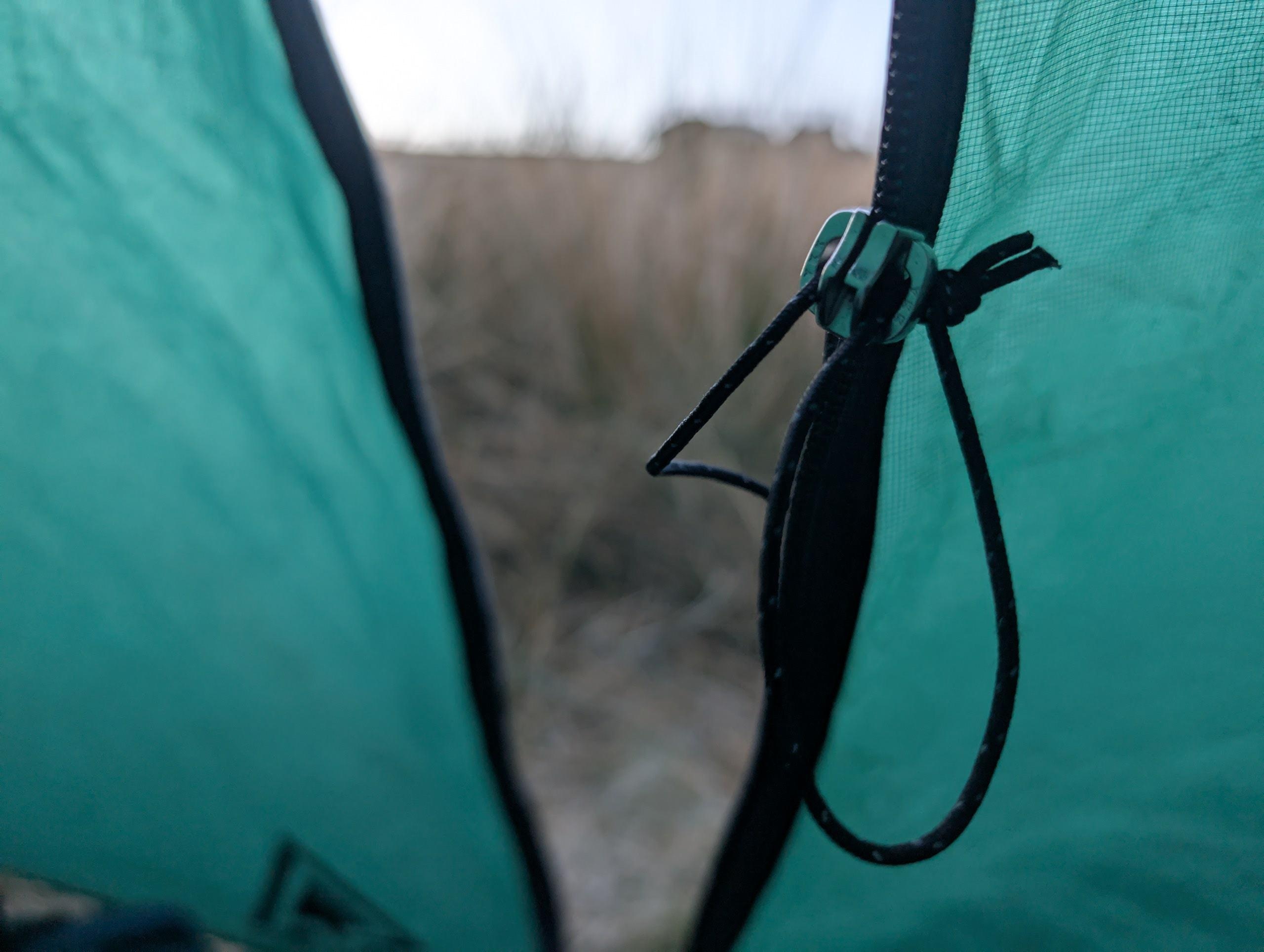
To fix a tent zipper, first identify the problem. If the zipper separates or won’t stay closed behind the slider, the slider is worn out and needs replacing, which fixes the large majority of tent-zipper failures. If the teeth are jammed, clean and lubricate them, and if the teeth or fabric are torn, you’ll need to replace the zipper itself. A simple zipper repair kit with replacement sliders, stops, and pliers handles almost every fix in the field.
Whenever you go camping, a tent is essential gear, and whether yours is brand new or a trusted old favorite, zippers break. The zipper is one of the most important parts of a tent and also one of the first things to fail, which can be frustrating if you don’t know what to do. The good news is that most zipper problems are fixable, often faster than you’d expect, so you rarely need to buy a new tent. If you work with zippers often, it’s also worth reading our guide on how to fix other zippers.
Why Tent Zippers Fail
Zippers are more fragile than they look. Grit, sand, and dust work into the teeth and jam them, moisture and salt air corrode the metal, and a hard or hurried tug can bend teeth or wear out the slider. Camping life is often humid and dirty, which is exactly the environment zippers hate. Understanding the cause points you to the right fix, so before you start, diagnose the problem using the quick guide below.
Quick Diagnosis: What’s Wrong and How to Fix It
| Symptom | Likely cause | Fix |
|---|---|---|
| Zipper closes but teeth split open behind the slider | Worn-out slider | Replace the slider |
| Zipper is stuck or hard to pull | Grit or fabric caught in teeth | Clean and lubricate |
| A tooth is bent or sticking out | Damaged tooth | Realign with pliers |
| Slider has come off the track | Missing or broken stop | Re-thread slider, add new stop |
| Teeth are torn out or fabric is ripped | Damaged zipper tape | Replace the whole zipper |
A zipper repair kit is a camping lifesaver, and not just against mosquitoes sneaking into your tent. Kits include the zipper tools, spare sliders, stops, and instructions you need for most roadside fixes. Here are the common problems and how to solve each one.
Fix 1: Teeth Are Popping Open
This is when the zipper looks closed but splits apart behind the slider. Often this is a jammed-tooth issue, though if it keeps happening the slider is the real culprit (see Fix 3).
Tools: a pair of pliers, a replacement bottom stop.
- Locate the bottom end of the zipper.
- Apply a little mild soap to lubricate it. Mix a small amount of soap and water on a plate, dip a cloth, and wipe it along the zipper.
- If that doesn’t free it, check the teeth one by one.
- Make sure no fabric, thread, or grit is stuck in the teeth.
- If any tooth sticks out, gently press it back into place with the pliers.
- If the zipper still won’t align, move the slider all the way to the bottom.
- Re-insert the opposite side of the chain fully into the slider.
- Pull the tab all the way up to re-engage the teeth.
- Secure the bottom by placing the prongs of a new stop between the teeth.
- Crimp the stop firmly with the pliers.
If the teeth keep separating even after this, the slider has worn out and needs replacing, which brings us to the most common fix of all.
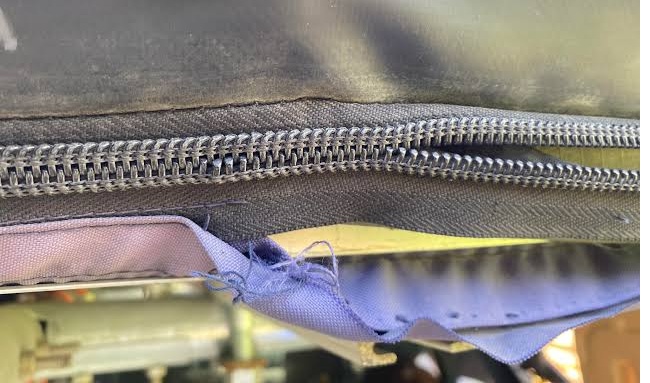
Fix 2: Jammed or Stuck Zipper
When a zipper won’t move, resist the urge to yank it, since forcing it bends teeth and makes things worse. Instead, work the slider gently back and forth a little at a time. Clean grit out of the teeth with an old toothbrush, then lubricate the track with mild soap, a dedicated zipper lubricant, or even a graphite pencil rubbed along the teeth. If fabric is caught, hold the material taut and ease the slider back off it slowly. Patience here saves you a bigger repair.
Fix 3: Replacing a Worn Slider (the Most Common Fix)
Here’s the key thing most guides bury: when a zipper separates behind the slider but the teeth themselves are fine, the slider has simply worn out, and replacing it solves the problem. This is the single most common tent-zipper failure, so try this before assuming the whole zipper is dead.
Tools: a pair of pliers, a new slider, top and bottom stops, a tube of glue.
- Locate the broken zipper on the tent.
- Remove the zipper stops with your pliers.
- Pull the slider down and off the track.
- Feed one side of the teeth into the new slider, then carefully feed in the opposite side.
- Pull the slider back to the start, making sure both sides engage evenly.
- Add a new stop at the bottom and the top.
- Crimp the top and bottom stops with your pliers.
- Slide the zipper up and down to confirm it works smoothly.
- Apply a small dab of glue at the bottom stop for extra security.
The No-Tools Option: A FixnZip-Style Slider
If you’d rather skip the pliers and stops, a reusable replacement slider like a FixnZip tool is a brilliant field fix. Made of zinc and nickel, it clamps onto the existing zipper track with a thumbscrew, no sewing or crimping required.
Tools: a small screwdriver (or just your fingers), the replacement slider.
- Loosen the thumbscrew on the slider.
- Slip the slider over one side of the exposed teeth.
- Tighten the thumbscrew.
- You’re ready to zip.
These come in several sizes, so match the size to your zipper, and they’re small enough to live permanently in your repair kit.
Fix 4: Replacing the Entire Zipper
Sometimes the teeth are torn out or the zipper tape is ripped, and no slider swap will help. In that case you have to replace the zipper, which is trickier because a tent is bulky to feed through a sewing machine, but it’s doable at home.
Tools: a sewing machine, a new zipper, a seam ripper.
- Locate the zipper on the tent and measure it.
- Buy a replacement zipper the same length and type as the broken one.
- If the new zipper is creased, iron it flat on a low setting.
- Set up good lighting before you start.
- Use the seam ripper to remove all the old stitching, on both sides of the zipper.
- Position the new zipper in place.
- Pin it securely so it won’t shift while you sew.
- Sew along the original stitching line.
- Repeat on the other side.
- Your zipper is as good as new.
If you’re not confident with a sewing machine, a gear-repair shop or a local tailor can do this affordably, which is still far cheaper than a new tent.
How to Protect and Maintain Your Tent Zippers
Zippers are far easier to protect than to fix, so a little care after each trip keeps them running for years. Grit and corrosion are the main enemies, and a careful cleaning routine removes both.
- First, lubricate the zippers with a zipper-specific wax or a little mild soap.
- Fill a bathtub with water (use cool water and a gentle, technical cleaner, never harsh detergent, bleach, or fabric softener, which can damage the tent’s coatings).
- Put the tent in the water.
- Use your hands to create a gentle washing action and rub along the zippers.
- Drain the tub.
- Refill with fresh water to rinse.
- Repeat the rinse at least three times to remove all soap, since leftover residue attracts dirt.
- Hang the tent to dry, unzipped, on a line.
- Choose a shaded or overcast spot, since prolonged direct sun fades and weakens tent fabric. Always store the tent fully dry to prevent mildew.
Zipper Lubricants for Corrosion Protection
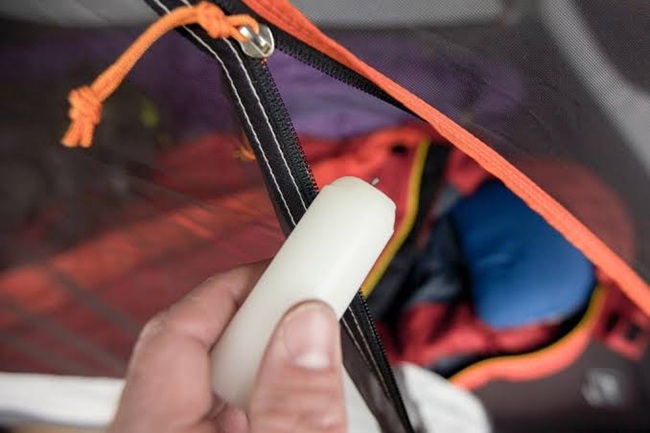
Several lubricants come in liquid or stick form to protect zippers from corrosion, which matters most if you camp near salt water. Many have a built-in brush applicator, or you can use an old toothbrush.
- Open the tube or bottle and apply a little to the brush.
- Coat the whole zipper on both sides.
- Run the slider up and down to work it in.
- Let it dry, and it’s ready to go.
More Tips to Protect Your Zippers
A few habits go a long way, whatever type of zipper your tent has.
Pack a repair kit every trip. A compact zipper repair kit with spare sliders, stops, and pliers means a broken zipper never ends your trip.
Never force a zipper. Pull the two sides of the fabric together first, then zip gently. The moment it catches on something, stop and clear it rather than forcing it, since forcing is what bends teeth and wrecks sliders.
Keep zippers clean. Brush off sand and dirt before packing up, since grit is the number one cause of jams and premature wear.
Have an emergency backup. If a zipper breaks in the backcountry with no tools, secure the door with safety pins or clothespins, or drape a blanket or tarp over the opening from outside. Keep your lights off at night so you don’t attract insects through the gap.
Frequently Asked Questions
Why does my tent zipper keep splitting open?
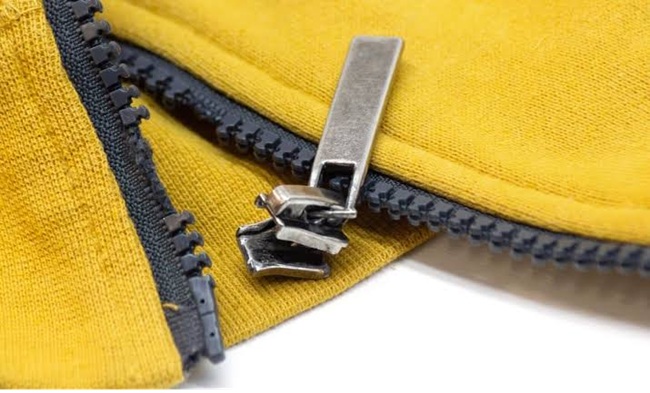
Almost always because the slider is worn out. As a slider ages, its internal channel widens and stops pressing the teeth together, so the zipper opens behind it. Replacing the slider, rather than the whole zipper, usually fixes the problem.
Can you fix a tent zipper without sewing?
Yes. Most tent-zipper problems are slider or grit issues, not torn fabric. Cleaning and lubricating, realigning teeth with pliers, or clamping on a no-sew replacement slider like a FixnZip all fix zippers without any sewing. You only need to sew when the zipper tape or teeth are torn.
How do you lubricate a tent zipper?
Use a zipper-specific lubricant stick or liquid, applied to both sides of the teeth with a brush, then run the slider up and down to work it in. In a pinch, mild soap, beeswax, or a graphite pencil also work. Avoid oily products that attract dirt.
What is the most common tent zipper problem?
A worn slider is the most common issue, showing up as a zipper that closes but then splits apart behind the slider. Jamming from trapped grit is the second most common, and both are easy roadside fixes.
How do I stop my tent zipper from breaking?
Keep it clean and free of grit, never force it, lubricate it periodically, and store the tent clean and fully dry. Brushing sand off before packing and using two hands to align the fabric before zipping prevent most failures.
Is it worth repairing a tent zipper or should I replace the tent?
Repairing is almost always worth it. A new slider or even a full zipper replacement costs a fraction of a new tent, and the rest of a good tent usually has plenty of life left. Replace the tent only if the fabric and poles are also failing.
Conclusion
There are many ways to keep your tent zippers working, and a little care goes a long way toward avoiding the cost of a new tent. The zipper is the most common tent failure point, but most problems come down to a worn slider or trapped grit, both of which you can fix quickly with a basic repair kit. Clean and lubricate your zippers after each trip, never force them, and carry spare sliders, and your tent will keep sealing out the weather and the bugs for many seasons.
Have a tent-zipper fix or a maintenance tip of your own? Share it in the comments below.


Your article is very informative Daniel. I am so glad that you included videos too. I am so guilty when it comes to not really looking after my tent zippers, which, of course, is not ideal. I will surely take note of all the tips you have shared to your readers.
What I am really concerned about are the snakes. I have a phobia that’s why I really make sure that whenever I go camping, the tent is in good condition. This, of course, includes the zipper which is super important. I can still remember a story of a friend of mine. His tent had a zipper problem and he woke up with a small non-venomous snake beside him.
Thank you!
That’s scary!