
Note: We get commissions for purchases made through links in this article. This article is for general information only and isn’t a substitute for medical advice. If you’re worried about a rash, talk to a doctor or pharmacist.
If you’ve just brushed against poison ivy, you’re probably wondering how long until a poison ivy rash appears. The short answer: a rash usually shows up 12 to 72 hours after contact. It can take longer, sometimes a week or more, especially if it’s your first reaction.
Poison ivy grows across most of the United States, so most hikers and campers will meet it eventually. The good news is that you have a short window to stop the rash before it starts, and most rashes clear up on their own in one to three weeks. This guide covers the full timeline, what to do right away, how to ease the itch, and when you need a doctor.
Poison Ivy Rash Timeline at a Glance
|
Time After Contact |
What Happens |
|---|---|
|
0 to 30 minutes |
Urushiol oil starts binding to your skin. Washing now can prevent a rash or make it much milder. |
|
A few hours |
Oil left on hands, clothing, gear or pet fur can still spread to other skin. |
|
12 to 72 hours |
Itching and redness usually begin where the oil touched your skin. |
|
1 to 3 days |
Red streaks or patches, bumps and swelling develop. Blisters often form. |
|
Up to a week or more |
New patches can appear where skin was thicker or got less oil. This is not the rash spreading. |
|
About 1 week |
Blisters may weep, then start to crust over. |
|
1 to 3 weeks |
The rash fades and heals in most people. |
Why the Rash Takes Time to Appear
A poison ivy rash is an allergic reaction, not an infection. The plant contains an oily resin called urushiol. When it touches your skin, your immune system identifies it as a threat and mounts a response. That process takes time, which is why the rash doesn’t appear the moment you touch the plant.
Several things affect how quickly the rash shows up and how bad it gets:
- How much oil you touched: more urushiol usually means a faster, stronger reaction. According to the CDC, an amount smaller than a grain of salt causes a rash in 80 to 90% of adults.
- Skin thickness: thin skin on your face, wrists and inner arms reacts sooner than thick skin on your palms or soles.
- How long the oil stayed on: the longer urushiol sits on your skin, the more of it binds.
- Your sensitivity: most people react, but sensitivity varies. Some people get mild rashes while others get severe ones.
- Previous exposures: your immune system has to learn to react to urushiol. A first-ever exposure may cause no rash at all, or a rash that takes a week or more to appear. Later exposures usually react faster.
What Is Poison Ivy?
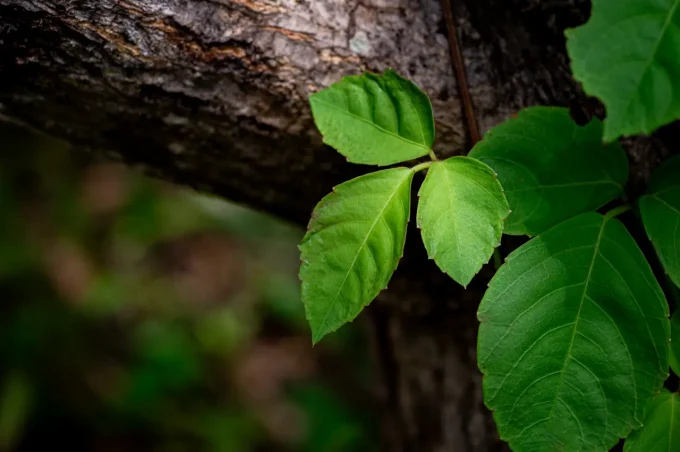
Poison ivy isn’t a true ivy. It belongs to the cashew family, alongside poison oak and poison sumac, which all contain the same urushiol oil. Poison ivy grows throughout the United States except Alaska and Hawaii, and related species also grow in parts of Canada and eastern Asia.
How to identify poison ivy
The classic rule is “leaves of three, let it be.” Poison ivy has three leaflets per stem, with the middle leaflet on a longer stalk than the two side leaflets. The edges can be smooth or toothed, and the leaves can be glossy or dull.
Its appearance changes a lot by region and season:
- Eastern poison ivy often grows as a hairy, rope-like climbing vine, but it can also be a ground cover or shrub.
- Western poison ivy usually grows as a low shrub and doesn’t climb.
- Spring: new leaves are often reddish.
- Summer: leaves turn green.
- Fall: leaves turn red, orange or yellow.
- Berries: clusters of white, greenish-yellow or amber berries may appear.
The CDC notes that poison ivy can occasionally have more than three leaflets, and several harmless plants look similar. Poison sumac is different again, with 7 to 13 leaflets per stem. When in doubt, don’t touch it.
Which part of poison ivy causes the rash?
Every part of the plant contains urushiol, including the leaves, stems, roots and berries. The oil is released when the plant is damaged, which happens easily because the leaves are fragile. Even dead plants and bare winter vines can still cause a rash. Never eat any part of poison ivy, as it can cause severe reactions in your mouth and digestive tract.
What to Do Right After Touching Poison Ivy
The first 30 minutes matter most. Urushiol binds to skin quickly, but washing it off promptly can prevent a rash or make it much milder. Even if more time has passed, washing still removes oil that could spread to other parts of your body or to other people.
- Avoid touching your face, eyes or other skin until you’ve washed your hands.
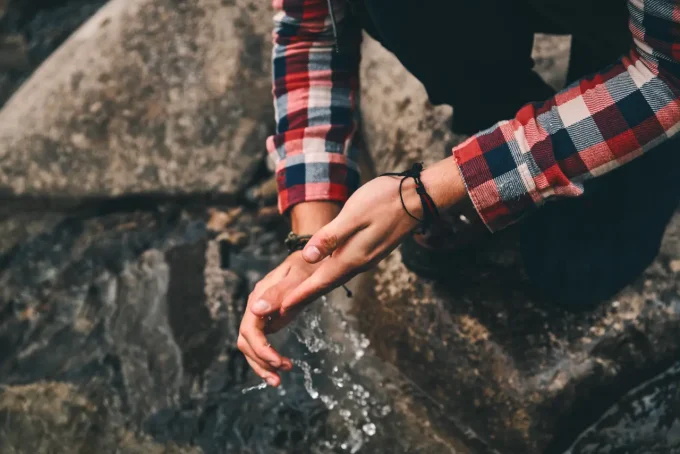
- Wash the area right away with plenty of cool or lukewarm water and soap. Dish soap works well because it cuts through oil. A dedicated poison ivy cleanser such as Tecnu Original is designed to remove urushiol and is worth keeping in your first aid kit. Avoid hot water.
- Rinse thoroughly and often so soap or cleanser doesn’t dry on your skin and spread the oil.
- Scrub under your fingernails with a brush, since oil trapped there is easy to spread.
- On the trail with no water? Rubbing alcohol or alcohol wipes can help remove the oil until you can wash properly.
- Remove and wash your clothing separately in hot water with detergent.
- Clean your gear, including boots, tools, trekking poles and backpack straps, with rubbing alcohol or soap and water. Wear disposable gloves while you clean.
This step is more important than most people realize. The CDC warns that urushiol can stay active on objects for up to five years. A pair of boots you wore through a patch last season can still give you a rash today.
Poison Ivy Rash Symptoms
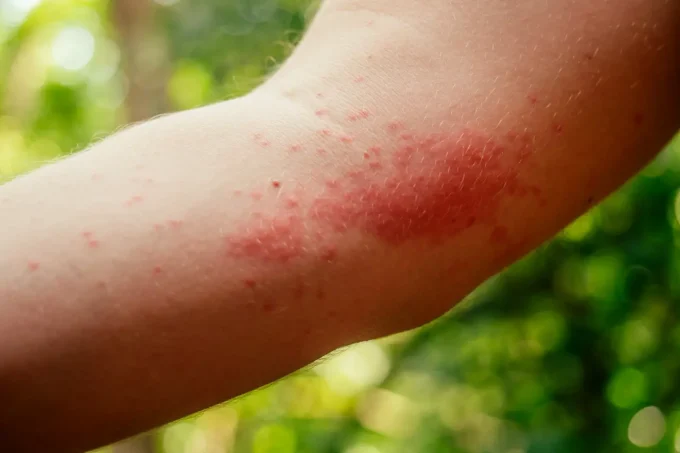
Symptoms appear where the oil touched your skin and usually include:
- Intense itching, often the first sign
- Redness, frequently in streaks or lines where the plant brushed against you
- Bumps and swelling
- Blisters, which may ooze clear fluid
- Crusting as the blisters dry and heal
Itching is the main symptom, but the rash can also sting or burn, especially when it’s widespread or swollen.
Does a poison ivy rash spread?
This is one of the biggest myths about poison ivy. The fluid in blisters does not contain urushiol, and it can’t spread the rash to other parts of your body or to other people.
So why does it look like it’s spreading? Areas that got more oil, or that have thinner skin, react first. Areas with thicker skin or less oil can break out days later, which makes the rash appear to move. The only way to truly spread it is with urushiol that’s still on your hands, under your nails, or on clothing, gear or pets.
That also means a poison ivy rash isn’t contagious. You can’t catch it by touching someone’s rash, only by touching oil that’s still on their skin or belongings.
How Long Does a Poison Ivy Rash Last?
Most poison ivy rashes clear up on their own within one to three weeks. Mild rashes may fade in under a week, while severe rashes can take longer. If you’re still dealing with it after a few weeks, or it seems to be getting worse, see a doctor.
How to Treat a Poison Ivy Rash at Home
There’s no instant cure, but you can ease the itch and help your skin heal. These steps follow CDC first aid guidance:
- Cool compresses: a cool, wet cloth on the rash for 15 to 30 minutes several times a day can calm itching and blistering.
- Calamine lotion: calamine lotion helps dry oozing blisters and soothe itching.
- Hydrocortisone cream: an over-the-counter 1% hydrocortisone cream can reduce itching on mild rashes.
- Oatmeal baths: a lukewarm colloidal oatmeal bath can relieve widespread itching.
- Oral antihistamines: tablets such as diphenhydramine can help you sleep through the itch. They can cause drowsiness, so follow the label. Avoid antihistamine creams, which can irritate the skin further.
A few important rules:
- Don’t scratch. Scratching won’t spread the rash, but it can break the skin and cause a bacterial infection. Keep nails short.
- Don’t pop blisters. Leave them intact to protect the skin underneath. If they break on their own, leave the skin flap in place and keep the area clean.
- Don’t apply creams or lotions to broken or oozing skin unless a doctor advises it.
When to See a Doctor for Poison Ivy
Most rashes heal at home, but see a doctor if:
- The rash is widespread or covers a large part of your body
- The rash is on your face, eyes, lips, mouth or genitals
- Swelling is significant, for example your eyes are swelling shut
- You see signs of infection, such as pus, yellow crusts, increasing pain or warmth
- You have a fever over 100°F (38°C)
- The itch is so bad you can’t sleep or function
- The rash isn’t improving after a few weeks
For severe rashes, a doctor may prescribe a stronger steroid cream or a course of oral steroids to calm the immune reaction. Antibiotics are only needed if the skin becomes infected, since the rash itself isn’t an infection.
When to go to the emergency room
Call 911 or go to the nearest emergency room if you have:
- Trouble breathing or swallowing
- Swelling of the face, lips, tongue or throat
- A history of severe reactions to poison ivy and a new exposure
- Possible inhalation of smoke from burning poison ivy
Never burn poison ivy
Burning poison ivy releases urushiol into the smoke. Breathing it in can cause severe lung irritation and breathing problems, and the smoke can also cause rashes on exposed skin. Never burn brush that may contain poison ivy, and stay upwind of any fire where it might be burning. If you think you’ve inhaled the smoke and have any trouble breathing, get emergency help immediately.
Poison Ivy and Pets
Dogs and cats rarely react to poison ivy because their fur protects their skin. The problem is that urushiol sticks to fur. If your dog runs through a patch and you pet it later, the oil can transfer to you.
If you think your pet has been in poison ivy, bathe it with pet shampoo while wearing disposable gloves, then wash your hands and any towels or leashes. Ask your vet if your pet shows any signs of skin irritation.
How to Prevent Poison Ivy on the Trail
- Learn to identify it in every season, including bare winter vines.
- Stay on the trail and avoid brushing through undergrowth.
- Cover up with long sleeves, long pants, socks and boots in areas where poison ivy grows.
- Wear gloves for trail work, gardening or clearing campsites. Heavy-duty nitrile gloves are a good choice.
- Pack a cleanser like Tecnu or alcohol wipes so you can wash quickly if you’re exposed.
- Handle gear carefully after a hike, and remove boots and clothing without touching the outside surfaces.
- Keep pets on the trail in poison ivy country.
Adding a poison ivy cleanser and anti-itch cream to your kit is an easy win. Our camping gear checklist covers what else belongs in your first aid kit, and you’ll find more safety guides in our Outdoor Basics section.
Frequently Asked Questions
How long until a poison ivy rash appears?
Usually 12 to 72 hours after contact. It can take a week or more, especially after a first exposure, and new patches can keep appearing for several days.
How long after touching poison ivy should I wash?
As soon as possible, ideally within 30 minutes. Washing later still helps by removing oil that could spread to other skin, clothing or people.
Can you get poison ivy without touching the plant?
Yes. You can get it from urushiol on clothing, tools, gear or pet fur, or from smoke when the plant is burned. You can’t get it just from standing near the plant.
Is a poison ivy rash contagious?
No. The rash and the blister fluid can’t spread to other people. Only urushiol oil that’s still on someone’s skin or belongings can cause a rash in someone else.
How long does a poison ivy rash last?
Most rashes heal in one to three weeks. See a doctor if it’s severe, on your face or genitals, shows signs of infection, or isn’t improving after a few weeks.
Should I pop poison ivy blisters?
No. Popping blisters raises the risk of infection. Leave them alone, keep the area clean, and let them dry out naturally.
Can you build up immunity to poison ivy?
No reliable method exists, and eating or deliberately touching the plant is dangerous. Sensitivity can change over time, but most people stay allergic.
Enjoy the Outdoors and Watch for Poison Ivy
Poison ivy is no reason to stay indoors. Learn to spot it, cover up in areas where it grows, and wash quickly if you touch it. If a rash does appear, it usually shows up within 12 to 72 hours and clears in one to three weeks with simple home care. Know the warning signs that mean it’s time to see a doctor, and you’ll be ready for whatever the trail throws at you.
For more detail, see the CDC’s guide to poisonous plants and MedlinePlus on poison ivy, oak and sumac rashes.
This article is for general information only and isn’t medical advice. Always follow product labels, and contact a doctor or pharmacist if you have questions about a rash, especially for children, pregnant people or anyone with a history of severe reactions.

Daniel is a gear freak when it comes to hiking, climbing and camping. He went to REI Outdoor School to meet new people and learn best practices. Don’t even try to argue with him about the latest backpack or ice axe, he tried most of them. Daniel’s dream is to climb Mount Everest.
Thank you for this Jessica! I have always loved the outdoors and to be honest I really do not have enough knowledge about poison ivy so this is really helpful. Just like what you have mentioned, it should never be the reason for a camping or hiking trip to not be enjoyable especially if you know what to avoid.
Being informed is the best way to go!
It is all about knowing your surroundings, and knowing how to identify poison ivy is important when going outdoors in Asia and North America. The rash is definitely irritating; so, it helps to know what you can about the plant.
The most ideal thing to do when you get a rash is to get medical help. But, it is wise to know what to do when you get poison ivy rash while you’re deep in the woods.