
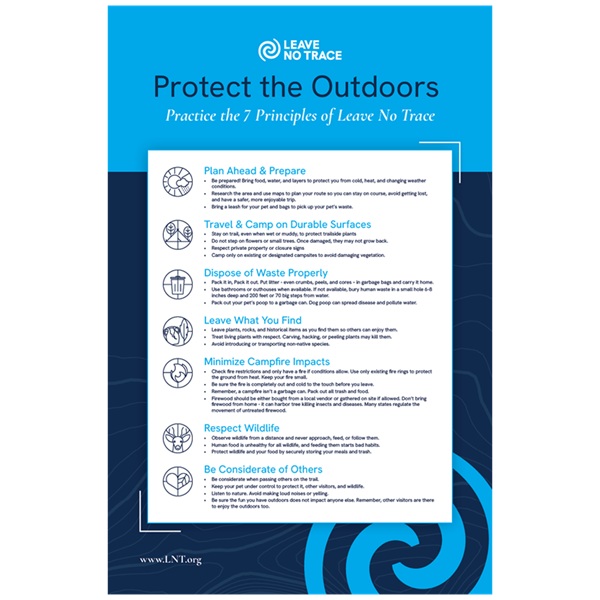
We all want to leave our mark on the world by achieving great things, but when it comes to outdoor activities, the opposite is actually the goal. The wilderness is already under real strain from human activity. Habitat loss, illegal logging, and species decline are ongoing problems most of us can’t solve individually. What we can do is make a genuine difference through the LNT principles every time we head outdoors.
LNT stands for Leave No Trace. It’s a set of seven principles meant to guide how we behave in nature, so we don’t leave something behind, intentionally or not, that harms the environment we came to enjoy. Land management agencies and outdoor education organizations across the country have worked together for decades to spread awareness of these principles among hikers, campers, and outdoor enthusiasts.
The goal is simple: educate people one at a time so future generations can still experience the wilderness in something close to its natural state.
This guide introduces the seven LNT principles and explains how to actually put each one into practice. Even if you’re already familiar with Leave No Trace, the practical details here should still be useful.
Editors note: This article was updated September 2026
The History Behind Leave No Trace
Even actions that feel insignificant in the moment can leave a lasting mark on nature. The Leave No Trace principles exist specifically to prevent that kind of quiet, cumulative damage.
The concept traces back to the 1960s, when the U.S. Forest Service began developing an early “No-Trace” program in response to growing recreational pressure on wilderness areas. By the late 1980s, the Forest Service partnered with the National Outdoor Leadership School (NOLS) to build a proper curriculum around these ideas, and the guidelines gradually expanded and refined into the seven principles used today.
In 1994, Leave No Trace became an independent nonprofit, now known as the Leave No Trace Center for Outdoor Ethics, headquartered in Boulder, Colorado. The organization has since partnered with major federal land agencies, including the Forest Service, National Park Service, Bureau of Land Management, and Fish and Wildlife Service, to bring this education to millions of outdoor visitors every year. You can find the current official guidance directly at lnt.org.
Today, wherever you go camping or hiking, you’ll likely come across a brochure or trailhead sign encouraging you to follow these seven principles while you’re out in the field.
Principle 1: Plan Ahead and Prepare
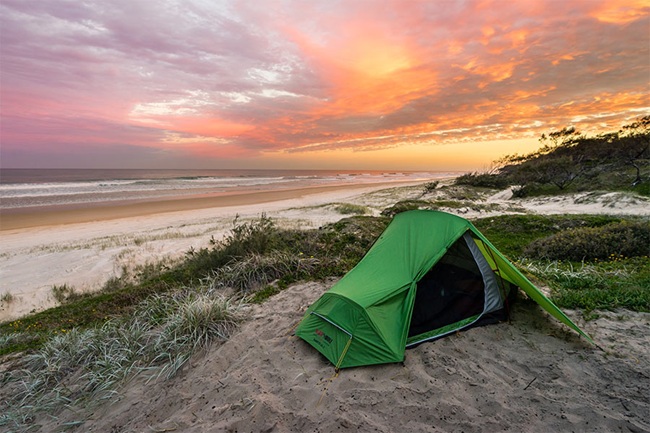
Sometimes damage to nature isn’t intentional. It’s the result of circumstances forcing a bad decision. Maybe you’re lost, cold, and the sun is going down fast. Suddenly you’re chopping tree branches for a fire or setting traps just to get through the night.
Nobody would blame you in a genuine survival situation, but proper preparation beforehand can prevent most emergencies from ever reaching that point.
Here’s what’s worth preparing before every trip.
Bring real navigation tools. A map and compass help you avoid getting lost in the first place. Familiarize yourself with the area beforehand if you can, and the moment you notice you’ve drifted off route, retrace your steps immediately rather than pushing forward. Our guide on how to use a compass covers the basics if you need a refresher.
Check the weather forecast carefully. Waiting until the sky visibly darkens before heading back to camp can already be too late. Many outdoor devices now include a barometer, which is worth checking regularly so you can get ahead of bad weather rather than react to it.
Pack real survival tools. If you do end up lost despite your best planning, preserving nature understandably takes a back seat to preserving yourself. But you often don’t have to choose between the two. Carry extra food so hunting isn’t your only option. Bring a flashlight and a thermal blanket instead of relying on building a fire. These modern essentials are both easier on the environment and considerably less stressful for you in the moment.
Planning ahead benefits you and the wilderness in equal measure. It keeps you out of the kind of dangerous, high-panic situations that lead people to make destructive choices, and it keeps the environment safe from the fallout of those choices.
Principle 2: Travel and Camp on Durable Surfaces
In cities, we’re used to seeing signs that say “keep off the grass,” and for good reason. Surfaces never meant to handle heavy foot traffic can become barren and unusable for years if people keep walking or camping on them anyway.
That lush, inviting patch of grass that looks perfect for a tent? It can turn brown and lifeless in no time without protection. Camping on fragile ground can also be genuinely dangerous for you. Mountainsides are often covered in loose earth that looks solid but can’t actually support real weight.
Even if the ground holds up under you in the moment, repeated foot traffic accelerates soil erosion, which can eventually contribute to landslides, especially in areas that see frequent heavy rain. That’s a real risk not just to the terrain itself, but to anyone camping nearby when it happens.
To avoid all of this, stick to genuinely durable surfaces. A few rules to follow when choosing where to travel and camp.
Don’t camp right next to rivers or streams. Most experienced outdoors people already know not to wash gear or food containers directly in a river, since it risks contaminating the water. What’s less obvious is that simply camping too close can disturb the wildlife that depends on that water source. Set up camp at least 200 feet away from any water source as a general rule.
Avoid camping or traveling through vegetation. As covered above, repeated traffic can turn a healthy grassland into a barren patch, and it rarely takes just one person doing it once. The real risk is being the one who creates the initial path that others then follow. Stick to areas already established for foot traffic: dead grass, gravel, rock, existing trails, or packed snow in winter.
Don’t build sprawling campsites. Traveling in groups is fine, but consider splitting a large group into smaller units, each pitching camp on solid, already-impacted ground. Large patches of land big enough to comfortably host several tents at once are rare outside of designated public campsites, and crowding tents together tends to spill damage into the surrounding vegetation.
Principle 3: Dispose of Waste Properly
Most of us are already familiar with responsible waste disposal in everyday life: sorting recyclables, taking out the trash, and simply not littering. The same logic applies outdoors, just with a few extra considerations.
Improper waste disposal in the wild might not get you fined the way it would in a city, since park rangers can’t monitor every visitor. But that’s exactly why it matters more, not less, that outdoor enthusiasts hold themselves to the standard voluntarily.
Some waste disposal genuinely benefits the ecosystem when done correctly, including certain organic waste. Here’s how to handle the main categories properly.
Human waste needs a proper cathole, dug roughly 6 to 8 inches deep and at least 200 feet from any water source, trail, or campsite to avoid contamination. Some areas, particularly popular river corridors, actually require visitors to pack out human waste entirely rather than bury it, using specially designed waste bags. Always check the specific rules for wherever you’re headed before you leave.
Hygiene products and toilet paper need to be packed out too, not buried. That includes things like tampons, which should go into a sealed waste bag rather than left in a cathole. The same distance rule applies to washing up: keep toothbrushing, washing, and any other hygiene routine at least 200 feet from water sources, using biodegradable soap, toothpaste, and shampoo. If hauling water that far feels like too much effort, using a small amount of bottled water for basics like brushing your teeth is a reasonable compromise.
Dishwashing also needs the same 200-foot buffer from water sources, along with biodegradable cleaning solution. Wiping plates clean with a paper towel is a genuinely effective, low-water alternative when a full wash isn’t practical.
Pack out every bit of trash, including used paper towels, in a bag you brought specifically for that purpose. Never leave litter behind, even if it’s technically biodegradable. It still takes time to break down, and it’s not your call to make that tradeoff on someone else’s behalf.
Principle 4: Leave What You Find
Enjoy nature freely, but keep your distance from it physically. Rocks, plants, wildlife, and landmarks are meant to be observed, not collected. Avoid touching them where possible, and never remove them from where you found them.
It’s genuinely tempting to bring home a small piece of a great trip, but a photo accomplishes the same thing without depriving future visitors of the exact same discovery.
This principle matters even more around historical or cultural artifacts. Taking a leaf or a small rock might go unnoticed, but removing genuine artifacts is illegal and can carry serious consequences.
Leave every campsite as close as possible to how you found it. Avoid altering the site in any lasting way. Don’t build structures you can’t dismantle quickly, avoid digging trenches, and never leave permanent marks on trees, whether that’s driving in a nail or tying rope tightly enough to damage the bark.
Principle 5: Minimize Campfire Impacts
This one tends to get pushback, since campfires feel like a core part of the camping experience. Even so, campfires are genuinely one of the more damaging things you can do to the surrounding environment, through spreading ash, fire risk, demand for firewood, and smoke pollution.
You can still have a genuinely memorable trip without one. A few alternatives worth considering.
Cook on a backpacking stove instead. It’s faster, more controllable, and considerably easier to clean up after than an open fire. If you’re shopping for one, our guide to the best camping stoves covers current options across group sizes and budgets.
Use candle lanterns for lighting instead of a fire. It shifts the mood toward something quieter and more atmospheric, and you can still play music or sing around it just as easily.
Or skip artificial light altogether and enjoy the stars. Stargazing works best in genuine darkness. Lay out a mat, lie back, and let your eyes adjust.
If a campfire is genuinely non-negotiable for your trip, you can still minimize the damage.
Only build one where firewood is genuinely abundant. In places where supply is naturally scarce, deserts and high-altitude terrain especially, let your group know upfront that a fire probably isn’t realistic. If you do need to build one from scratch, our guide on how to start a fire covers the fundamentals.
Reuse an existing fire ring rather than building a new one, which keeps the damage contained to a single spot rather than spreading it across the site.
Keep the fire small and manageable. Small, dry twigs you can snap by hand burn cleaner and are easier to fully extinguish than full logs.
Let it burn down completely before putting it out. This isn’t counterproductive, it’s actually safer. Once the wood and coals have fully turned to ash, you can scatter the cooled remains safely rather than dealing with partially burned material later.
Make absolutely sure the fire is fully extinguished before you leave or go to sleep. A wildfire caused by an improperly doused fire is a risk no camper wants on their conscience.
Principle 6: Respect Wildlife
An unexpected wildlife encounter is genuinely one of the best parts of being outdoors. Still, resist the urge to get close, no matter how magical the moment feels. Just like the rocks, plants, and artifacts covered earlier, animals deserve real distance.
The key difference is that animals may actually react to your presence, and how they react varies.
If an animal runs, let it go. Reach for binoculars or a camera instead of following. Chasing wildlife for a better view or photo isn’t worth the stress it causes the animal.
If an animal seems ready to defend itself, don’t run. Back away slowly without turning your back, and make yourself appear larger by keeping your pack on or calling out to your group. Wild animals generally avoid confrontation with humans, but that changes during harsh winters, mating season, or when they’re protecting young, all situations where their instinct to defend themselves takes over.
Some animals may actually approach looking for food. This might look like boldness, but it’s really the result of past visitors feeding them, a habit that ultimately hurts the animal. Fed wildlife becomes less cautious around humans and predators alike, and human food can genuinely make wild animals sick. Never feed wildlife, no matter how harmless it seems in the moment.
Even animals that retreat when they first notice you may come back later to investigate your leftovers, or slip into camp overnight looking for food. Store your food and gear securely, and clean up thoroughly before settling in for the night.
Principle 7: Be Considerate of Other Visitors
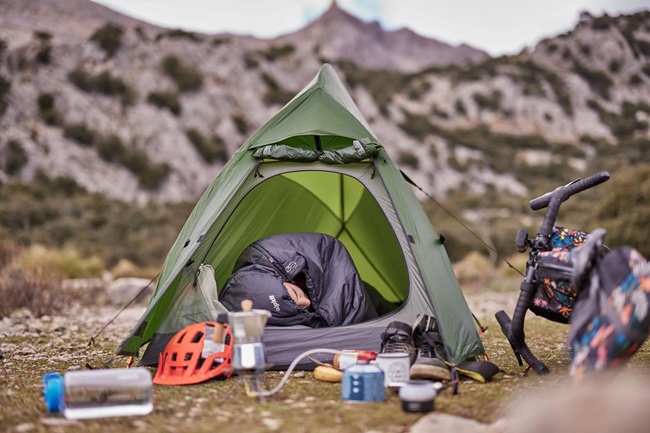
This one is exactly what it sounds like. Nature belongs to everyone, so behave accordingly.
Following the six principles above already goes a long way toward respecting other visitors, but a few extra habits help too.
Keep noise levels down. It’s easy to get carried away with friends around a campsite, but music, singing, and loud conversation can genuinely disturb neighboring campers and local wildlife alike. Keep the volume reasonable.
Yield the trail to hikers heading uphill if you’re heading downhill. It’s a small courtesy that makes a real difference on narrow trails.
Handle personal business well away from other campsites. Public restrooms usually aren’t an option in the backcountry, so scout a secluded, safe spot away from anyone else’s camp ahead of time.
Wrap Up
Large-scale environmental damage from irresponsible industry practices continues on a massive scale, and it can feel like individual action barely registers against that backdrop. But thanks to sustained work from organizations focused on outdoor education, we can still meaningfully protect the parts of nature within our own reach.
The Leave No Trace principles represent a genuinely achievable way for people and wilderness to coexist. These rules aren’t complicated to remember or follow. Admire nature from a respectful distance. Look, don’t touch. That’s the entire philosophy in a sentence.
What do you personally do to leave a campsite better than you found it? Did we miss anything worth adding about the LNT principles? Share your thoughts in the comments below.

Daniel is a gear freak when it comes to hiking, climbing and camping. He went to REI Outdoor School to meet new people and learn best practices. Don’t even try to argue with him about the latest backpack or ice axe, he tried most of them. Daniel’s dream is to climb Mount Everest.