
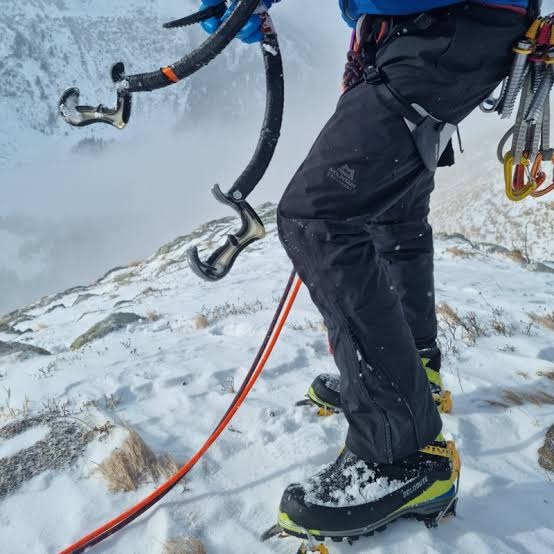
The best mountaineering pants are softshells built from stretch double weave fabric, because they combine wind resistance, breathability, and freedom of movement in one layer. Hardshell pants are the better choice only when you need full waterproof protection in sustained storms or heavy wet snow.
That single-layer advantage is why softshells dominate alpine kit lists. Instead of stacking three or four layers under a shell, you carry one pant that regulates temperature on the climb and sheds wind and light precipitation on exposed ridgelines. Fewer layers means less weight, less bulk in your pack, and less fabric fighting your stride on hour ten of a summit push.
Softshells are not just for expedition mountaineering either. They work equally well for climbers, trekkers, ski tourers, and any outdoor adventurer spending serious time above the treeline.
Below you will find current, in-stock picks for men and women, a plain-English breakdown of hardshell versus softshell, and the features that actually matter when you are spending real money on technical pants.
Editors Note: We updated this article in June 2026, we earn commissions on purchases made through links in this article.
Quick comparison: top mountaineering pants at a glance
| Pant | Best for | Type | Weight | Key feature |
|---|---|---|---|---|
| Outdoor Research Cirque II (Men’s) | All-round alpine climbing | Softshell | 21.8 oz | Kevlar scuff guards, ActiveTemp waistband |
| Outdoor Research Cirque II (Women’s) | All-round alpine climbing | Softshell | 19 oz | Gusseted ankle zips, harness-compatible waist |
| Black Diamond Dawn Patrol Hybrid (Men’s) | Ski touring and mixed conditions | Hybrid | 15.5 oz | Waterproof panels plus breathable softshell |
| Marmot PreCip Eco Full Zip (Men’s) | Emergency storm layer | Hardshell | 10.4 oz | Full-length side zips, taped seams |
| Arc’teryx Beta Pant (Women’s) | Serious alpine weather | Hardshell | 13.5 oz | 3-layer GORE-TEX ePE, PFAS-free |
| prAna Stretch Zion (Men’s) | Approaches and rock days | Stretch woven | 16 oz | Roll-up legs, UPF 50+ |
| Marmot Lobo’s Convertible (Women’s) | Warm-weather approaches | Convertible | 9.9 oz | Zips off to 9-inch shorts |
| Marmot Scree Pant (Women’s) | Spring tours to summer climbs | Softshell | 15.2 oz | M3 softshell, articulated knees |
Mountaineering gear turns over fast. Several cult-favorite pants from Mountain Hardwear and Arc’teryx have been discontinued since our last update, so we replaced them with currently available pants that fill the same role. Every product below is one you can buy today.
Best mountaineering pants: reviews
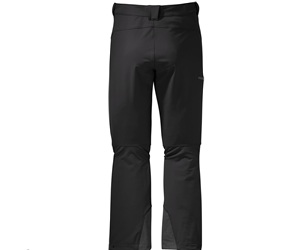
 Outdoor Research Cirque II Pants, Men’s
 Outdoor Research Cirque II Pants, Men’s
Material: 50% nylon, 43% polyester, 7% spandex; 90D stretch double weave softshell Weight: Approx. 21.8 oz Key features: Kevlar-reinforced scuff guards, ActiveTemp thermoregulating waistband, harness-compatible waist, avalanche beacon pocket
The Cirque II is Outdoor Research’s best-selling technical softshell, built for alpine climbing, ski touring, and mountaineering in equal measure. It is durable and stretchy, with a harness-compatible waist and a leg opening wide enough to clear mountaineering boots without sacrificing mobility.
The ActiveTemp treatment on the waistband stands out. It regulates body temperature during high-exertion pushes, so you stay cooler and drier without stopping to vent. Articulated knees and a gusseted crotch keep the pant moving with you on steep, technical terrain, and Kevlar-reinforced instep patches resist damage from crampon points and ski edges. Pair these with mountaineering boots and crampons and you have one of the most trail-tested combinations available.

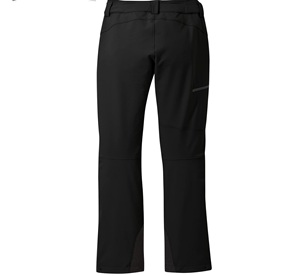
 Outdoor Research Cirque II Pants, Women’s
 Outdoor Research Cirque II Pants, Women’s
Material: 50% nylon, 43% polyester, 7% spandex; 90D stretch double weave softshell Weight: Approx. 19 oz Key features: Kevlar scuff guards, ActiveTemp waistband, gusseted ankle zippers, drawcord cuff adjustments
The women’s Cirque II shares the same technical DNA as the men’s pant but is cut with a women’s-specific fit through the hip and thigh. Like its counterpart, it uses a weather-resistant double weave that shrugs off wind and light precipitation while still breathing well on the skin track or the approach.
Gusseted ankle zippers and drawcord cuff adjustments make it easy to get boots on and off without wrestling your pant legs. The harness-compatible waist means you will not need to strip your harness to answer nature’s call mid-route. It is a genuine step up from older women’s mountaineering softshells that prioritized style over function.
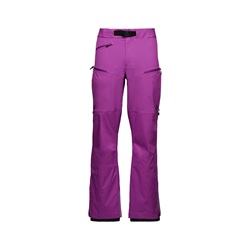
 Black Diamond Dawn Patrol Hybrid Pants, Men’s
 Black Diamond Dawn Patrol Hybrid Pants, Men’s
Material: BD.dry laminated waterproof-breathable panels with air-permeable softshell fabric Weight: Approx. 15.5 oz Key features: RECCO reflector, instep scuff patches, integrated belt, dedicated electronics and beacon pocket
Built for backcountry ski touring and alpine missions where conditions change fast, the Dawn Patrol Hybrid places Black Diamond’s waterproof BD.dry membrane in the high-exposure areas (seat and lower legs) and uses breathable softshell everywhere else. That hybrid construction gives you real weather protection without paying for it in sweat on the skin track.
Side-zip vents dump heat quickly on the uphill, and instep patches guard against ski edges and crampon points. A stretch gaiter and dual-snap cuffs seal the pant over touring or mountaineering boots, while the integrated RECCO reflector adds a layer of safety for anyone heading into avalanche terrain.
 Marmot PreCip Eco Full Zip Pant, Men’s
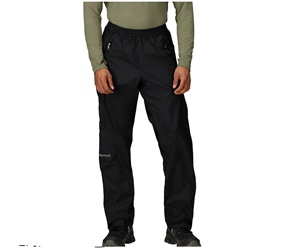 Marmot PreCip Eco Full Zip Pant, Men’s
Material: 100% recycled NanoPro nylon ripstop, PFC-free DWR Weight: Approx. 10.4 oz Key features: Full-length side zips, bonded storm flaps, fully taped seams, packable
If you want a genuinely waterproof shell to pull over a softshell or base layer the moment weather turns, the PreCip Eco Full Zip is one of the most trusted names in the category. Full-length side zippers let you pull it on or off over mountaineering boots without removing them, a small detail that matters a great deal at 4 a.m. in a storm.
The recycled NanoPro nylon face fabric is waterproof and breathable, with taped seams keeping water out at every stitch line. It is not built to be a stand-alone technical mountaineering pant like the Cirque or the Dawn Patrol. As an emergency shell layer in your pack, though, it is hard to beat for the weight and the price.
 Arc’teryx Beta Pant, Women’s
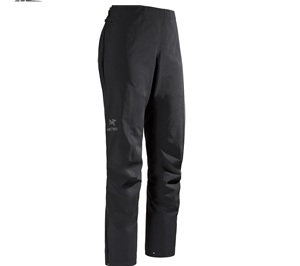 Arc’teryx Beta Pant, Women’s
Material: PFAS-free 80D 3-layer GORE-TEX ePE with recycled face fabric, GORE C-Knit backer Weight: Approx. 13.5 oz Key features: Three-quarter-length side zips, laminated instep patches, RECCO reflector, zippered thigh pocket
The Beta Pant is the modern successor to a lot of Arc’teryx’s older alpine shells, now built around a fully waterproof, PFAS-free GORE-TEX ePE laminate. It is a true all-mountain shell: light enough for a long approach, tough enough for genuine alpine weather.
Three-quarter-length side zips provide serious ventilation on the way up and make it easy to layer over boots or crampons in a hurry. A low-profile, women’s-specific stretch waistband and articulated patterning keep the fit comfortable through long days, and laminated instep patches resist wear from boots and ski edges. Reach for this pant when you need bombproof protection without compromising mobility.
 prAna Stretch Zion Pants, Men’s
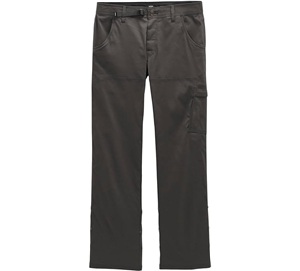 prAna Stretch Zion Pants, Men’s
Material: 97% nylon, 3% spandex; Stretch Zion fabric with DWR finish, made from recycled materials Weight: Approx. 16 oz Key features: Roll-up leg snaps, free-range gusset, UPF 50+
The Stretch Zion has been a backcountry staple for over two decades, and it is easy to see why. The internal waistband cinch system keeps the pant secure without a bulky buckle, and the stretchy twill fabric extends and contracts for full range of motion on scrambles and approaches.
A free-range gusset allows unrestricted movement, and roll-up leg snaps convert the pant to a cooler capri length on warm approach days. That is a useful middle ground if you do not want a fully convertible pant. The DWR finish sheds light moisture and the fabric resists abrasion well, making this a versatile choice that works as well for approach hiking and camp life as it does for climbing days.
 Marmot Lobo’s Convertible Pant, Women’s
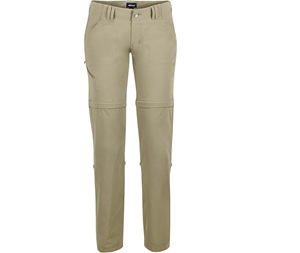 Marmot Lobo’s Convertible Pant, Women’s
Material: 94% nylon, 6% elastane, DWR finish, part of Marmot’s UpCycle program Weight: Approx. 9.9 oz Key features: Zips off to 9-inch shorts, DriClime waistband, inseam gusset, UPF 50
The Lobo’s Convertible is built for hiking, backpacking, and mountain days where conditions and temperatures shift hour by hour. It converts from full-length pants to 9-inch shorts, a genuine advantage on long approaches that climb through multiple microclimates.
The moisture-managing DriClime waistband prevents chafing during high-output days, and the inseam gusset keeps mobility intact on scrambles and stream crossings. With a UPF rating of 50, it doubles as sun protection on long glacier approaches, which is worth pairing with good sun-protective hiking gear if you are heading somewhere exposed.
 Marmot Scree Pant, Women’s
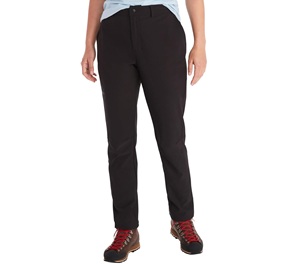 Marmot Scree Pant, Women’s
Material: 90% nylon double weave, 10% elastane; Marmot M3 softshell Weight: Approx. 15.2 oz Key features: Ankle zippers, articulated knees, PFC-free DWR
The Scree is versatile enough to go from spring ski tours to summer alpine climbs without missing a beat. Marmot’s M3 softshell fabric is water-resistant and breathable, with enough stretch to move, bend, and lunge without feeling restricted.
An elastic waist with snap closures and a zip fly keep the fit dialed in, while zippered hand and thigh pockets secure gear on exposed terrain. The ankle zippers open wide enough to get the pant on and off over boots, which is genuinely useful when you are changing footwear at altitude. It suits mild to cool weather hiking, skiing, and climbing better than the harshest alpine conditions.
Hardshell vs softshell: what is the difference?
Hardshell pants are fully waterproof and windproof outer layers for storm protection, while softshell pants are stretchy, breathable, water-repellent layers built for movement during high-output activity. Most mountaineers climb in softshells and carry a hardshell for emergencies.
Hardshell fabric is a woven face laminated to a micro-porous coating or a breathable waterproof membrane. It is breathable to a point, but during any high-heart-rate effort the inside of the garment tends to feel damp and clammy from condensation and perspiration.
Softshell fabric is less rigid and works as either a protective mid-layer or an outer layer. Softshells are water-repellent, air-permeable, breathable, and stretchy, prioritizing mobility above all else. They are designed for aerobic activity in dynamic weather, which describes most climbing and mountaineering days.
Although softshells are rarely fully waterproof, their windproofing is what keeps you warm in exposed conditions. They still shed light rain and snow, dry quickly, and resist abrasion against rock, ice, and rough terrain.
If you are building out a full layering system for alpine conditions, softshell pants usually sit as your mid-to-outer layer, with a fleece mid-layer underneath and a hardshell stowed in your pack. Your insulated jacket comes out at belays and on summits, not on the climb.
How to choose mountaineering pants
Fabric construction
- Stretch wovens are among the lightest softshell fabrics available, engineered to be wind- and water-resistant while staying highly breathable for aerobic effort. Schoeller popularized the category and offers both single-layer and double weave constructions.
- Laminated stretch combines stretch woven nylon with a stretch polyurethane coating or membrane plus an insulating layer such as fleece. The polyurethane improves windproofing and water repellency while adding warmth, which suits colder temperatures and higher elevations.
- Encapsulation places an ultra-thin, durable, breathable barrier film between the fiber bundles. This improves thermal efficiency and water repellency, and it holds up after repeated washes.
Weather resistance
Judge weather resistance on two things: water repellency and windproofing.
Water repellency describes how well the material sheds water. Softshells use water-resistant fabrics that wick well and dry fast, usually with a DWR coating on top. Fully waterproof softshells are rare, because waterproofness normally costs breathability.
Windproofing matters because it drives thermal regulation. A single windproof layer removes the need for three or four layers underneath. Fabric that is both windproof and breathable insulates you while still shedding the heat you generate on the climb.
Breathability
Breathability is the main dividing line between softshells and hardshells. Softshells are built for sustained aerobic output, so the fabric needs to move vapor out faster than you produce it. Hardshells trap more moisture because they are far less air-permeable, which is why they feel clammy after a hard push.
Reinforcements
Look for reinforcement at the knees, seat, and instep, since those areas take the most abrasion on a climb. Kevlar or laminated scuff patches protect against crampon points and ski edges and extend the life of the pant. Even unreinforced softshell fabric is often abrasion-resistant enough for rock and scree, but the patches are what save a pant from a single bad crampon strike.
Weight
Weight matters on any long day, and especially on multi-day expeditions. Pants with extra abrasion-resistant fabric or an added insulation layer weigh more than minimalist designs. The range in this guide runs from roughly 10 oz for a packable storm shell to nearly 22 oz for a fully featured alpine softshell.
Fit and compatibility
Check three things before you buy: whether the waist is harness-compatible, whether the leg opening clears a mountaineering boot, and whether the side or ankle zips run far enough to let you change layers without removing your boots. These details are easy to overlook in a shop and impossible to ignore on a route.
Convertibility
Some pants convert to shorts or capris, which helps with thermal regulation on hot summer days. Zip-off and roll-up legs add versatility, making one pant work for trekking and technical climbing alike.
Frequently asked questions
Are softshell pants waterproof?
No. Softshell pants are water-repellent rather than waterproof. They shed light rain and snow thanks to a DWR finish, but sustained rain will eventually soak through, which is why most mountaineers carry a lightweight hardshell as a backup.
Can you wear hiking pants for mountaineering?
Standard hiking pants work for approaches and low-angle terrain in mild weather, but they lack the wind resistance, abrasion reinforcement, and harness-compatible waist that technical mountaineering demands. For anything involving crampons, a rope, or exposed ridgelines, use a purpose-built softshell or shell pant.
What do you wear under mountaineering pants?
A single merino or synthetic base layer is enough for most conditions. The point of a softshell is that it replaces several layers, so adding bulk underneath usually creates more sweat than warmth. Save heavier insulation for cold belays and summit stops.
How should mountaineering pants fit?
They should be snug enough not to catch on crampon points and loose enough to allow a full high step without the fabric pulling. Check the waist with a climbing harness on, and confirm the cuffs seal over the boot you actually plan to wear.
How do you restore water repellency on softshell pants?
Wash the pants with a technical fabric cleaner rather than standard detergent, then reactivate the DWR with low tumble dry heat or a warm iron with a cloth barrier. If water still soaks in rather than beading, apply a spray-on or wash-in DWR treatment.
Are softshell pants warm enough for winter mountaineering?
For most winter days, yes, when worn over a base layer. Softshells trap warmth by blocking wind, which is the main driver of heat loss on exposed terrain. For extreme cold or static days, look for a laminated stretch fabric with an insulating backer.
Final thoughts
A good pair of softshell pants is an all-in-one layer for weather resistance and breathability. They serve as a mid-layer in cold conditions and replace a hardshell entirely when weather allows, which is exactly why they earn their place in almost every alpine kit.
They also pull double duty for hiking, backpacking, skiing, and snowboarding, so the cost per use tends to be low. Weigh fabric, fit, and features against how and where you actually climb, and if you are planning a bigger objective, review your mountaineering boots and insulated layers at the same time so the whole system works together.
Have you climbed in any of these pants? Tell us how they held up in the comments below, and browse our full climbing gear guides before your next trip.

Mark Foster loves to push his limits when it comes to survival in the wilderness. He might go for a 30-days adventure without any food or equipment except for a survival kit and a knife. We should mention that his survival kit has 122 items in it, so he know what he is doing. Mark is working on his book to share with the world all his experience gained during those brave adventures.
I’m SO happy with my Marmot lobo’s convertible pant! They feel good on the skin and have the right amount of pocket space, are convertible, and simply make you feel good by wearing them. They have great movement and are quite easy to clean. I also like that sand did not stick to them! I sincerely hope they’ll last for a long time.
Don’t worry Linda, they will! I’m very pleased with your choice since the Marmot is a great product to use. You can move easily and the material is comfortable, too.
The Prana Stretch Zion’s are my new go-to pair of mountaineering pants. In fact, they’re my new go-to pants for all situations! Period. Though I do mainly wear them in the great outdoors, I have recently started wearing them at work too. They look smart enough without easily being identifiable as hiking pants. They’re nice and lightweight with a fair amount of stretch. The breathability of the pants and the addition of a side entry thigh pocket all add up to a well thought out pair of pants. I’d highly recommend!
Most of my buddies, including me love the Prana Stretch and I say, it’s not only for good for mountaineering. In fact, they’re great for everyday use, too. It’s very comfortable and the breathable fabric is tops!
I have been planning to buy mountaineering pants for the longest time, but it is hard to choose what brand to get. Thank you for your list Mark because I was able to narrow down my choices. I am thinking of buying either Mountain Hardwear’s Desna Alpen or 66oNorth Snaefell.
Both are great products, so you will have to try them on to see what works better!
I would recommend Prana’s Stretch Zion to everyone because in my opinion, it is a must buy. I used it for my hiking trip on the Appalachian Trail and I loved it! Aside from the fact that the size is perfect, it is very comfortable to wear. It was perfect for the cold weather.
We are happy to hear that!