

Here’s the short answer: technically, yes. You can hike in jeans. But should you? That’s a different question entirely, and the answer changes depending on how long you’re out, what the weather is doing, and how much you care about still feeling good three hours in.
I’ve seen experienced hikers swear their old Levi’s have never let them down. I’ve also seen those same hikers dragging wet denim up a muddy trail, looking like they’re wearing two soaked blankets on their legs. There’s a reason the outdoor community has a saying: “Cotton Kills.” It sounds dramatic, but it’s earned.
My article today breaks down exactly why denim is a risky choice for serious hikes, what the better alternatives are, and the practical things worth thinking through before you pack your pants.
If you’re heading out for a short, dry walk, some of this won’t apply to you. But if you’re planning anything longer, wetter, or colder, keep reading.
Why Denim is Bad
Jeans and denim are made from cotton, which is a natural fiber. That sounds like a great match for the outdoors, but it’s actually one of the worst choices you can make when hiking. And the reason comes down to one fundamental flaw: cotton and water are a terrible combination.
Cotton can absorb up to 27 times its weight in water. That means the sweat your body produces on the trail, or any rain that catches you out, gets absorbed directly into the fabric and stays there.
Once it’s wet, denim gets extremely heavy. Instead of a quick, breezy hike, you’ll feel like you’re slogging through quicksand with all that extra weight on your legs.
And it doesn’t dry quickly either. In controlled testing, cotton can take over eight hours to dry fully, while synthetic fabrics cover the same ground in under two.
But the weight is only part of the problem. The bigger danger is what that moisture does to your body temperature. Water conducts heat away from the body 25 times faster than air.
So when your denim is soaked through, the thermal protection it was offering disappears almost completely, and in cold conditions, that’s not a comfort issue. That’s a safety issue.
Hypothermia doesn’t only happen in blizzards. It happens to unprepared hikers in mild weather when their clothing gets wet and they can’t warm back up. This is exactly why experienced guides treat “Cotton Kills” as more than a catchy phrase.
In very cold temperatures, wet denim won’t just fail to keep you warm. It will actively pull heat from your skin and can develop ice crystals along its surface. Combined with everything just described, that soaked pair of jeans becomes a serious risk.
Then there’s chafing. Denim is not a soft, forgiving fabric against moving skin. On a long hike, the fabric rubbing against your inner thighs or ankles can go from mild irritation to painful, bleeding sores faster than you’d expect.
The good news is that you don’t need to spend a fortune to do better.
Also read: Best Survival Lighter
Why People Make the Mistake of Denim
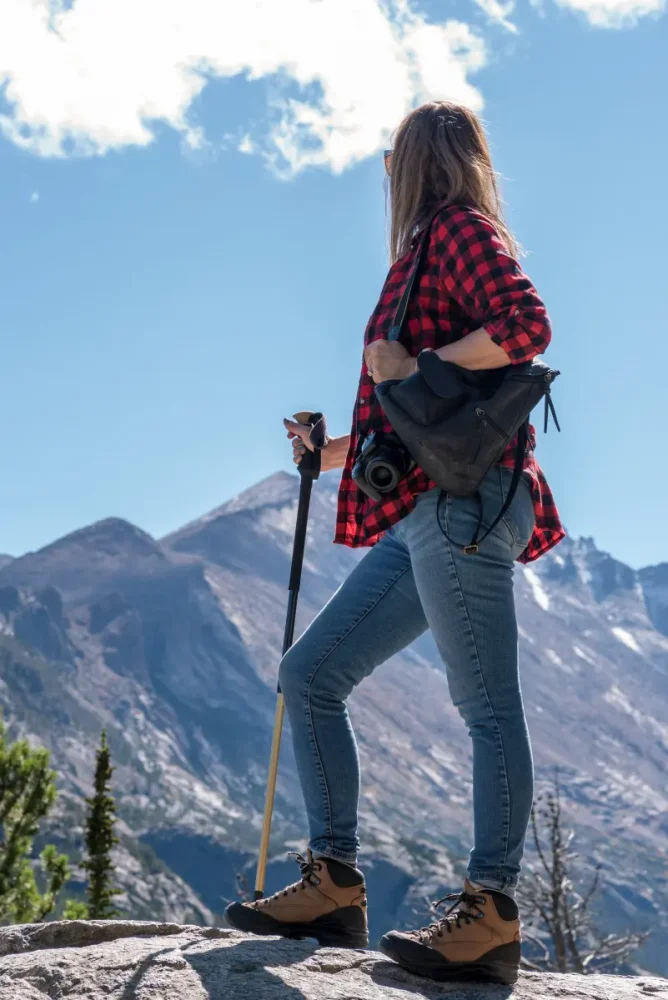
None of this means denim is a bad fabric. In the right context, it’s excellent. Cotton is soft and comfortable against dry skin, and denim in particular is genuinely durable and abrasion-resistant.
Manual laborers have worn it for over a century for exactly those reasons. A good pair of jeans can last for years without a hole or a tear, which makes the cost-per-wear hard to argue with.
And for outdoor use specifically, denim offers some real benefits. It won’t snag easily on branches or thorns. It keeps your legs protected from biting insects and from the sun.
For people with sensitive skin, cotton is generally well-tolerated and unlikely to cause irritation, though the processing chemicals used in some cotton fabrics can still be a factor for highly reactive skin, so calling it universally hypoallergenic is a stretch.
These are exactly the reasons jeans feel like a sensible choice. For camping and short walks on dry days, they hold up fine. The problems only begin when moisture, exertion, and changing temperatures enter the picture together.
That’s when the same properties that make denim tough and comfortable at the trailhead start working against you on the trail.
If you do set out in jeans for any reason, I’d strongly recommend packing at least one pair of proper hiking pants to change into if conditions shift.
Also read: Dry Camping 101: Everything You Need to Know
Alternatives to Denim
Now that we’ve covered why denim struggles on longer hikes, here’s what actually works, and why.
Synthetic
Polyester and nylon remain the top-performing choices for hiking pants in terms of pure trail performance. They’re lightweight, they wick moisture away from the skin efficiently, and they dry fast, sometimes within an hour or two of getting wet.
When you’re deep into a hike and your body temperature is the main thing keeping you moving, having fabric that works with your body rather than against it makes a real difference.
The one legitimate downside to synthetics worth being honest about: they shed microplastics with every wash, which contributes to water system pollution.
It’s a real environmental concern, and the outdoor community is increasingly paying attention to it. The practical answer is to look for recycled polyester where possible.
Major brands have built entire product lines around it, and it performs identically to virgin polyester while using less energy to produce and keeping plastic out of landfills.
Merino Wool
If I had to pick one fabric that has changed hiking apparel in recent years, it’s merino wool. Unlike traditional wool, merino comes from a finer fleece that sits soft against your skin with no itching and no bulk.
It wicks moisture, breathes well, and one of its best qualities is that it continues to insulate even when wet. Where a soaked cotton fabric is a liability, wet merino is still doing its job.
It’s also naturally antimicrobial, which matters on multi-day hikes where you’re wearing the same pants for days at a stretch. Synthetics tend to hold onto odor in a way merino simply doesn’t.
The trade-off is that merino dries more slowly than polyester or nylon, and it tends to cost more. For cold, wet conditions, though, it’s hard to beat.
Merino-synthetic blends that combine the warmth and softness of merino with the quick-dry performance of polyester are increasingly popular and worth looking at if you want the best of both.
Wool
Wool more broadly is a reliable performer in the outdoors. It keeps moisture away from the skin, insulates even when damp, and breathes well.
The itchy, scratchy wool of older garments has largely been replaced by softer modern versions. Wool does get heavier when wet, but unlike denim, it will still keep you warm while you sort out dry clothes.
Also read: UV Index and Tanning
Bamboo, Tencel, and Other Sustainable Options
The hiking apparel world is visibly moving toward natural, sustainable fabrics right now, and these are worth knowing about.
Bamboo fabric is naturally antibacterial, moisture-wicking, and biodegradable. It’s soft, increasingly available in performance hiking cuts, and a solid choice for hikers who want to avoid purely synthetic materials.
That said, it’s worth noting that turning bamboo into soft fabric does require a chemical-intensive process, so it’s not automatically the greenest option, but it’s still a meaningful step up from conventional synthetics in terms of end-of-life impact.
Tencel (lyocell), made from sustainably harvested wood pulp using a closed-loop production process, handles moisture reasonably well and feels smooth against the skin. It won’t match the quick-dry performance of nylon for hard efforts, but for mild conditions or as part of a layered system, it holds its own.
Hemp is another natural fiber seeing a genuine resurgence, valued for its durability and low environmental footprint.
None of these options are going to replace polyester or merino at the performance end of the spectrum, but if sustainability is a real priority for you, they’re legitimate choices rather than compromises.
Cotton Blends
Cotton in a well-designed blend is a different story from the pure denim we spent the first part of this article discussing. When cotton is combined with quick-dry synthetic or natural fibers, the result can balance cotton’s comfort and breathability against the moisture problems we covered.
The key is to look at what it’s blended with and in what ratio. A fabric that’s mostly cotton still carries most of cotton’s moisture problems. But a blend that pairs cotton with nylon, polyester, or Tencel can be genuinely comfortable without leaving you stuck in soaked fabric for hours.
Also read: Best Bowie Knives
Features to Look For
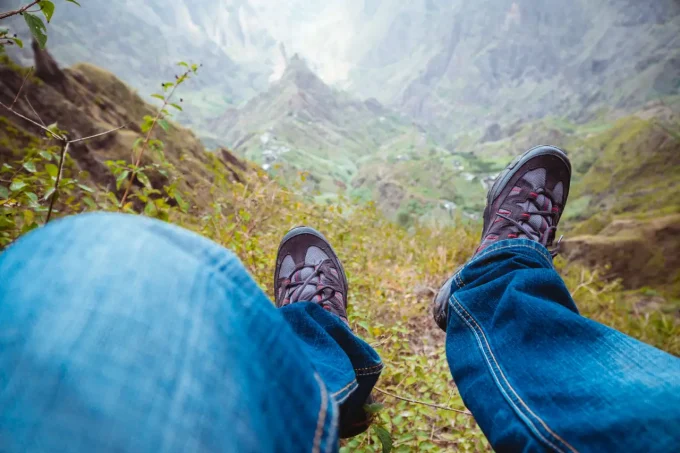
If sorting through fabric types feels like more research than you signed up for, there’s a simpler approach: focus on what the fabric actually does rather than what it’s made from. These are the properties that separate a good hiking pant from a bad one.
Moisture-wicking is the big one. Fabric that pulls sweat away from your skin doesn’t just keep you more comfortable. It removes the bacteria that causes odor, reduces chafing, and, as we covered earlier, lowers your risk of getting dangerously cold from prolonged dampness against your skin.
Water-resistance matters too, though it’s worth distinguishing from waterproof. A water-resistant fabric handles light rain and splashes without soaking through immediately.
A fully waterproof shell keeps heavy rain out but often sacrifices breathability. For most hiking pants, water-resistance is the right balance.
Breathability is something I’d put almost on the same level as wicking. A fabric that doesn’t breathe traps heat, produces more sweat, and leaves you hotter and wetter than you started. Good breathability means your body can regulate its temperature naturally rather than fighting against your clothing.
Insulation is worth thinking through based on where and when you hike. You need something that holds warmth when temperatures drop, and, critically, that keeps doing so if the fabric gets wet. This is where denim, as we discussed, fails completely.
Sun protection has become a standard feature in quality hiking pants. Look for a UPF rating on the label. The higher the number, the more UV radiation the fabric is blocking. This is worth taking seriously, not just for comfort, but for long-term skin health on exposed trails.
Considerations to Keep in Mind
Knowing what features to look for is one thing. Knowing which of those features matter most for your specific situation is what actually guides a good purchase. A few questions worth asking yourself before you buy.
Where are you hiking? Desert terrain and dense scrubland call for lightweight coverage that protects your legs from sun, thorns, and insects. High alpine routes with wet weather demand insulation and water-resistance. These aren’t the same pant.
What’s the weather doing? If temperatures shift significantly between morning and late afternoon where you’re hiking, convertible pants that zip off into shorts are one of the more practical solutions available. They handle both ends of the thermometer without needing a bag change mid-trail.
How long is the hike? A few hours on a marked trail in mild weather is a different equation from a multi-day backcountry trip.
For shorter outings, you have more flexibility. For anything extended, every feature on this list becomes more important, and the consequences of getting it wrong compound with every mile.
What’s your budget? Not everyone can justify spending serious money on hiking pants, and I’d never tell someone to skip a trip because their gear isn’t premium.
If you’re working with a tight budget, prioritize function over brand name. A cheaper synthetic pant that wicks and dries fast will serve you far better than expensive denim.
And if you do go the budget route, take care of what you buy. Clean your gear properly and it will last significantly longer.
How often do you hike? If this is your first time out and you’re not sure it’ll become a habit, it doesn’t make sense to invest heavily. But if hiking has become a regular part of your life, quality gear pays for itself in comfort, safety, and durability over time.
Also read: How to Choose a Survival Lighter
Wrapping up
If you can’t find a single fabric or pant that ticks every box for your conditions, layering is a completely legitimate strategy. In fact, it’s what most experienced hikers do.
A base layer of merino wool or moisture-wicking synthetic keeps sweat off your skin. A mid-layer of insulating fabric holds warmth when the temperature drops.
A water-resistant or waterproof outer layer handles precipitation. You can add or remove layers as conditions change, which gives you far more flexibility than any single garment can.
Thermal leggings or long johns under your hiking pants add insulation on cold days without needing to pack an entirely separate wardrobe. Convertible pants with zip-off legs let you adapt to warming temperatures without stopping to dig through your bag.
Lightweight waterproof over-pants pack small and add meaningful protection when rain comes in.
The honest truth is that no single piece of clothing works for every condition. Building a flexible layering system, even a simple one, is more useful than hunting for the one perfect pant.
If you’ve found a hiking pant or fabric that’s worked well for you, I’d love to hear about it in the comments below.

Daniel is a gear freak when it comes to hiking, climbing and camping. He went to REI Outdoor School to meet new people and learn best practices. Don’t even try to argue with him about the latest backpack or ice axe, he tried most of them. Daniel’s dream is to climb Mount Everest.