

Building a campfire isn’t always the romantic experience it’s cracked up to be. If it rained the night before or the wind is howling, getting a consistent cooking flame is a battle you don’t want to fight when you’re starving.
That’s where the camp stove comes in. It might be an extra few pounds in your pack or car trunk, but it is absolutely worth it if you’re camping for a few days in the same spot.
While camp stove cooking is often brushed aside in favor of the “exciting” open fire, your stove is actually the MVP of the trip. You just need the right recipes. If you have a solid stove and these instructions, you have nothing to worry about.
We’ll give you some meal ideas for each part of the day. These easy camp stove recipes can be made using simple cooking equipment, such as a frying pan or a pot, and they should all be cooked over the flames of a camp stove.
The Golden Rules of Stove Cooking, before we even check out the recipes.
First, fuel management. Always bring one more canister than you think you need; wind and high altitude burn fuel faster.
Second, prep before you light. Unlike a kitchen stove, you don’t want to burn fuel while chopping onions. Have everything sliced, diced, and ready to go before the flame touches the pot.
With these things in mind, let’s check out my recommended, easy to make, camp stove recipes that will keep everybody happy!
Camp Stove Breakfast Ideas
When morning comes, few people want to go scavenging for dry wood early in the morning when the cold air is chilling your bones. You just want hot coffee and a breakfast you don’t have to wait hours for. These ideas are fast, high-energy, and don’t require a roaring fire.
1. One-Pan English Breakfast
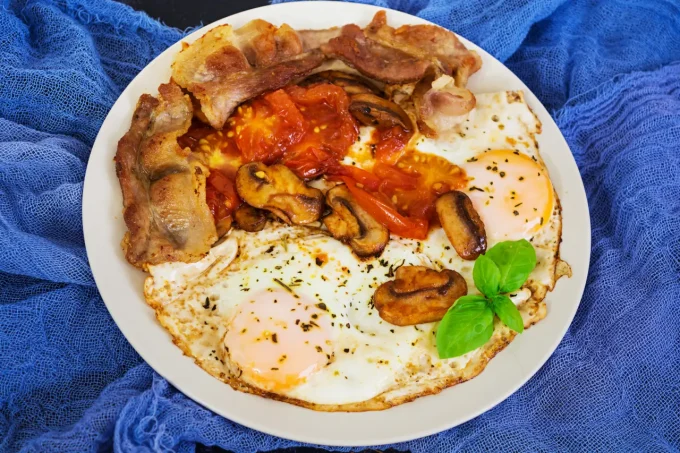
The English breakfast is world-famous: eggs, bacon, sausages, mushrooms and tomatoes (we can skip the beans!). It’s now easy for you to make this in the wilderness on your camp stove, almost as easily as at your kitchen stove back home. We call this “All-in-One” because we cook it together to save gas and cleanup time.
The Gear: You likely won’t have unlimited butter or scrubbing pads, so a non-stick frying pan is better here.
How to cook it:
- Start with the Bacon: Put the pan on medium heat and lay your bacon strips in cold. As the pan heats, the fat renders out. This is free cooking oil for everything else.
- Add Sausages: Once the bacon has released some grease but isn’t fully crispy, add your sausages. Let them roll around in the heat for about 5-6 minutes.
- The Veggies: Add about five ounces of sliced button mushrooms and a halved tomato. Stir them in the bacon fat for four minutes.
- Manage the Grease: If there is too much liquid fat, do not pour it on the ground. This attracts animals and damages the ecosystem. Soak up excess grease with a paper towel and pack it out in your trash bag. Ideally, one of our recommended odor-proof bags.
- The Eggs: Push the meat and veg to the sides to create a well in the center. Pour in six beaten eggs (seasoned with salt and pepper).
- Finish: Let it sit for around three minutes. Before it’s cooked through, sprinkle some grated cheese on top. Cut into slices and serve directly from the pan.
2. Fluffy Camp Stove Pancakes
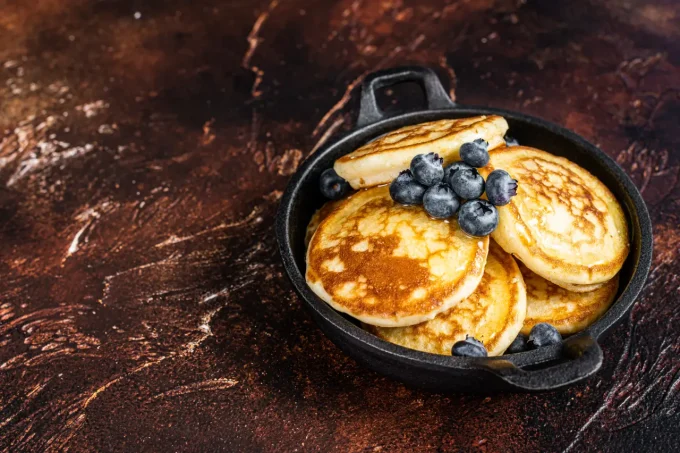
You can never go wrong with pancakes, but timing is everything. A camp stove burner is intense, so we have to be careful not to burn them.
The Prep: Do yourself a huge favor: mix the dry ingredients at home. Put your flour, baking powder, sugar, and salt in a Ziploc bag or a reusable bottle. When you get to camp, just add the water (and milk/egg if your recipe requires it) and shake.
How to cook it:
- Heat Control: Keep your flame low-to-medium. High heat will burn the outside while the inside stays raw.
- The Pour: Pour the batter. If you like chocolate (who doesn’t?), drop the chips in now.
- The Flip: Unlike home cooking, don’t wait forever. It takes about 2 to 3 minutes. Watch for bubbles on the surface. When the edges look dry, flip it. Cook for another 60 seconds.
- The Topping: Bringing glass jars of jam is heavy and risky. We recommend a simple squeeze bottle of maple syrup or honey.
- Peanut Butter Sauce (Optional): If you crave that gourmet touch, mix three tablespoons of peanut butter with a splash of milk and stir until gooey. It’s messy, but delicious.
Also read: Try These Genius Camping Meals
Camp Stove Lunch Ideas
Lunch is the most practical meal of the day when hiking. You need an energy boost to keep going until dinner, but you don’t want a heavy meal that makes you want to nap.
1. One-Pot Summer Pasta
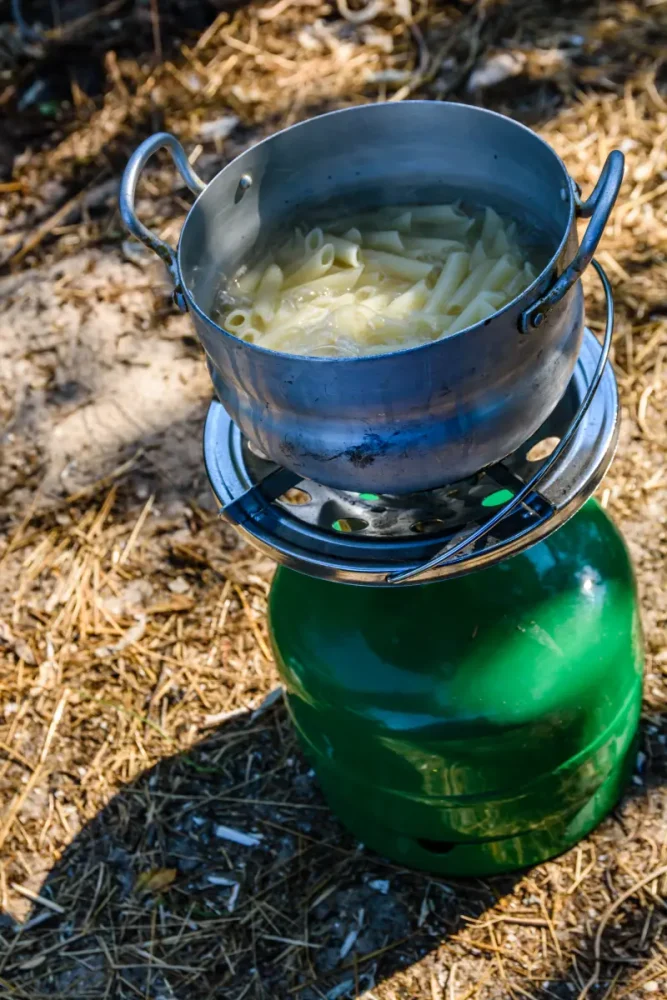
This recipe is designed to save water and fuel. Traditional pasta instructions tell you to boil a huge pot of water and drain it – that’s a waste of resources in the wild. We use the “absorption method.”
Ingredients:
- Bowtie or Penne pasta (thick shapes hold up better)
- Chicken broth (or bouillon cubes)
- Summer veggies: Zucchini, squash, bell peppers, garlic powder.
- Optional: Pre-cooked chicken breast (from a pouch or cooler).
How to cook it:
- The Liquid: Place your pasta in the pot and pour in just enough water (or broth) to barely cover the noodles, usually about 2-3 cups depending on portion size. Bring to a boil.
- The Simmer: As the water reduces, the starch creates a natural sauce. When the water is half gone (about 5 minutes), toss in your veggies and garlic powder.
- Finish: Keep stirring so nothing sticks. Once the liquid is almost gone and pasta is al dente, stir in a dollop of sour cream or cheese. You shouldn’t need to drain anything.
- Season: Salt and pepper to taste. This method concentrates the flavor and saves you a trip to the water pump.
2. Quick Pad Thai
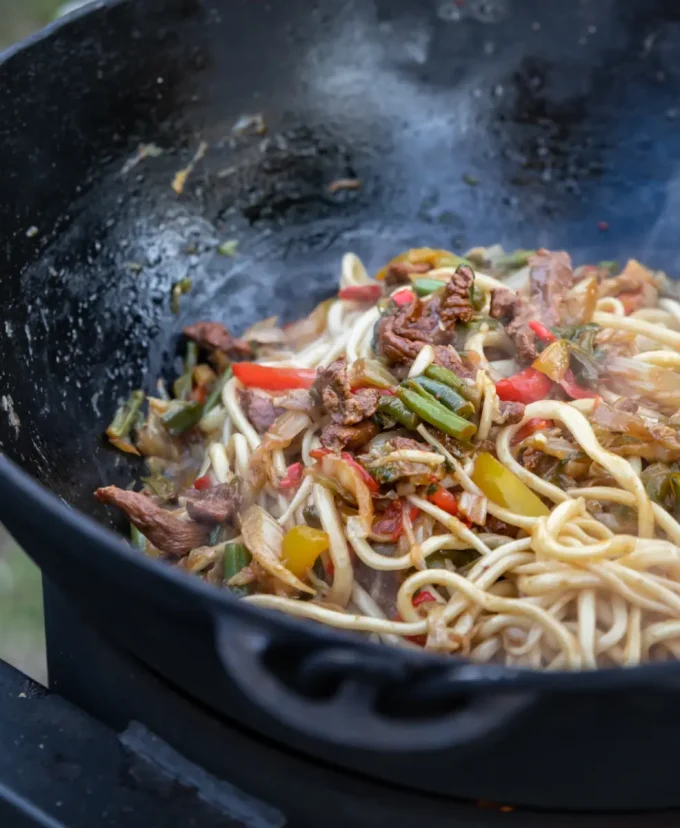
Pad Thai is delicious and refreshing, but rice noodles are tricky on a camp stove. If you boil them like pasta, they turn into mush. Here is the fail-safe method.
How to cook it:
- Noodle Prep: Boil water, then turn the heat off. Drop your rice noodles in the hot water and let them soak for 3-5 minutes (check the package). Test one – it should be soft but firm. Drain carefully.
- The Protein: In your frying pan, scramble two eggs. If you brought raw chicken, ensure it was stored in a cooler below 40°F (4°C) to prevent spoilage. Cook the chicken fully before adding noodles.
- Combine: Toss the noodles into the pan with the egg. Add your Pad Thai sauce (pre-mixed at home or from a jar) and toss to coat.
- Crunch: Top with crushed peanuts, green onions, and bean sprouts. A squeeze of lime juice here wakes up the whole dish.
- Heat: Add Sriracha or chili flakes if you need that extra kick to warm up.
3. Crispy Camp Quesadillas
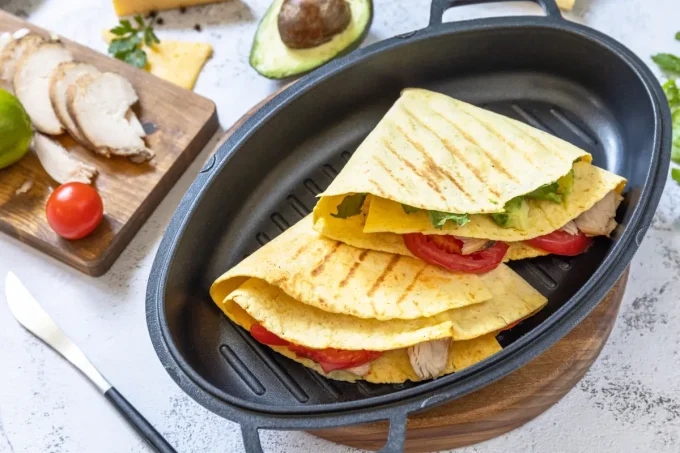
Sometimes you don’t want to boil water or wait for noodles to soften. You want something hot, crispy, and ready in five minutes. Quesadillas are the ultimate “lazy” gourmet camp lunch because they require almost no cleanup.
How to cook it:
- Serve: Slice it up and dip it in a jar of salsa. It’s messy, crunchy, and exactly what you need after a morning hike.
- The Base: You need flour tortillas and a bag of shredded cheese (cheddar or a Mexican blend works best).
- The Filling: Open a can of black beans or corn (drain the liquid first!) and mix it with the cheese. If you have leftover chicken from the night before, throw that in too.
- The Cook: Heat your non-stick pan over a medium flame. You don’t even need oil. Place the tortilla in the dry pan, pile your filling on one half, and fold the other half over like a book.
- The Flip: Cook for about 3 minutes per side. You’re looking for golden-brown spots on the tortilla and melted cheese oozing out the side.
Also read: What to Bring Camping (ALL Essentials)
Camp Stove Dinner Ideas
Things get busy in the wilderness. Maybe you hiked all day or just arrived late and you’re already hungry. These two recipes focus on comfort and high calories to replenish what you burned. Trick: any of the recommended lunches above also work!
1. Comfort Chicken Soup
If you’re feeling a bit under the weather or just cold, chicken soup is medicine. The key here is portion control – don’t fill a massive pot that takes 30 minutes to boil.
Ingredients:
- 1.5 Liters of water (manageable for most stove burners)
- 2 carrots, diced small (cooks faster)
- 1 onion, chopped
- Garlic cloves
- Instant Noodles (Ramen works best as it cooks in 3 minutes)
- Chicken bouillon cubes
- Canned or pouch chicken (easy protein without raw meat risks)
How to cook it:
- Sauté First: Sauté the onions and carrots in the bottom of the pot with a little oil for 2 minutes. This unlocks flavor you don’t get by just boiling them.
- Simmer: Add water and bouillon. Bring to a boil.
- Noodles: Break your instant noodles into the pot. They only need about 3 minutes.
- Finish: Stir in the chicken and any delicate greens like parsley right at the end so they don’t lose their nutrients.
- Tip: Frozen veggies are a great “ice pack” in your cooler during the day and can be tossed directly into the soup at night.
2. Pan-Seared Camp Steak
If you need a substantial dinner, steak is your best bet. It fills you up better than anything when you’re really hungry.
The Meat: While bone-in looks cool, we recommend boneless ribeye or strip steak for camping. Bones prevent the meat from lying flat in the pan, leading to uneven cooking on small camp skillets.
How to cook it:
- Prep: Season generously with salt and pepper.
- Heat: Get your skillet very hot. You want to hear an aggressive sizzle the second the meat hits the metal.
- Sear: For a 1-inch thick steak, sear for about 3 to 4 minutes per side for medium-rare. Don’t touch it while it sears – let that crust form.
- Rest: This is vital. Let the steak sit on a plate for five minutes before cutting. If you cut it immediately, all the juice runs out and the meat gets dry.
- The Pan Sauce: Don’t waste the flavor stuck to the pan. Throw in chopped onions and mushrooms while the steak rests. They will absorb the beef fat and seasoning.
- Good-quality steak tastes even better surrounded by the green outdoors. It makes your dinner feel like a 5-star experience, miles from the nearest restaurant.
Also read: How to Keep Food Warm During Hiking
Camp Stove Dessert Idea
We couldn’t let you finish your trip without something sweet! While s’mores are the classic go-to, your camp stove allows you to make something a little more sophisticated that warms you up from the inside out.
Skillet Cinnamon Apples
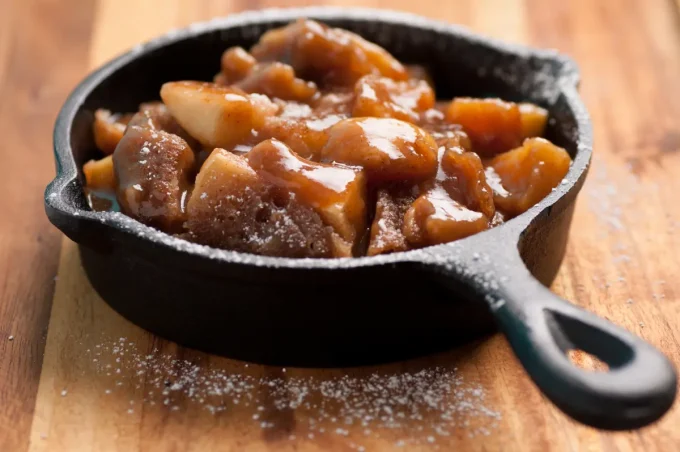
Think of this as an apple pie without the crust and without the hours of baking. It smells incredible and uses the same skillet you used for dinner (just wipe it out well!).
How to cook it:
- Prep: Slice 2 or 3 apples (Granny Smith or Fuji hold up well). You don’t need to peel them unless you really want to.
- The Sizzle: Melt a tablespoon of butter (or coconut oil) in your pan over medium heat. Toss in the apples.
- The Flavor: Sprinkle generously with cinnamon and sugar. If you have a bit of granola or crushed graham crackers, have them ready.
- Cook: Sauté the apples for about 8–10 minutes. You want them soft and tender, but not turning into applesauce. The sugar and butter will combine to make a sticky caramel glaze.
- Enjoy: Eat them straight out of the pan with a spoon. If you’re feeling fancy, top with that granola for a crunch. It’s simple, warm, and comforting.
Also read: How to Find Food in the Wild
Important Safety & Gear Tips
Cooler Safety: If you are cooking the steak or English breakfast, you are dealing with raw meat. You must have a high-quality cooler with ice. If you are backpacking without a cooler, swap fresh meat for cured meats (salami) or foil-pouch chicken/tuna.
Wind is the Enemy: Even a light breeze can triple your cooking time. Always use a windscreen (or foil folded around the burner) to protect the flame.
Leave No Trace: We mentioned this with the bacon grease, but it applies to everything. “Grey water” (pasta water or soup broth) should be strained of food particles (pack those out) and the water scattered at least 200 feet from your campsite and water sources.
Wrap Up
With this, you won’t have to settle for low-nutrition, high-sodium instant food anymore. It’s not like instant gruel doesn’t have its uses, especially when every ounce counts, but real food lifts morale.
One of the many charms of camping is eating good food in nature. There’s something reassuring about eating homemade food when you’re far away from home. Many campers bring their stove just to boil water for coffee, which is useful, but now you have the best camp stove recipes to turn that burner into a kitchen.
I would love to hear what you’re cooking when you go out camping, and what’s your opinion on these six recipes.

Daniel is a gear freak when it comes to hiking, climbing and camping. He went to REI Outdoor School to meet new people and learn best practices. Don’t even try to argue with him about the latest backpack or ice axe, he tried most of them. Daniel’s dream is to climb Mount Everest.