
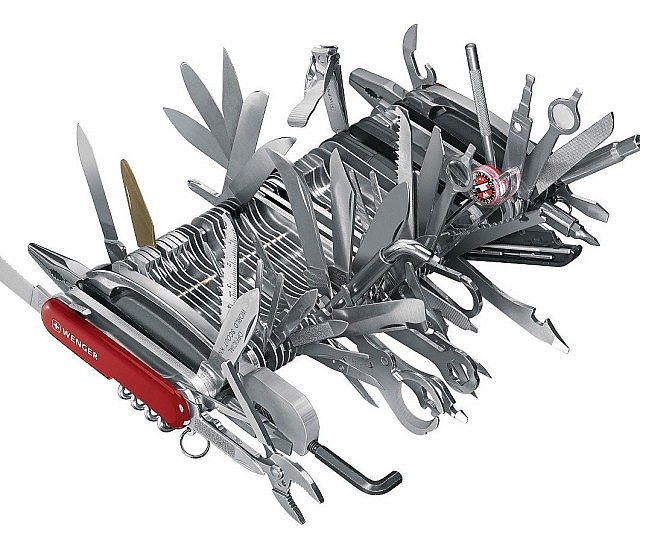
The best Swiss Army knife for survival is the one that balances size, weight, and a small set of genuinely useful tools for the activities you actually do, not the one with the most gadgets crammed into it. For most people that means a compact 91mm Victorinox model like the Huntsman or Camper, which pairs a sharp blade with a saw, scissors, and screwdrivers without becoming a brick in your pocket.
That single principle, the right tools rather than the most tools, is what this guide is built around. Below we break down every factor that matters when choosing a Swiss Army knife, name specific models worth considering, and cover the care and carry details most buying guides skip.
A good Swiss Army knife earns its place because it’s endlessly versatile. From tightening a loose screw on the trail to slicing rope, opening a can at camp, or handling a hundred small fixes around the house, these compact multi-tools solve problems far bigger than their size suggests. It’s no surprise most seasoned adventurers never leave home without one.
Quick Answer: What Makes a Good Swiss Army Knife?
A great Swiss Army knife comes down to four things:
- The right size: compact enough to carry every day, big enough to be useful.
- Manageable weight: light enough that you’ll actually bring it along.
- A sharp, quality blade: the tool you’ll use more than any other.
- A curated tool set: the specific functions you need, and nothing you don’t.
Get those four right for your use case and you’ll have a knife you carry for decades. Let’s dig into each.
1. Size: Compact Enough to Carry, Big Enough to Use
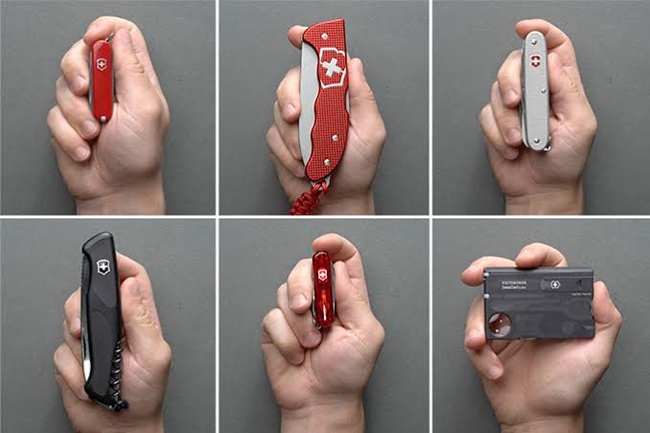
Size is the first thing to get right, because a knife you leave at home helps no one. Swiss Army knives come in a handful of standard lengths, and picking the correct one narrows your choice dramatically.
| Length | Class | Best for |
|---|---|---|
| 58mm | Keychain (e.g. Classic SD) | Ultralight EDC, keyring, travel |
| 84mm | Small | Light everyday carry |
| 91mm | Standard | The sweet spot, most survival and camp models |
| 111mm | Large | Locking blades, one-hand opening, heavier use |
| 130mm | Extra-large (RangerGrip) | Rugged outdoor work, gloved hands |
For survival and outdoor use, the 91mm standard size is the classic all-rounder. It’s small enough to disappear in a pocket yet large enough for the blade, saw, and other tools to work properly.
The trade-offs matter at both ends. If a knife is too thick, it won’t sit comfortably in a pocket or slip into tight compartments. Too long or heavy, and you’ll be tempted to leave it behind, which defeats the whole purpose. But go too small and the tools become fiddly or inadequate when you actually need them. Match the size to the job, not to an instinct to go as big or as tiny as possible.
2. Weight: Light Enough That You’ll Actually Bring It
Weight is where a lot of backpackers make the wrong call. Every year people agonize over whether to pack a hatchet or a heavy fixed-blade knife, when a well-chosen Swiss Army knife does most of those jobs at a fraction of the weight.
The whole appeal of a multi-tool is that it replaces several single-purpose tools. Loading up on heavy gear “just in case” works against you on a long hike, where every ounce counts. A 91mm knife typically weighs only a few ounces, so you get real capability without the burden. You should head into the outdoors feeling equipped, not weighed down.
3. Blade Quality: The Tool You’ll Use Most
The blade is the heart of any Swiss Army knife, so don’t overlook it while counting the other tools. Genuine Victorinox knives use stainless-steel blades that hold a good edge, resist rust, and are easy to re-sharpen at home.
A few blade considerations for survival use:
- Locking vs. non-locking. Most Swiss Army knives, the 58mm to 91mm models, use a slip-joint blade that folds without a lock. It’s perfectly safe for normal cutting, but for hard, survival-style tasks some people prefer the 111mm line, which adds a liner lock so the blade won’t fold under pressure.
- One-hand opening. Standard blades are nail-nick openers needing two hands. Models like the One-Hand Trekker feature a one-hand-opening, locking blade, which is genuinely useful when your other hand is occupied.
- Keep it sharp. A dull blade is more dangerous than a sharp one because it forces you to use excess pressure. See the care section below.
4. Tool Variety: Why More Isn’t Always Better
The best knife isn’t the one with the most tools. It’s the one with the best tools for you. It’s tempting to think 30 functions beats 15, but past a point extra tools just add bulk, weight, and cost while making the knife awkward to hold and hard to pocket.
The tools that earn their keep for most outdoor users are:
- Large blade: cutting, carving, food prep.
- Wood saw: surprisingly effective on branches and kindling.
- Scissors: one of the most-used tools, period.
- Can and bottle openers: camp cooking essentials.
- Screwdrivers (flat and Phillips): gear repairs and everyday fixes.
- Awl or reamer: punching holes in leather, wood, or straps.
- Tweezers: splinters and ticks, a genuine outdoor safety tool.
Before buying, honestly ask which functions you’ll actually reach for. A knife with 100 tools you never use is heavier and more expensive than the perfect 8-tool knife you carry every day.
Recommended Swiss Army Knife Models by Use
Genuine Swiss Army knives are made by Victorinox, based in Ibach, Switzerland since 1884. The other historic maker, Wenger, was acquired by Victorinox in 2005 and its knife line was folded into the Victorinox brand in 2013, so today Victorinox is the name to look for. Here’s how the popular models map to real needs.
- Ultralight everyday carry: Victorinox Classic SD (58mm). Blade, scissors, file, tweezers, toothpick. Lives on a keyring and weighs almost nothing.
- All-around survival and camping: Victorinox Huntsman or Camper (91mm). The Huntsman adds scissors to the saw-and-blade combo, while the Camper is a leaner, saw-focused version. Either is a superb general-purpose outdoor knife.
- Maximum ruggedness: Victorinox Farmer (Alox, 91mm). Built with tough aluminum (Alox) scales instead of plastic, with a blade, saw, awl, and openers and no fragile extras. A favorite of minimalists.
- Heavy-duty and one-handed: Victorinox One-Hand Trekker (111mm). Locking, one-hand-opening serrated blade plus saw. The closest a Swiss Army knife gets to a hard-use survival knife.
- Do-everything toolbox: Victorinox SwissChamp (91mm). The maximalist option with 30-plus functions. Great for a car, boat, or workshop where weight doesn’t matter and variety does.
Cellidor vs. Alox scales: The familiar red plastic (Cellidor) models include tweezers and a toothpick and come in the widest tool range. Aluminum Alox models are slimmer, tougher, and more pocket-friendly, but skip the toothpick and tweezers. For rugged outdoor use, many people prefer Alox.
Recommended Models Compared
| Model | Size | Locking blade? | Standout | Best for |
|---|---|---|---|---|
| Classic SD | 58mm | No | Keyring-tiny | Ultralight EDC, travel |
| Camper | 91mm | No | Saw-focused, lean | Minimalist camping |
| Huntsman | 91mm | No | Saw plus scissors | All-round survival/camp |
| Farmer (Alox) | 91mm | No | Tough alloy scales | Rugged minimalist carry |
| One-Hand Trekker | 111mm | Yes | Locking, one-hand serrated | Hard use, survival |
| SwissChamp | 91mm | No | 30-plus tools | Car, boat, workshop |
How to Match the Knife to Your Activity
The right Swiss Army knife depends entirely on where you’re taking it. Ask yourself what situations you’ll realistically face.
Hunting or fishing? Look for a larger blade or fishing-specific tools, and consider a locking 111mm model for confident cutting.
Backpacking or camping? Prioritize light weight and a sharp blade plus a saw for processing kindling. The 91mm Huntsman or Alox Farmer shine here.
Car or home tool? Weight matters less, so lean into variety, with more screwdrivers, scissors, and a magnifying glass for small fixes. The SwissChamp fits this role well.
There’s a line between what you need and what the knife offers. Don’t be seduced by the model with the most tools, but don’t undercut yourself with something too simple to handle the jobs you’ll actually face. Picture your typical outing, then choose the knife that answers it.
Caring for Your Swiss Army Knife
A well-maintained Swiss Army knife lasts a lifetime, and many get passed down between generations. Keep yours in top shape.
- Rinse and dry after messy jobs. Open all the tools, rinse with warm water (a drop of dish soap for sticky residue), then dry completely to prevent rust in the joints.
- Oil the pivots occasionally. A tiny drop of mineral oil, or Victorinox’s own oil, on each hinge keeps the tools opening smoothly. Wipe off the excess.
- Sharpen the blade regularly. A whetstone or a simple pull-through sharpener restores the edge. A sharp knife is safer and does more with less force.
- Never put it in the dishwasher. The heat, harsh detergent, and moisture will dull the blade and corrode the joints.
A Quick Note on Carrying Knives Legally
Knife-carry laws vary by country, state, and even city, covering blade length, locking mechanisms, and where you can carry. Non-locking blades under a certain length are often treated more leniently, but rules differ everywhere and change over time. Check your local regulations before carrying, and never bring a knife into airports, government buildings, or other restricted areas. This is general information, not legal advice.
Frequently Asked Questions
What is the best Swiss Army knife for survival?
For most people, a 91mm Victorinox Huntsman or an Alox Farmer offers the ideal blend of a sharp blade, a wood saw, and essential tools in a light, pocketable package. For hard use, the locking 111mm One-Hand Trekker is the most survival-oriented option.
Are Swiss Army knife blades good enough for real use?
Yes. Victorinox uses quality stainless steel that holds an edge well, resists rust, and sharpens easily. It’s not a heavy-duty fixed-blade survival knife, but for the vast majority of cutting tasks it’s more than capable.
Do Swiss Army knives lock?
Most standard models, from 58mm to 91mm, use a non-locking slip-joint blade. The larger 111mm line adds a liner lock, which is worth choosing if you plan to do harder cutting where a folding blade would be a hazard.
How many tools do I really need?
Fewer than you think. A blade, saw, scissors, screwdrivers, can and bottle openers, and tweezers cover the overwhelming majority of real-world situations. Extra tools add weight and bulk you may never use.
What’s the difference between Cellidor and Alox models?
Cellidor, the classic red plastic, models offer the widest tool selection and include tweezers and a toothpick. Alox, aluminum, models are slimmer, tougher, and more pocket-friendly but drop those small extras. Alox is popular for rugged outdoor carry.
How do I keep my knife from rusting?
Rinse and fully dry it after wet or messy jobs, and put a small drop of oil on the pivots now and then. Never run it through the dishwasher.
Is a Swiss Army knife TSA-approved for flights?
No. Swiss Army knives cannot go through airport security in carry-on bags in most countries, including the US. Pack any knife in checked luggage, and never try to carry one through a security checkpoint.
The Bottom Line
The best Swiss Army knife for survival isn’t about maxing out the tool count. It’s about matching size, weight, blade quality, and a curated tool set to the way you actually live and adventure. Decide where you’ll carry it, picture the jobs it’ll handle, and choose accordingly. Do that, and you’ll end up with a compact, reliable companion that offers a big piece of mind in a tiny object, one you’ll reach for again and again for years.
Ready to gear up? Pair your knife with the rest of your kit and head outside with confidence.
Related Reading on My Outdoors Life
- Best Moisture-Wicking Shirts for Men: stay cool and dry on the trail.
- Camping Gear Checklist for Beginners: everything you need to know.
- Essential Survival Kit Checklist: what to pack beyond your knife.
- Beginner’s Camping Gear Guide: everything you need for your first trip.
- How to Sharpen a Knife in the wild: keep every blade in top condition.