
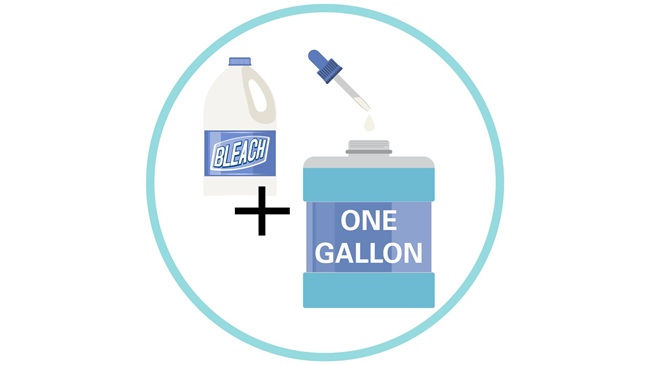
Knowing how to purify water with bleach is one of the most useful emergency skills you can learn, because clean water is the one thing you genuinely can’t go without for long. The human body is around 60% water, and you can survive only about three days without it. So when you’re far from a tap, or when a storm, flood, or boil-water notice knocks out your safe supply at home, a few drops of ordinary household bleach can make contaminated water safe to drink.
The catch is precision. “A few drops” is doing a lot of work in that sentence, because if you get the ratio wrong you either leave dangerous microbes alive (too little) or create water that can make you sick on its own (too much). For that reason, this guide walks through exactly how to do it safely, using the official dosing from the U.S. EPA and CDC rather than guesswork.
One important point before we start: bleach is a backup method. According to both the EPA and CDC, boiling is the preferred way to disinfect water, because it reliably kills bacteria, viruses, and protozoa. Use bleach only when you can’t boil, whether that’s from a lack of heat, no fuel, or simply too much water to boil practically.
Editors Note: We get commissions for purchases made through links in this article. The information here is for educational purposes and emergency preparedness, and it is not medical advice. This article was updated September 2026.
What Kind of Bleach Can You Use?
This part is non-negotiable, because the wrong bleach will hurt you. Use plain, unscented household chlorine bleach whose only active ingredient is sodium hypochlorite. In the United States that’s typically between 5% and 9% sodium hypochlorite, and most standard bleach is 6% or 8.25%. Do not use any of the following:
- Scented or “fresh linen” bleaches
- Color-safe or “splash-less” bleaches
- Any bleach with added cleaners or detergents
- Non-chlorine (“oxygen”) bleach, which doesn’t disinfect water at all
Two more rules matter just as much. First, use fresh bleach, because chlorine strength fades over time. The EPA recommends using bleach that’s been stored at room temperature for less than one year, since old, weak bleach can leave you under-dosing without knowing it. Second, avoid “concentrated” or “ultra” bleach above 8.25%, because precise dosing gets difficult and the risk of over-chlorinating to a harmful level goes up. Stick to standard 6% to 8.25%.
The Correct Bleach-to-Water Ratios (EPA Official Chart)
Here’s the part the internet most often gets wrong: the correct dose depends on your bleach’s concentration. Check the “active ingredient” line on your bottle, then use the matching column below. This is the EPA’s official emergency disinfection table.
| Volume of Water | Amount of 6% Bleach | Amount of 8.25% Bleach |
|---|---|---|
| 1 quart / 1 liter | 2 drops | 2 drops |
| 1 gallon | 8 drops | 6 drops |
| 2 gallons | 16 drops (¼ tsp) | 12 drops (⅛ tsp) |
| 4 gallons | ⅓ tsp | ¼ tsp |
| 8 gallons | ⅔ tsp | ½ tsp |
Remember to double the dose if the water is cloudy, colored, or very cold. Filter cloudy water first, as covered in Step 1, and then double the bleach. Cold and murky water both slow disinfection down, so they need more chlorine to work. If you’re unsure of your bleach’s exact strength, for example with an older bottle, use the cloudy-water doubled amount and rely on the smell test in Step 4.
How to Purify Water with Bleach: Step by Step
Step 1: Filter cloudy water first
Chlorine works far better on clear water, because dirt and debris “use up” the bleach before it can disinfect. If your water is cloudy or murky, let it settle, then pour it through a clean cloth, paper towel, or coffee filter. Repeat with a fresh filter if it’s still cloudy. For a sturdier field option, see our guide on how to make a DIY water filter. Keep in mind that filtering removes sediment but does not make water safe on its own. You still need to disinfect afterward.
Step 2: Measure your water and add the bleach
Measure how much water you’re treating, then add the exact number of drops from the chart above using a clean medicine dropper. A dropper really does matter, because drops are small and eyeballing it from the bottle is how people over-chlorinate. Add the bleach to cool or room-temperature water.
Step 3: Stir and wait 30 minutes
Stir thoroughly, cover the container, and let it stand for at least 30 minutes, or longer if the water is very cold. This contact time is what actually kills the microbes, so don’t rush it.
Step 4: Do the smell test
After 30 minutes, the water should have a slight chlorine smell. That faint odor is your confirmation it worked.
- If you can smell chlorine, it’s ready to use.
- If you can’t, add the same dose again, stir, and wait another 15 minutes. If there’s still no chlorine smell after that, discard the water. The source may be too contaminated to treat this way, so find another source or method.
Step 5: Improve the taste (optional)
If the chlorine taste is too strong, pour the water back and forth between two clean containers several times to aerate it, then let it stand uncovered for a few hours. The chlorine dissipates and the taste mellows.
Quick-Reference Dosage Card
For clear water and standard household bleach, use these amounts:
- 1 liter / quart: 2 drops
- 1 gallon: 8 drops (6% bleach) or 6 drops (8.25% bleach)
- 5 gallons: 40 drops (6%) or 30 drops (8.25%)
- Cloudy or very cold water: double all amounts
- Wait time: 30 minutes, then smell-check
What Bleach Kills and What It Doesn’t
This is the most important safety limitation to understand, and it’s why bleach is a backup rather than a first choice. Used correctly, bleach reliably kills most disease-causing bacteria (such as E. coli) and viruses. However, bleach does not reliably kill Cryptosporidium, and it’s less effective against Giardia.
These two protozoan parasites are common in backcountry streams and in water contaminated by animal or human waste, and their tough cysts shrug off chlorine at these doses. So if there’s any chance your water contains these parasites, which includes most wild streams and anything near livestock or sewage, bleach alone may not be enough. Your better options for protozoa are boiling, which kills everything, or a good water filter rated to 0.1 to 0.2 micron.
For backcountry trips specifically, a dedicated filter is the smarter primary tool, so see our roundup of the best backpacking water filters for options like the Sawyer Squeeze and Katadyn BeFree. Bleach is the emergency stopgap when those aren’t available.
Advantages and Limitations of Bleach Purification
Bleach has clear strengths as an emergency tool. It’s cheap and everywhere, since a bottle costs a couple of dollars and sits in nearly every home, store, and gas station. A little also goes a long way, because a few drops treats a liter, so a small bottle covers a lot of water in a crisis. On top of that, it’s effective against bacteria and viruses when dosed correctly, and it leaves no lasting color or taste once the chlorine dissipates, unlike iodine, which discolors water and tastes harsh.
It also has real limitations you need to plan around. Remeber it doesn’t kill Cryptosporidium and is weak against Giardia. It has a short shelf life too, since bleach weakens within months to a year, which makes it a poor choice for long-term storage. For long-term prep, granular calcium hypochlorite stored sealed lasts far longer, though it requires careful mixing and counts as an advanced option.
Dosing must also be exact, because too little leaves microbes alive while too much is harmful. Finally, the fumes can irritate, especially for people with asthma, and spilled bleach isn’t great for the environment at a campsite, since it can harm plants and leach into soil and water.
Important Safety Warnings
- Never mix bleach with ammonia or other cleaners. This produces toxic chloramine gas that can be dangerous or deadly.
- Don’t over-dose. Drinking water with too much chlorine can cause stomach pain, vomiting, and in severe cases serious harm. When in doubt, follow the chart and trust the faint-chlorine-smell test rather than adding “a little extra to be safe.”
- Ventilate. Mix and treat in a well-ventilated area. If your eyes burn or you have trouble breathing, get to fresh air, and seek medical attention if symptoms persist. People with asthma should take extra care.
- Store bleach safely. Keep it sealed, cool, dark, and well out of reach of children and pets.
- Treat this as an emergency method. It isn’t meant as your everyday, long-term water supply.
How Bleach Compares to Other Purification Methods
No single method is best for every situation, so here’s how bleach stacks up against the alternatives. Boiling is the gold standard. A rolling boil for one minute, or three minutes above 6,500 ft (2,000 m), kills bacteria, viruses, and protozoa. The catch is that you need a heat source and fuel, and you have to wait for the water to cool.
Water filters such as Sawyer, Katadyn, and LifeStraw remove bacteria and protozoa mechanically, with no chemicals or waiting, which makes them the backcountry favorite. Most don’t remove viruses, but viruses are rare in North American and Australian backcountry water. Purification tablets, whether chlorine dioxide or iodine, offer pre-measured, foolproof dosing, and chlorine-dioxide tablets do handle Cryptosporidium with a longer wait.
They’re lightweight and far easier to dose correctly than liquid bleach, so they’re a smart thing to keep in any kit. Bleach, finally, is the cheapest and most available option and works well for home emergencies and large volumes, but it doesn’t handle protozoa and demands careful dosing. The practical takeaway is simple. For backcountry trips, carry a filter and/or tablets.
For home and disaster prep, keep bleach (fresh) and the means to boil. Bleach shines exactly when nothing else is available, and that’s reason enough to know how to use it. If you’re stuck with only seawater, read how to purify salt water, because bleach won’t desalinate it and that situation needs a different approach entirely.
Frequently Asked Questions
Is it safe to put bleach in drinking water?
Yes, it’s safe when you follow the correct ratios (for example, 8 drops of 6% bleach per gallon of clear water) and use plain, unscented chlorine bleach. The treated water is safe to drink after a 30-minute wait and should have only a faint chlorine smell. Adding too much, however, can make you ill, so precise dosing matters.
How much bleach do I add to a gallon of water?
For clear water, add 8 drops of 6% bleach, or 6 drops of 8.25% bleach, per gallon. Double the dose if the water is cloudy, colored, or very cold. Always check your bottle’s sodium hypochlorite percentage first.
How long does bleach take to purify water?
It takes at least 30 minutes after you stir it in. After that, the water should smell faintly of chlorine. If it doesn’t, re-dose and wait another 15 minutes. Very cold water may need longer.
Does bleach kill Giardia and Cryptosporidium?
Not reliably. Bleach is weak against Giardia and does not reliably kill Cryptosporidium. To stay safe against these parasites, boil the water or use a filter rated to remove protozoa, or use chlorine-dioxide tablets, which do handle them with extra contact time.
Can I use scented or concentrated bleach?
No. Use only unscented bleach with no added cleaners, and stick to standard 6% to 8.25% concentrations. Scented, color-safe, and cleaner-added products can be toxic, and “ultra” or concentrated bleach above 8.25% is hard to dose safely.
How long does bleach stay effective for water purification?
Bleach loses strength over time. The EPA recommends using bleach stored at room temperature for less than a year. For long-term emergency storage, purification tablets or sealed granular calcium hypochlorite hold up far better.
Conclusion
Bleach is one of the cheapest, most accessible ways to make water safe when your normal supply fails, but it’s a precision tool rather than a “more is better” one. Use plain unscented chlorine bleach, match the dose to your bottle’s concentration, double it for cloudy or cold water, wait 30 minutes, and confirm that faint chlorine smell.
Above all, remember its blind spot, because it won’t reliably kill Cryptosporidium or Giardia, so reach for boiling or a filter when parasites are a risk. Most of all, learn this before you need it. Keep a fresh bottle of bleach and a dropper in your emergency kit, a filter or tablets in your pack, and you’ll never be caught choosing between thirst and a stomach you’ll regret. Got a water-purification tip or a story from the field? Share it in the comments, because it might help a fellow outdoors lover stay safe.
Sources for dosing and safety guidance: U.S. Environmental Protection Agency, “Emergency Disinfection of Drinking Water,” and U.S. Centers for Disease Control and Prevention, “Making Water Safe in an Emergency.” Always follow the instructions on your bleach label, and your local authorities’ guidance during a water emergency.

Daniel is a gear freak when it comes to hiking, climbing and camping. He went to REI Outdoor School to meet new people and learn best practices. Don’t even try to argue with him about the latest backpack or ice axe, he tried most of them. Daniel’s dream is to climb Mount Everest.
This is amazing. Kudos to you for sharing this important article. I will surely take note of the tips you mentioned since you’ll never know what might happen in case of emergencies. We really need to be more knowledgeable about these kinds of survival tips. Will definitely share this around.
I cannot see myself using this technique in the near future, but it is of course nice to know just in case. Since you said it can be dangerous, so I think I will just choose boiling water if needed. Also, there are some organisms that bleach cannot eliminate like protozoa and Cryptosporidia.
Most people would prefer water filtration/purifying devices. But a bleaching agent can come in handy during an emergency situation. You should be careful with the quantity you use, though.
You should consider adding twice the amount of bleach recommended if the water you are purifying is cloudy and you cannot decant/filter it.
I want to store good clean tap water for long periods of time. It would seem proper to also add some bleach to this water but in much less amounts. How many drops per gal.?
If the water is clean and the recipient is also clean and everything’s stored appropriately, there is no need to add extra bleach. If unsure, before using, boil it or add bleach then… but there is really no real reason to do it with already clean water stored properly in a clean container.
Thank you for such a comprehensive article on making safe water with bleach!