
When you are deep in the woods, taking care of yourself means more than just watching out for wildlife. The biggest risk of camping and hiking is actually dehydration.
You might be surrounded by streams and lakes, but there is no way to know for sure if that water is safe. Since your body is around 60% water, you must replace what you lose during a long hike or while setting up camp.
This is where the best water purification tablets come in. These small, lightweight tools eliminate bacteria, viruses, and other contaminants that can ruin a trip. Modern tablets ensure your water is safe to drink and, in many cases, improve the flavor. But you shouldn’t just grab the first box you see on the shelf.
Understanding how these tablets work, the ingredients they use, and which specific pathogens they target is the difference between a successful trip and a medical emergency.
In recent years, water quality concerns have become an ongoing issue, exemplified by the Camp Lejeune water contamination lawsuit, underscoring the importance of safeguarding your health when enjoying the great outdoors.
So, whether you’re an avid hiker or a casual camper, ensuring your water is free from harmful contaminants should be a top priority.
Top Purification Tablets
Note: We get commissions for purchases made through links in this article
Quick Comparison & Summary
If you are in a hurry, here is how the top three options compare based on protection, speed, and taste.
| Product | Details |
|---|---|
| Katadyn Micropur MP1 | Maximum Safety Active ingredient: Chlorine Dioxide Kills Cryptosporidium: Yes Wait Time: 4 Hours |
| Potable Aqua PA+ | Best Taste Active ingredient: Iodine + Neutralizer Kills Cryptosporidium: No Wait Time: 35 Minutes |
| Aquatabs | High Volume / Value Active ingredient: NaDCC Kills Cryptosporidium: No – Giardia Only Wait Time: 30 minutes |
Related Product: In addition to these water purification tablets, it is a good idea to include a LifeStraw personal water straw, and this is ideal where you need to drink directly from a potentially hazardous water source.
Now let’s learn more about the tablets recommended above!
Katadyn Micropur MP1 Purification
- Pack Size: 30 tablets
- Output: 1 tablet treats 1 liter of water
- Chemical Element: Chlorine Dioxide
- Where to Buy: Katadyn Micropur MP1 Purification Tablets
The Micropur tablets are a top-tier choice because they are EPA-registered and effective against the full spectrum of threats: viruses, Giardia, bacteria, and Cryptosporidium. This covers the vast majority of water hazards you will encounter worldwide, even in areas with very poor sanitation.
One important note: while most harmful organisms are neutralized in 30 minutes, the mandated treatment time for Cryptosporidium is 4 hours. If you suspect the water is heavily contaminated, you must be patient.
Potable Aqua PA+Plus Water Purification
- Pack Size: 100 (Two-bottle set)
- Output: 2 tablets treat 1 liter of water
- Chemical Element: Iodine
- Where to Buy: Potable Aqua with PA+ Plus Neutralizing Tablets
Potable Aqua is a classic iodine-based germicidal tablet. While many modern purifiers use chlorine, iodine remains highly effective against most bacteria. The main drawback of iodine is the medicinal taste and yellow tint it leaves behind.
This PA+ version solves that problem by including a second bottle of neutralizing tablets. These remove the iodine taste and color completely. You should avoid this product if you have an iodine allergy, are pregnant, or have thyroid issues.
To use them, drop two germicidal tablets into a liter of water. Cap the bottle loosely and shake it so the water moistens the threads of the cap – this is a vital step often missed by beginners. Wait 5 minutes, tighten the cap, and wait another 30 minutes.
Once the wait is over, add two PA+ neutralizing tablets, wait 5 more minutes, and your water is ready to drink.
A Note on Shelf Life Most of the tablets listed here have a shelf life of 3 to 5 years. However, once you open a bottle of Potable Aqua, the tablets begin to degrade due to exposure to air and moisture.
If your iodine tablets look dull or greyish rather than shiny and dark, they have lost their potency and should be replaced. The individually foil-sealed tablets like Katadyn and Aquatabs generally last longer in humid environments.
Aquatabs Water Purification Tablets
- Pack Size: 30 or 50 (available in 100 or 200 counts for bulk)
- Output: 1 tablet treats 1 liter of water (49mg tablets)
- Chemical Element: Sodium Dichlorisocyanurate (NaDCC)
- Where to buy: Aquatabs Water Purification Tablets
Aquatabs are the most utilized water purification tablets worldwide. They are used daily by millions of people and are a staple for NATO and various NGOs. Unlike traditional chlorine, these use NaDCC, which is more shelf-stable and effective across a broader range of water conditions.
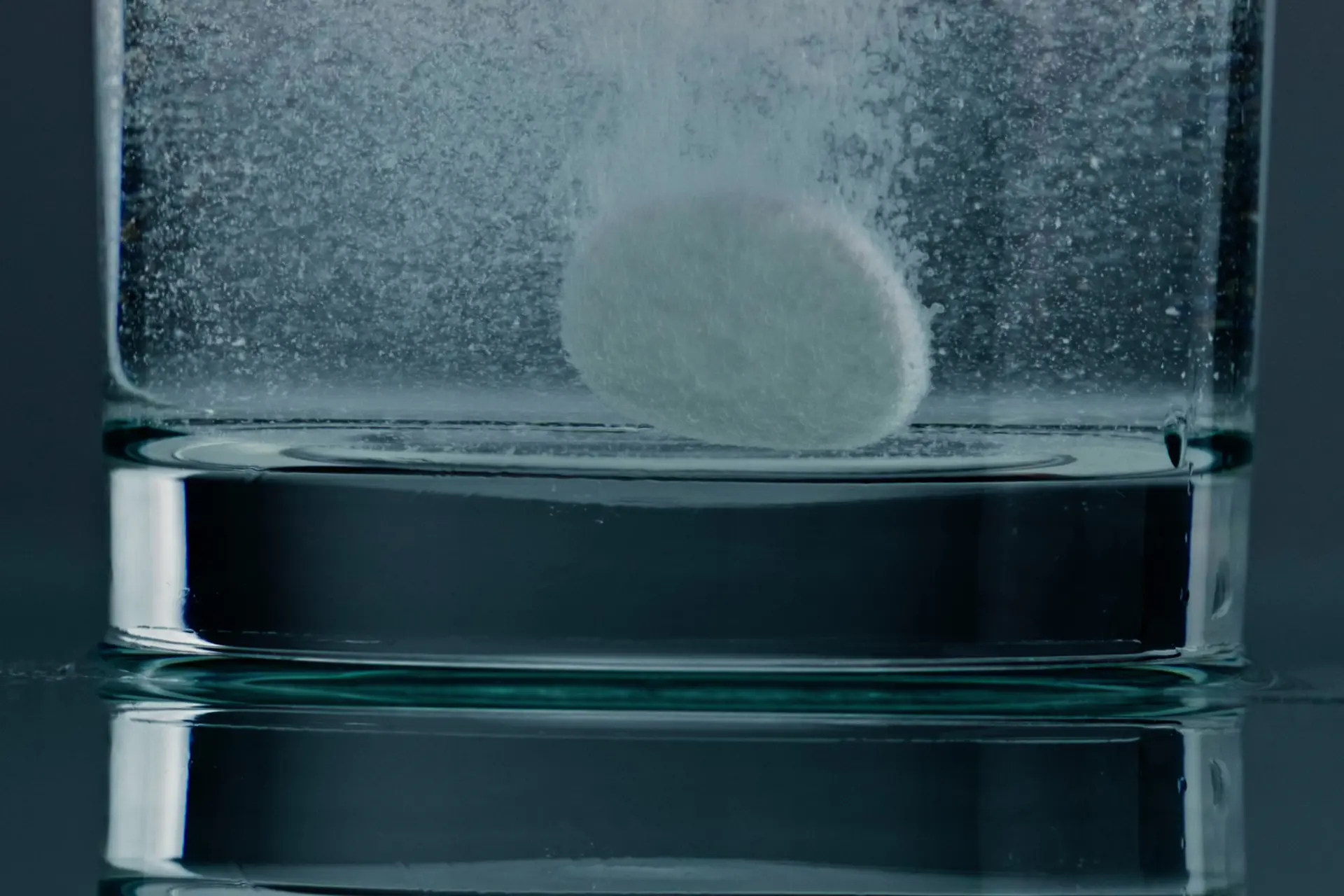
A single tablet treats one liter of water in just 30 minutes. These are effervescent, meaning they dissolve quickly and start working immediately to eliminate bacteria and viruses, protecting you from cholera, typhoid, and dysentery.
Pro Tip: Because one or two people in a group might be more susceptible to infection than others, you should never skip purification just because your friends seem fine. If someone does get sick, having Oral Rehydration Salts (ORS aka Electrolytes) on hand is essential to restore the minerals lost through diarrhea and dehydration.
Factors Effecting Water Loss
We lose naturally lose water from our bodies every day, and it’s important to replace this water so that the body can continue to function properly. There are a few factors that contribute to the loss of water from the body.
- Internal factors: here we refer to factors generally limited to the body, and whilst there may be many contributors to abnormal water loss, the most significant is the effect of diarrhea on the body.
Diarrhea is not limited to the evacuation of the bowels alone; it also exacerbates sweating, which is another underestimated form of water loss. In the event that you start experiencing loose stool, it’s important that you stay hydrated.
Another internal factor that affects our levels of hydration is urination. Water and natural salt is excreted from the body in this process, and it’s important to rehydrate.
A failure to do so will result in a concentration of the natural salt, which can result in kidney damage and bladder infections. - External factors: The most significant of which is simple heat exposure, and here the body can lose anything between one and 1.5 liters of water through perspiration. Wear breathable clothes to minimize the retention of heat on the body and drink water frequently. If you start to feel thirsty, you’re already dehydrated.
How to Minimize Water Loss
There are number of basic guidelines one can adopt to limit the amount of water we lose, and in emergency situations, it is a very good idea to anticipate what our bodies are likely to experience if we don’t manage our situation and environment.
For the purposes of our review, we will concentrate only on avoiding unnecessary water loss, and clearly these will be situation specific, and therefore may not always apply:
- Remain calm: panicking only increases the heart rate and, in turn, the need for the body to expend energy, which requires water. Take deep breaths to calm yourself.
- Reduce your movements: running around will quickly deplete your water reserves. Only move when necessary.
- Avoid risky water sources: this may provide temporary relief, but remember that they could cause diarrhea, which will remove more water than your body has taken in. This will cause your condition to deteriorate even further to the point of life-threatening.
- Stay out of the sun: heat will quickly dehydrate the body given that an adult can lose between one and one and a half liters of water through sweating.
- Whilst salt is an important mineral for the body to function normally, during episodes of acute potable water shortage, avoid eating salty foods. In fact, it is safer to reduce your intake of dehydrated foods of any type, as these generally require that body utilize its supply of water for digestion.
If you’re not careful, you could start experiencing the symptoms of dehydration in no time. These symptoms include:
- increased thirst
- dry mouth
- swollen tongue
- dizziness and confusion
- dark urine and decreased urine output
- heart palpitations
- fainting
If you start to notice any of these symptoms, then you should seek either medical attention or a clean body of water to drink from immediately.
The Difference between Purification and Filtration
Many people think filtering and purifying are the same, but they serve different roles. Filtration is a mechanical process. It involves pushing water through a filter with tiny holes (microns).
While great at removing sediment, dirt, and larger parasites like Giardia, most filters cannot catch viruses because they are smaller than 0.1 microns.
Purification is a chemical or UV process. It doesn’t “remove” the pathogens; it kills or inactivates them so they cannot reproduce in your body. If you are drinking from a stream near a cow pasture or in a foreign country with poor sanitation, you need purification to handle the viruses.
For the best result, use both. Filter the water first to remove the “floaties” and cloudiness, then use your tablets to kill the invisible threats. This ensures your water is both safe and visually appealing.
Water Purification Chemical Treatments
In the water purifying process, there are two main chemicals that are used. They’re relatively safe, have been used for decades, and aren’t very expensive for manufacturers to produce.
The two main kinds of water purification treatments are:
- Chlorine treatment: Chlorine has been around for several centuries, and the biggest objection to its use is related to its taste. It is however effective against a broad spectrum of bacteria. Its a great alternative to those who are allergic to iodine.
- Iodine treatment: iodine has been proven to be more effective in the treatment of Giardia cysts – a bacterium which causes abdominal cramps, bloating, nausea, and episodes of diarrhea. It is advisable to consult your physician if you are over 50 years old, have thyroid problems, are pregnant, or have iodine allergies.
REMEMBER: Purification of the water container is just as important as purify the water. Always agitate the container with the lid partially closed to allow some of the treated water to spill out and in the process remove any untreated water which may remain in the groves or threads of the bottle opening or cap.
The Importance of Electrolytes
The process of losing water through dehydration affects more than the simple loss of water as we know it. Along with the water, the body loses a multitude of electrolytes, minerals and salts.
The most important electrolytes are sodium, chloride, potassium, magnesium, calcium, phosphate, and bicarbonate, which are all critical to the normal functioning of our bodies through a very complex process.
This is where rehydration salts play such an important role in restoring this delicate balance of minerals, which are normally available in the foods we eat every day.
In the case of a bout of diarrhea, particularly if it is a serious case, our bodies will expel the essential minerals rather quickly, and will require some assistance in restoring concentrated minerals.
That’s why rehydration salts are important, as the body absorbs water more quickly than food, allowing you to replenish your supply of electrolytes much faster.
Alternative Situations
When a natural disaster occurs, the first services to usually go down are the power grid and the water supply.
Alternatively, you could have running water, but the supply lines have been damaged, resulting in contamination of what should be potable water.
Apply this scenario to a populated area, and you could easily end up with an epidemic. It’s very easy for E. Coli to contaminate the water supply, and that can lead to a lot of sick people.
So instead of waiting around for this to happen, you could invest in a few water purification products to take care of the problem for you.
We’ve found a list of the top rated products in the market so that you can get an idea of what you should be looking for when you head to the store.
Conclusion
Water purification tablets represent what can only be described as the most valuable inclusion in your travel pack, and they are not limited to just travel.
From as little as 26 cents for a liter of purified water, one can agree that this is insignificant to the risks of falling ill, especially if you’re in a foreign land.
Don’t take a risk on that river or stream near your campsite; bring these purification tablets with you, and you’ll never have to worry about searching far for your water supply ever again.
Have a story you’d like to share regarding any of these products? Have we neglected to mention one of your favorites? Share your tale or leave a comment in the section below.
We’d love to hear from you and your experiences with any of these purification tablets or any other products that have given you great results.


I think Katadyn is the Cadillac of the water-purification market and their products are always top-notch. There is absolutely no excuse for not having a pack of these! The water is slightly yellow after treating with the tablets but this is pretty much gone by morning, and the best thing about these tablets is that the water tastes very good with no after taste.
Yes, these are good purification tablets and one that does not leave any aftertaste. These are also inexpensive to get and one that you need to stay safe from dirty or polluted water sources. Good for camping or for your bug-out bag!
Got a box of the Taharmayim tablets for our camping trips. Nice little Israeli tablets! They come foil wrapped and take up literally no space in your backpack. I cannot stand the taste of iodine tablets and so decided to take a chance on chlorine tablets instead. These certainly do not leave a bad taste like the iodine tablets do. I’d highly recommend these tablets, whether for camping and hiking; emergency preparedness; or simply making your tap water taste better!
Ah, so you’ve discovered the Taharmayim tablets which are, in my book – wicked! They’re very effective and like you’ve mentioned, no aftertaste like iodine tablets. Although Aquatabs are more mainstream and well-known. Thanks for the comments Emma!