
Disclosure: We earn commissions for purchases made through links in this article.
Choosing a survival lighter sounds simple until you realize there are hundreds of options across half a dozen fuel types, and most of them are marketed with words like “tactical” and “military-grade” that mean absolutely nothing in many cases.
I’ve been through enough of them to know what actually matters when you’re cold, wet, and need a flame and today’s article tells you exactly what I have learned, so you can choose the perfect survival lighter for your situation.
Already know what you want? Check out my picks for the best survival lighters – tested and reviewed with honest pros and cons.
What Will You Actually Use It For?
What will you use it for aside from lighting your campfire? This is the first and most important question, because unexpected things happen outdoors.
One day you might be camping in the woods, and the next day you might be on a boat heading to a new campsite. In cases like that, you need a lighter that works well not only in windy conditions but in wet ones too.
Consider waterproof lighters if you’re going boating, fishing, or camping near bodies of water. Weather can be unpredictable, so windproof capability is almost always worth having.
And if you’re planning to carry the lighter in a survival kit long-term, the kind you pack once and don’t touch for months, fuel evaporation becomes a serious factor.
O-ring sealed lighters like a classic, cheap BIC in an Exotac fireSLEEVE make far better kit lighters than a standard Zippo, which will slowly dry out on the shelf.
Think about your worst-case scenario, not your best day. If you only camp in clear weather at low elevation, almost any lighter will work. But the whole point of a survival lighter is that it performs when conditions turn against you.
Location and Altitude Matter More Than You Think
Where you’re going is also a major factor in choosing the right lighter.
Some lighters simply don’t work well at high altitude, mainly due to the thinner air, since oxygen is what feeds your flame.
For high-altitude locations, a plasma arc lighter like the UST TekFire PRO is your best bet, since it doesn’t rely on combustion at all – it creates an electric arc that works regardless of oxygen levels.
Alternatively, a quality jet torch lighter can work at moderate elevations, and ferrocerium rods or magnesium starters are reliable at any altitude, though those are more troublesome to set up and require practice.
Also read: Dry Camping 101
Durability and Reliability: The Non-Glamorous Essentials
While it’s always good to do research before purchasing, nothing matters more than your personal experience with a lighter. But when buying a survival lighter for the first time, always prioritize durability and reliability over looks or features. A lighter that looks great but fails in the rain is, at best, a fancy paperweight.
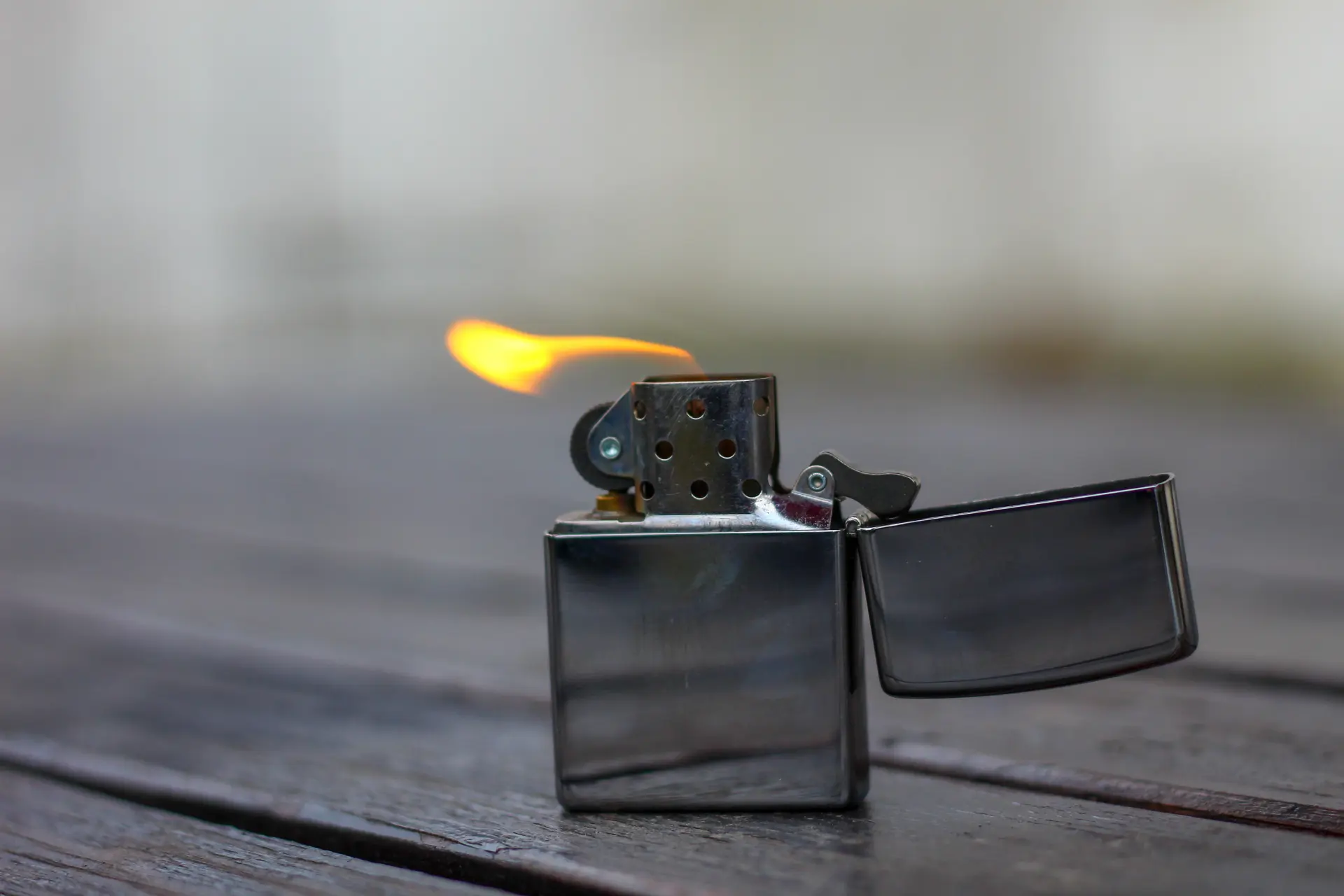
As a general rule, metal construction outlasts plastic. A Zippo, for example, will survive drops, bumps, and years of use that would destroy a plastic lighter. That said, there are trade-offs – some lighters trade raw durability for lighter weight and the ability to float. That’s a fair trade depending on whether you’re more worried about dropping your lighter on rocks or dropping it in a lake.
Here’s my personal test for durability: if I wouldn’t feel comfortable tossing it in the bottom of my pack alongside tools and cookware, it’s not durable enough for survival use.
Understanding Fuel Types
When you buy survival lighters online, they typically ship without fuel. This catches a lot of first-time buyers off guard.
The reason is DOT (Department of Transportation) regulations – butane, lighter fluid, and other fuels are classified as hazardous materials and can’t be shipped by air in most cases.
So plan ahead and order your fuel at the same time as the lighter, so you’re not stuck with a new lighter and nothing to put in it. Here’s a breakdown of fuel types and when each makes sense:
Butane
The most common fuel for refillable lighters. Available in most hardware stores and many convenience stores. Works well across a range of conditions, but performance drops at very high altitudes and very cold temperatures.
One important detail: use at least triple-refined butane. Cheap, unrefined butane contains impurities that clog jets and nozzles over time, and a clogged lighter is a dead lighter. I’ll cover this more in the maintenance section below.
Lighter Fluid (Naphtha)
Widely available, inexpensive, and produces a reliable flame. The downside is evaporation in non-sealed lighters – a filled Zippo left unused for three weeks (or more) can dry out completely, but today, some options are better sealed.
USB Rechargeable (Electric)
No fuel at all. Arc and plasma lighters use rechargeable lithium-ion batteries. You’ll never buy fuel, but you will need a power source eventually. These are a great option if you carry a power bank or solar charger, but I wouldn’t recommend them as your only fire source on extended trips without access to electricity.
Disposable Butane (BIC-style)
Pre-filled and sealed at the factory, which means almost zero fuel evaporation. You can’t refill them, but they are really affordable, so the economics favor just replacing them.
The BIC Classic is the gold standard here – it provides roughly 3,000 one-second lights and can sit unused for years without losing significant fuel.
Pair one with an Exotac fireSLEEVE for waterproofing and you have one of the most cost-effective survival fire setups available.
Flame: Size, Type, and Adjustability
Different lighters offer different flame sizes and types, and this matters more than most people realize.
Some produce powerful torch flames that can dry out and ignite damp tinder, a real advantage when everything around you is wet. Others produce a low, soft flame that may struggle with anything beyond dry paper or a cigarette.
Consider whether the flame is adjustable. Most modern lighters offer this feature, and you’ll want it. Sometimes you need a big flame to get damp kindling going, and other times a small flame is all you need to light a camp stove.
There are also fundamental differences in flame technology. Jet lighters produce a focused, high-temperature blue flame – great for cutting through wind.
Soft-flame lighters produce a traditional yellow flame that’s easier to control but more vulnerable to wind.
And arc lighters produce intense localized heat through an electric arc with no visible flame at all – they work differently and take some getting used to, particularly when learning what materials they can and can’t ignite effectively.
Arc lighters excel at fine tinder like dry grass, paper, and bark shavings, but don’t expect them to light a thick twig directly.
Also read: How to Survive in the Wild with Nothing
Maintaining Your Survival Lighter
A survival lighter is only as good as the care you give it. I’ve seen perfectly good lighters fail because they were neglected – and I’ve seen cheap lighters last for years because their owner took five minutes to maintain them. Here are the habits I follow.
For Butane Lighters
The number one maintenance rule is to use quality fuel. Triple-refined or higher butane burns cleaner and leaves far less residue in the jets and nozzles. Cheap gas station butane is full of impurities that build up over time and will eventually clog your lighter.
Before refilling, always bleed the tank. Turn the lighter upside down and press the refill valve with a small tool until all hissing stops. This removes trapped air that can cause inconsistent flames or prevent proper filling.
After refilling, let the lighter sit for two to three minutes so the butane reaches room temperature before you try to light it – igniting cold butane straight after filling often results in a weak or non-existent flame.
If your lighter has exposed jet nozzles (no protective cap), pocket lint and dust will get in. A quick blast of compressed air every few weeks keeps the jets clear. You can also gently clean around the nozzle with a dry Q-tip – but never use a pin or needle, which can damage the jet openings.
For Liquid Fuel Lighters
Carbon builds up around the flame area over time. A pipe cleaner or Q-tip dipped in rubbing alcohol works well to clean it off. Check and adjust the wick periodically – if the flame is getting shorter, the wick may need to be pulled up slightly with tweezers.
Flints wear out and should be replaced when the lighter becomes hard to spark. Carry a spare flint in your kit; they weigh nothing and cost pennies.
For Zippo owners specifically: refill before every trip. Since lighter fluid evaporates through the felt pad, a Zippo that’s been sitting for a few weeks is likely low or empty.
For Arc / Plasma Lighters
Keep the electrodes clean. Over time, residue from ignited materials (especially if you’ve been lighting things like paracord or treated tinder) can coat the arc points and reduce effectiveness. A wooden toothpick or plastic knife gently scraped across the electrodes clears this up.
Never use metal tools, and make sure the lighter is off before cleaning. Keep the USB charging port dry and covered when not in use – even on waterproof models, salt or grit in the port can cause charging issues.
Always Carry More than One Survival Lighter!
This is the most important piece of advice I can give you, and it’s free: carry more than one fire source. No single lighter is perfect for every situation.
My personal setup is a BIC in a fireSLEEVE as my primary, a small arc lighter as backup, and a ferrocerium rod as the last resort. The total weight is negligible, the total cost is under $50, but the total peace of mind is priceless.
If you take only one thing from this guide, let it be this: redundancy wins. Carry at least two different fire-starting methods.
What’s better: butane or lighter fluid?
Neither is universally better – they serve different needs. Butane lighters produce a cleaner, hotter flame (especially jet/torch models) and are easier to refill with pressurized cans.
Lighter fluid (naphtha) lighters like Zippos are simpler mechanically, produce a softer flame, and their fuel is available everywhere.
The main advantage of naphtha is simplicity and fuel availability; the main advantage of butane is a hotter, more wind-resistant flame. For sealed long-term storage, a naphtha lighter with O-ring seals or a disposable one wins over either refillable type.
Final Thoughts
Choosing a survival lighter isn’t complicated once you strip away the marketing and focus on what actually matters: will it light when conditions are bad, will it last, and does it fit the way you use it? That’s the entire decision tree.
If you have additional comments or questions, let me know in the comments down below – I love hearing from you!

Mark Foster loves to push his limits when it comes to survival in the wilderness. He might go for a 30-days adventure without any food or equipment except for a survival kit and a knife. We should mention that his survival kit has 122 items in it, so he know what he is doing. Mark is working on his book to share with the world all his experience gained during those brave adventures.