
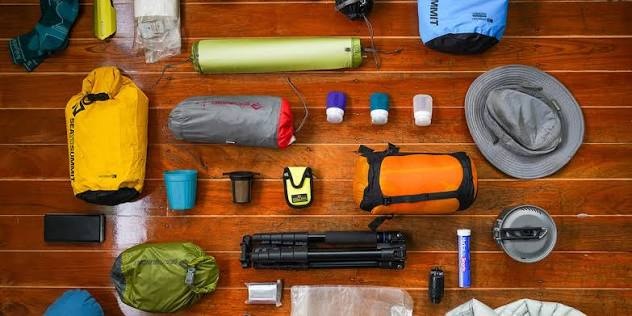
A beginner camping gear checklist comes down to five systems: shelter, sleep, kitchen, light, and safety. Get those right and everything else is comfort. A complete new kit for two people costs roughly US$250 to 450 (A$400 to 700, or €250 to 450) at the budget end, and you can rent or borrow most of it for a first trip.
That five-system framing matters more than the list itself. New campers usually arrive with a full car and still have a miserable night, because they bought four camp chairs and no sleeping pad. Every item below is sorted by whether it protects your sleep, your food, or your safety. Anything that does none of those three is marked optional.
This checklist assumes car camping: you drive to a site, park near your pitch, and unload from the boot. Weight barely matters, which changes the calculation on almost everything. Backpacking is a different list.
Where this guide applies: figures are given in metric and imperial throughout, and each section carries regional notes for the United States, Australia, and Europe. The physics of staying warm and dry is identical everywhere. The regulations, the hazards, and the campground infrastructure are not.
As an Amazon Associate we earn from qualifying purchases. Product links on this page are affiliate links. If you buy through them we may earn a commission at no extra cost to you. We link to gear categories rather than single products so you can compare current options yourself.
The Complete Camping Gear Checklist
| System | Essential | Optional | Why it matters |
|---|---|---|---|
| Shelter | Tent, poles, stakes, guylines, footprint | Mallet, tarp, repair tape | Wind and rain end trips faster than anything else |
| Sleep | Sleeping bag, insulated sleeping pad | Pillow, liner, stretcher or cot | The biggest single driver of whether you enjoy camping |
| Kitchen | Stove, fuel, pot, utensils, cooler, water containers, rubbish bags | Kettle, table, wash tub, coffee setup | Cold food and no water turn a weekend sour |
| Light | Headlamp per person, spare batteries | Lantern, string lights | Camp chores after dark are miserable one-handed |
| Safety | First aid kit, map, phone, power bank, sun protection | Whistle, multi-tool, fire blanket | Small problems stay small when you’re equipped |
Print that table. Then read the sections below for the specifications that decide whether each item actually works.
What Shelter Gear Do You Need?
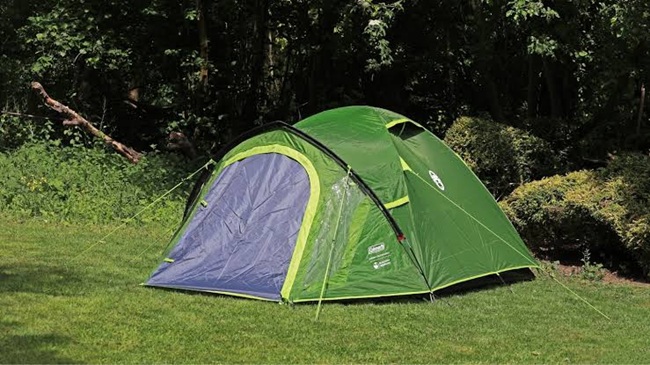
You need a tent one size larger than your group, with a fly rated to at least 1,500mm hydrostatic head, plus every stake and guyline it shipped with.
The capacity rule: subtract one. Capacity ratings assume adults lying shoulder to shoulder with roughly 50cm (20in) of width each and no space for gear. A “4-person” tent sleeps two adults comfortably with room for packs. Couples should buy a 3-person; a family of four wants a 6-person.
What the waterproof numbers mean. Hydrostatic head measures the water pressure a fabric resists before leaking, in millimetres. It is the same measure worldwide, which makes it the one spec you can compare across brands and countries. A fly at 1,500mm handles ordinary rain; 3,000mm handles sustained downpours. Floors need more, because body weight forces water through, so look for 3,000mm or higher on the floor regardless of the fly rating. Our guide to choosing a camping tent covers pole materials and season ratings.
Regional notes: shelter
| Region | What changes |
|---|---|
| United States and Canada | Season ratings (3-season, 4-season) are used consistently and are a reliable shorthand. Freestanding dome tents dominate. |
| Australia | UV degradation is the main killer of tent flies. Polyester loses strength fast under Australian sun, so look for UV-stabilised fabric and expect a shorter service life than the same tent in Europe. Coastal wind ratings matter more than cold ratings. Canvas tents and swags are common for extended trips and handle heat and UV far better. |
| Europe | Tunnel tents are popular and pitch well on the large, level, serviced pitches typical of commercial campsites. Season ratings are used but less consistently than in North America. Many sites allocate a numbered pitch, so tent footprint dimensions matter for booking. |
Shelter checklist:
- Tent with fly, poles, and stake bag (browse camping tents)
- Footprint or ground sheet (browse tent footprints)
- Stakes: count them before you leave, and pack six spares (browse tent stakes)
- Guylines, attached and tensioned
- Rubber mallet (rocks work, but split stake heads)
- Repair tape and a pole splint (browse tent repair kits)
Pitch it at home first. Every experienced camper says this and every beginner ignores it. A first pitch takes three times longer than the tenth, and discovering a missing pole section at 7pm in a car park is a very different experience to discovering it on a Tuesday afternoon at home.
What Makes a Good Camping Sleep System?
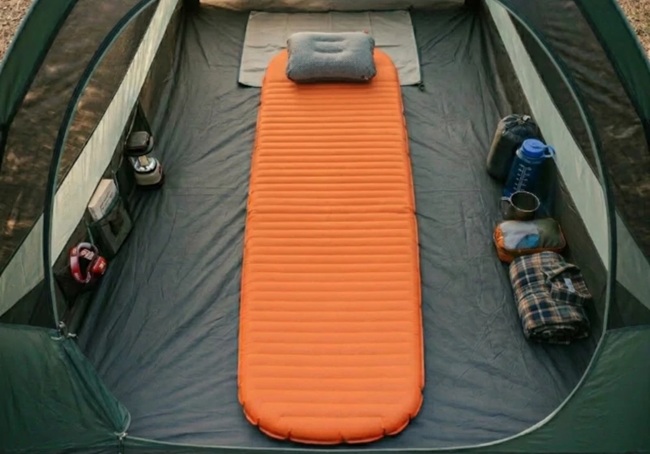
A sleep system is a sleeping bag plus an insulated pad. The pad matters as much as the bag, because the ground conducts heat away from your body far faster than air does.
Sleeping bags: read the comfort rating, not the headline number
Bags tested to ISO 23537, which replaced the older European standard EN 13537, carry three numbers:
| Rating | What it means | How to use it |
|---|---|---|
| Comfort | Temperature at which a cold sleeper stays comfortable | This is the number to shop by |
| Limit | Temperature at which a warm sleeper stays comfortable, curled up | Optimistic for most people |
| Extreme | Survival only: hypothermia risk, not sleep | Ignore it entirely |
Marketing usually leads with the limit rating because it’s the more impressive figure. Shop by comfort, and choose a bag rated about 5°C (10°F) below the coldest night you expect.
Standards vary by market. ISO testing is near-universal on European bags and standard among Australian technical brands. Many US and budget-market bags carry a single manufacturer-assigned number with no independent testing behind it. If a bag doesn’t state comfort and limit separately, treat its rating as marketing.
Why summer bags catch people out: air temperature falls roughly 6.5°C per 1,000m (3.5°F per 1,000ft) of elevation, and clear, still nights radiate heat away fast. The forecast you checked was for the nearest town, not your pitch.
Regional notes: sleep
| Region | What changes |
|---|---|
| United States | Coldest nights fall December to February. Desert and high-country sites swing hardest between day and night. |
| Australia | Seasons are inverted, so plan your coldest kit for June to August. The bigger trap is inland and desert camping, where a 35°C day can drop near freezing overnight in the same 24 hours. Alpine areas in NSW and Victoria get genuine sub-zero nights. A bag rated for “Australian summer” is often wrong by 15°C in the interior. |
| Europe | Coldest nights December to February. Northern and alpine regions need shoulder-season bags well into May. Mediterranean coastal camping is mild but humid, which favours synthetic fill over down. |
Sleeping pads: check the R-value
R-value measures resistance to heat loss into the ground, tested under ASTM F3340 so figures are comparable between brands and markets:
- R 1 to 2: warm summer nights only
- R 3 to 4: three-season, and the right target for most beginners
- R 5 and above: cold-weather and winter camping
A cheap closed-cell foam pad at R 2 stacked under a self-inflating pad reaches three-season territory for very little money. See sleeping pad vs air mattress vs cot for the comfort trade-offs. Airbeds are comfortable but frequently cold, because most household models have effectively no insulation value.
Sleep checklist:
- Sleeping bag per person, chosen by comfort rating (browse 3-season sleeping bags)
- Insulated sleeping pad, R 3 or higher (browse insulated sleeping pads)
- Closed-cell foam pad as a stacking layer (browse foam pads)
- Sleeping bag liner, which adds a few degrees and keeps the bag clean (browse liners)
- Beanie and dry sleep socks, worn only in the bag
What Do You Need for a Camp Kitchen?
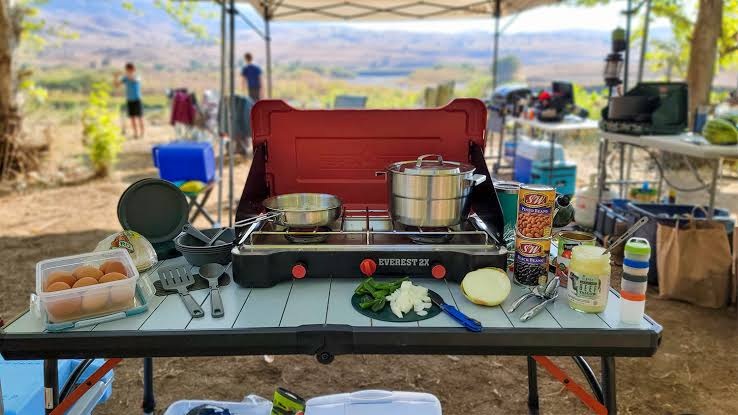
A working camp kitchen is a stove, fuel, one pot, one pan, eating and cooking utensils, a cooler, and water containers. Everything else is refinement.
Fuel choice by temperature. Isobutane canisters lose pressure and burn weakly below about 0°C (32°F), which surprises people on shoulder-season trips. Liquid-fuel stoves handle cold reliably but need priming. For summer weekends at a campground, a canister stove is simpler and cheaper. Our camp kitchen setup guide breaks down stove types and the minimum cookware that earns its space.
Never burn fuel inside a tent, vestibule, awning, or closed vehicle. Stoves, charcoal, and portable heaters all produce carbon monoxide. It is odourless, and it has killed campers who were only trying to take the chill off. Cook outside, always. This is the one rule on this page with no regional exception.
Regional notes: kitchen and fuel
| Region | What changes |
|---|---|
| United States | Two-burner propane stoves running 1lb green canisters are the car-camping default. Campground water is frequently shut off outside peak season without the website being updated. Where bear activity is present, food must go in the provided metal locker or an approved canister, never in the tent, and often not in the car. |
| Australia | Single-burner butane cartridge stoves are cheap and sold everywhere, and threaded isobutane canisters are widely available at outdoor retailers. Many bush and national park campgrounds have no water at all, or only rainwater tanks signed as untreated. Assume you carry every litre unless you have confirmed otherwise. Powered sites with 240V hookups are common in caravan parks. |
| Europe | Two canister systems coexist: threaded EN 417 isobutane, and Campingaz piercable or valve cartridges. They are not cross-compatible, so check which your stove takes before travelling, and note that the piercable type can’t be safely removed part-used. Commercial campsites almost always have potable taps, usually signed Trinkwasser, eau potable, or agua potable. Electrical hookups use the blue CEE 17 connector; bring the adapter, because a domestic plug won’t fit. |
Flying anywhere? You cannot carry gas canisters on an aircraft, checked or cabin, under any airline. Buy fuel after you land, and check that the local canister fitting matches your stove before you fly.
Water: plan on 4 litres (about 1 US gallon) per person per day, covering drinking, cooking, and washing up.
Food safety: keep the cooler below 4°C (40°F) using block ice rather than cubes, pre-chill it overnight, and keep drinks in a separate cooler so the food cooler stays shut. Cooked food left out more than two hours is a write-off. Make that one hour above 32°C (90°F), which is an ordinary Australian summer afternoon.
Kitchen checklist:
- Stove and fuel (browse camping stoves)
- Lighter and matches in a waterproof case (browse waterproof match cases)
- One pot, one pan, cooking spoon, tongs, sharp knife, cutting board (browse camp cookware sets)
- Plate, bowl, mug, cutlery per person (browse camp tableware)
- Cooler with block ice, plus a separate drinks cooler (browse coolers)
- Water containers, 4L per person per day (browse water containers)
- Biodegradable soap, sponge, wash tub, tea towel
- Bin bags, food containers, paper towel
What Lighting and Power Should You Pack?
One headlamp per person, minimum, plus spares. A lantern lights the table; a headlamp does everything else.
A headlamp in the 200 to 350 lumen range handles camp chores and night walks to the amenities block. Lithium batteries hold voltage far better in cold than alkaline, which sag noticeably below freezing. A 10,000mAh power bank covers a weekend of phone use, which matters because your phone is likely your map, torch, and emergency contact all at once.
Powered sites are standard at Australian caravan parks (240V) and most European campsites (230V, CEE 17 blue connector), and much less common at US public campgrounds, where tent loops often have no power at all. If you’re relying on charging, confirm it at booking rather than on arrival.
What Safety Gear Belongs in the Car?
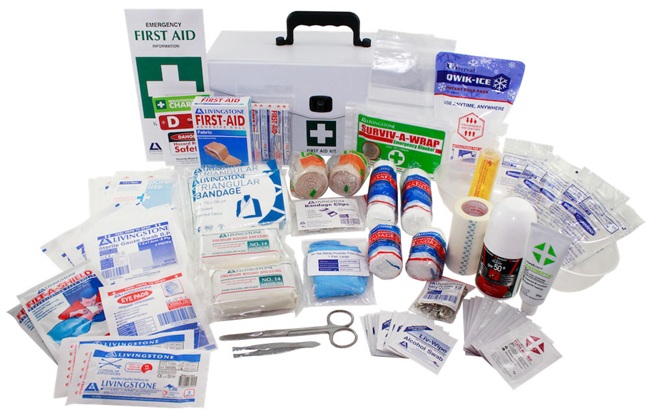
A first aid kit, a paper or offline map, sun protection, and a way to call for help.
- First aid kit: blister plasters, adhesive bandages, antiseptic wipes, tweezers, painkillers, antihistamines, personal medication, and a compression bandage (browse first aid kits)
- Navigation: an offline map download plus a paper site map from the entrance station
- Sun protection: sunscreen, broad-brim hat, sunglasses
- Communication: charged phone, power bank, and the campground and emergency numbers written on paper
- Multi-tool and duct tape: wrapped around a bottle rather than carried as a full roll
Emergency numbers by region
| Region | Number |
|---|---|
| United States and Canada | 911 |
| Australia | 000 (112 from any mobile, including locked handsets) |
| European Union and UK | 112 (999 also works in the UK and Ireland) |
Regional notes: hazards and first aid
| Region | What to add to the kit |
|---|---|
| United States and Canada | In bear country, follow the posted food storage rule: locker, hang, or approved canister. Bear spray where locally recommended, though check park rules, since some parks restrict it. |
| Australia | Two heavy elasticised bandages for pressure immobilisation, the standard first aid response to snake bite taught by the Australian Resuscitation Council. Australia’s UV index regularly exceeds 11 in summer, so use SPF50+ sunscreen, reapplied, plus clothing and a hat rather than sunscreen alone. Check for total fire ban declarations before every trip. |
| Europe | A tick removal tool, and awareness of tick-borne encephalitis in parts of central, eastern, and northern Europe, where vaccination is advised for people camping in forested areas. Lyme disease is present across much of the continent, so check for ticks each evening. |
Campfire rules differ sharpy
In Australia, state fire services declare Total Fire Ban days on which solid fuel fires are prohibited outright and some gas appliance use is restricted. Check the relevant state service the morning you travel, not the week before. Across most of Europe, open fires are prohibited outside designated rings, with Scandinavia a partial exception under right-to-roam traditions, subject to seasonal bans. In the US, restrictions are set by the managing land agency and change through fire season.
Tell someone at home where you’re camping and when you’ll be back. It costs nothing and it’s the single most effective safety measure on this list.
What Can You Skip on a First Trip?
| Commonly bought | Why you can skip it |
|---|---|
| Camp chairs for everyone | Two is usually enough; picnic tables are standard at most developed sites |
| Full cookware sets | One pot and one pan cover almost every camp meal |
| Air mattress and pump | Comfortable but cold, since an insulated pad sleeps warmer |
| Hatchet or axe | Most campgrounds sell firewood and prohibit gathering; many prohibit fires entirely |
| Screen house or gazebo | Bulky, fiddly, rarely worth it for one weekend |
| Specialist camp clothing | Whatever you’d wear hiking works fine to start |
How Much Does a Beginner Camping Kit Cost?
Roughly US$250 to 450 for a budget kit and US$600 to 1,200 for mid-range gear, for two people, buying new.
| Tier | United States | Australia | Europe | What you get |
|---|---|---|---|---|
| Budget | $250 to 450 | A$400 to 700 | €250 to 450 | Serviceable for fair-weather weekends; expect to replace the tent within a few seasons |
| Mid-range | $600 to 1,200 | A$950 to 1,900 | €600 to 1,150 | Three-season capable, lasts 8 to 10 years with care; best value if you camp more than a few times a year |
| Premium | $1,500 and up | A$2,400 and up | €1,400 and up | Lighter, tougher, more weather-capable than most car campers need |
Indicative retail as at August 2026. Australian and European figures are approximate. Outdoor gear typically carries a premium in Australia relative to the US, and VAT is included in European pricing. Verify current prices before budgeting.
Cost per trip falls fast: a mid-range kit used six weekends a year lands near US$20 a night in year one and far less afterwards. But if you’re unsure whether camping suits you, don’t buy anything yet. Read should you buy or rent camping gear first. Renting a full setup for a weekend costs a fraction of buying, and borrowing costs nothing.
Frequently Asked Questions
What are the five essentials for camping? Shelter, sleep insulation, water, food storage and cooking, and light. A tent, sleeping bag, insulated sleeping pad, stove with fuel, and a headlamp will get you through a fair-weather weekend safely anywhere in the world.
Do I need a sleeping pad if I have a thick sleeping bag? Yes. Your body weight compresses the insulation underneath you to nothing, so the bag provides almost no barrier against the ground. A pad with an R-value of 3 or higher is what keeps you warm from below.
What sleeping bag rating do I need in Australia? Match the bag to the region, not the season name. Coastal summer camping is mild, but inland and desert sites can fall close to freezing overnight after a 35°C day, and alpine areas in NSW and Victoria drop below zero. Choose a comfort rating about 5°C below the coldest night you expect.
Can I take gas canisters on a plane? No. Camping gas canisters are prohibited in both checked and cabin baggage on every airline. Buy fuel at your destination, and confirm the local canister fitting matches your stove, because European Campingaz cartridges and threaded EN 417 canisters are not interchangeable.
Can I use a household air mattress for camping? You can, but it will sleep cold. Household airbeds have no built-in insulation, so the air inside circulates and carries body heat straight into the ground. Put a foam pad or blanket between you and the mattress.
How much water should I bring camping? About 4 litres (1 US gallon) per person per day for drinking, cooking, and washing. Bring your own even where potable water is listed, because US campgrounds shut water off seasonally and many Australian bush campgrounds have only untreated tank water or none at all.
Is it cheaper to rent camping gear the first time? For one or two trips a year, renting almost always costs less than buying. Buying tends to pay for itself from around the third or fourth weekend, depending on the tier of gear you choose.
Before You Go
Pack the car in reverse order of use, so the tent comes out first and the cooler stays reachable. Then pick a campground with trails nearby, so a single setup gives you several days of walking. Our guide to planning a combined hiking and camping trip covers finding those sites and when to book.
Next step: work through this checklist against what you already own, then read the buy, rent, or borrow breakdown before spending anything.