
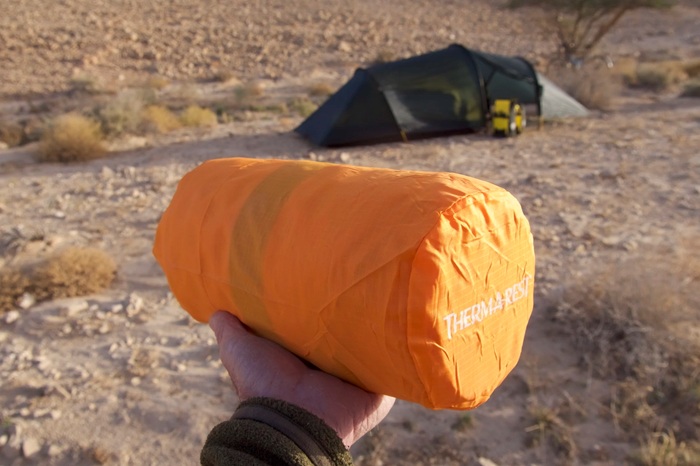
We cannot emphasize enough how important sleep is to the human body. Sleep is not only for rest, it is also when your body repairs itself so it can function properly the moment you wake up.
Getting good sleep outdoors matters even more, since backpacking or camping usually means a full day of activity lined up, and you need every bit of energy you can conserve overnight. This is exactly why a sleeping pad like the Therm-a-Rest ProLite Mattress earns its place in a serious camping kit.
Using a sleeping pad is more comfortable because it gives your body a soft, supportive surface to rest on, helping prevent backaches, joint pain, and muscle stiffness after a long day.
Editors note – We updated this article in August 2026, we get commissions for purchases made through links in this article.
Product Specifications
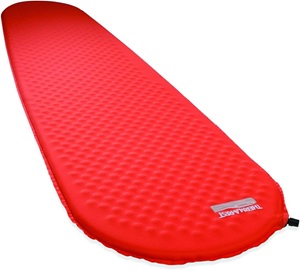 Self-inflating design: an expanding foam core self-inflates on its own, and you simply top it off with a few breaths to dial in your preferred firmness.
Efficient warmth: diagonal-cut foam channels reduce bulk while retaining heat more effectively than straight-cut foam construction.
Highly packable: the ultralight, diagonal-cut foam and tapered shape keep this mattress genuinely pack friendly, even on longer trips.
In camping, a sleeping pad works alongside your sleeping bag, providing both padding and thermal insulation so you can actually rest well outdoors.
Even in summer, a sleeping pad matters. It protects your body from rocks and small bumps that would otherwise disrupt your sleep. Warm ground can also pull body heat away from you surprisingly fast, and a proper barrier between you and the bare earth helps you hold onto that heat overnight.
There are plenty of sleeping pad options on the market. Before zeroing in on the features that matter most to you, it helps to understand the different types of pads available.
Review
The ProLite from Therm-a-Rest is a time-tested, self-inflating sleeping pad that won’t break the bank or your back. It weighs just over a pound and delivers a firm, stable, and smooth sleeping surface.
It’s not the smallest packed, lightest, or warmest sleeping pad on the market, but its genuinely convenient self-inflating design has made it a longtime favorite among backpackers and campers alike.
After a long day of hiking or camp activities, there’s something genuinely relaxing about spreading out the pad and watching it inflate itself with almost no effort on your part. Here’s how it holds up across the categories that actually matter.
Packaging
Out of the box, you’ll receive the pad packed down to roughly 10 x 8 x 10 inches, not yet inflated. It weighs just 1.4 pounds, so it adds minimal burden to your pack and takes up very little space.
Once inflated, the regular size measures 20 x 72 x 1 inches, and the large measures 25 x 77 x 1 inches. The packaging itself is nothing special, but it does the job of protecting the pad during transport.
Noteworthy Features
This is one of the lightest self-inflating sleeping pads available. The diagonal-cut foam and tapered shape were engineered specifically for alpine climbing, adventure racing, and long-distance backpacking, situations where every ounce and every cubic inch genuinely matters.
That same ultralight, diagonal-cut foam construction keeps the ProLite easy to pack down small, and the expanding foam core self-inflates on its own, needing just a few breaths from you to reach your ideal firmness.
Lightweight
The regular size weighs in at 16 ounces, or 1 pound, which isn’t the absolute lightest in its class, but it’s genuinely competitive against pads that are both heavier and bulkier when packed. It’s light enough to bring along comfortably on most camping or backpacking trips, and it comes with its own stuff sack for easy carrying.
Comfort
This isn’t the single most comfortable sleeping pad on the market, but it scores well here regardless. Users consistently praise how stable it feels compared to bouncier air mattresses. That firmness also helps keep your sleeping bag from sliding around on top of the pad overnight.
At only an inch thick, it’s worth clearing your sleeping spot of pine cones, rocks, or other lumps that could otherwise poke through and disrupt your sleep. Even so, the ProLite holds its own against thicker pads, especially on relatively even ground or at established campsites.
The self-inflating design remains everyone’s favorite feature. Just lay it out inside your tent and let it do the work. There’s no hand pump needed and no wasted breath. Give it around 10 minutes to fully expand, then add a breath or two if you want it firmer.
Packability
For a self-inflating mattress, the ProLite compresses down remarkably small, arguably one of the most compressible pads available today. Its perforated foam construction is what makes this possible, letting it pack into a genuinely small stuff sack that won’t eat up much space in your pack.
Warmth
The ProLite carries a 2.4 R-value, putting it solidly in three-season territory for camping and backpacking. Some users have taken it into the Rocky Mountains during summer and reported staying warm through the night, with others testing it comfortably in low-40-degree conditions.
Nobody’s reported testing it in genuinely snowy conditions, and for good reason. If you’re planning winter camping, pair this pad with a proper winter-rated sleeping bag, and consider stacking two ProLites for adequate insulation against truly cold ground.
Durability and Versatility
The pad is built from 50-denier polyester, durable enough to handle regular heavy use. This current version represents a refinement over older ProLite models, and like its predecessors, it doesn’t disappoint.
Its 50D mini hex rip polyester construction should hold up to years of use with reasonable care. If you do puncture it, the flat surface design makes repairs genuinely easy, unlike baffle-construction pads, which are considerably harder to patch out in the field.
To extend its lifespan, many users recommend adding a protective layer, like a tarp, between the tent floor and the pad to guard against punctures from below.
As a three-season pad, the ProLite performs reliably down into the low 40s. Given its price point, being able to use it confidently from summer through fall is more than enough value for most buyers.
If shaving weight matters to you, this pad pairs well with a lighter summer sleeping bag or bedroll for warm-weather trips. It’s genuinely not built for winter use, which for some value-conscious buyers is a real dealbreaker worth knowing upfront.
Value for Money and Guarantee
The ProLite offers strong value, especially given its self-inflating convenience, low weight, and durability. If those three things matter to you, this is a genuinely solid purchase.
Therm-a-Rest, through its parent company Cascade Designs, backs its products with a limited warranty covering defects in materials and workmanship. If your pad is damaged outside of warranty coverage, the company’s repair service remains available at a fair price.
Main Competitors
TNH Outdoors #1 Premium Self Inflating Pad
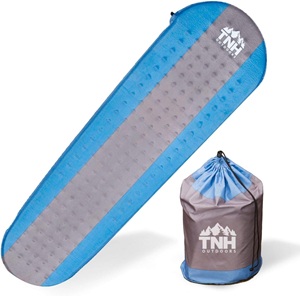 If you want a self-inflating pad that won’t strain your budget, the TNH Outdoors #1 Premium Self Inflating Sleeping Pad is genuinely worth considering.
Its thick polyester outer shell delivers solid comfort and warmth, while the outer layer contributes meaningfully to insulation. That same durable shell also resists punctures well, even on genuinely rough ground.
Inflating this pad is about as simple as it gets. Twist open the plastic valve, unroll the pad, and it inflates largely on its own, with just a handful of extra puffs needed to fully firm it up. It also includes its own carrying bag for easy transport.
User reviews are consistently positive. Many buyers are pleasantly surprised by how comfortable and durable it feels, often comparing favorably to considerably pricier pads. Reviewers also appreciate not having to huff and puff for minutes on end. About eight good breaths is usually enough to fully inflate it in under a minute.
Insulation performance draws praise too, with many users reporting genuine warmth through the night. Its light weight and packability are frequent highlights among backpackers specifically.
Price-wise, this pad runs close to the Therm-a-Rest ProLite, though it’s generally the more affordable of the two. The ProLite does edge it out slightly in weight, coming in lighter by a small margin, which could matter for gram-conscious backpackers. Overall, both pads are genuinely comparable and worth the investment.
Sea to Summit Ultralight Mat
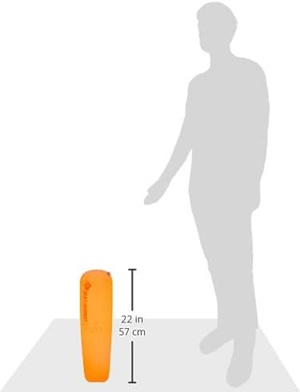 Sea to Summit has built a strong reputation among campers and backpackers thanks to genuinely excellent sleeping bags and pads, and the Ultralight Mat is no exception.
Weighing in at only about a pound, it genuinely lives up to its name. Sea to Summit’s Air Sprung Cells technology delivers strong comfort and support for something this light. A multi-function, low-profile valve makes both inflation and deflation fast and easy, and the liquid-extruded antimicrobial TPU on the shell fabric helps prevent delamination and mold growth over time. Support is genuinely solid too, with the pad absorbing pressure and conforming to your body’s contours.
This pad holds consistently high ratings among buyers. Reviewers frequently praise the build quality and overall construction, and most find the comfort level genuinely satisfying for the weight class. Its light weight draws consistent positive mentions as well.
Many users appreciate how easy the mat is to inflate and deflate. That said, several reviewers note it isn’t built as an all-season pad, and it’s not the strongest pick for backpackers watching their budget closely.
Pricing sits close to the Therm-a-Rest ProLite, depending on the specific size and model you choose. While the Ultralight Mat’s insulation works fine for most conditions, its R-value of 0.7 limits it to late spring and summer use realistically.
By comparison, the Therm-a-Rest ProLite carries a considerably higher R-value of 2.4. Some buyers may also find the Ultralight Mat a bit too thin for their comfort preferences.
Therm-a-Rest Trail Lite Mattress
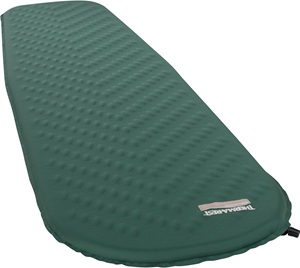 The Trail Lite Mattress comes from the same manufacturer as the ProLite and makes a strong case for backpackers looking for a compact camping mattress that doesn’t compromise on comfort or durability.
Like the ProLite, this is a self-inflating pad, so manual inflation isn’t something you need to worry about. That self-inflating design also lets the foam roll up small, keeping packability genuinely convenient.
Its compact build makes it a versatile option, equally suited to straightforward backpacking or car camping. Die-cut foam construction contributes to both the compact size and reduced weight, and its 3.4 R-value qualifies it for solid three-season use.
The Trail Lite has earned plenty of positive reviews. One reviewer specifically noted it comfortably accommodated a taller frame, and buyers consistently rave about the comfort level, largely thanks to a good balance of loft, insulation, and material choice.
Buyers also appreciate the compact design and strong packability, making it a genuinely great pick for lightweight backpackers, along with consistently positive feedback on its durability and long-term reliability.
So how does the Trail Lite stack up against the ProLite? Both are genuinely high-quality camping mattresses with similar specs and performance. The Trail Lite runs a bit heavier, but it offers a meaningfully higher R-value in exchange.
Overview
The ProLite is a strong choice if you’re looking for a self-inflating pad built for extended trips. It’s light and compact enough to carry comfortably, and the self-inflating design remains genuinely convenient and easy to use.
With its R-value, it handles three-season camping and backpacking safely, and many users appreciate not dealing with the deflation issues that sometimes plague air mattresses.
The self-inflating feature remains the single most-loved aspect of this pad. Many users simply lay it out, open the valve, and let it work while they handle other camp chores like setting up the tent or starting dinner.
Its small packed size is another standout feature. For a self-inflating pad, plenty of users are genuinely surprised by how compact it packs down. While it’s not the lightest option in its category, it’s light enough for most backpacking needs.
If you want something lighter, plenty of alternatives exist, but most sacrifice either durability or warmth to get there. Taller users also appreciate the fit here, with some buyers over 6 feet tall comfortably using the XL version.
A small number of negative reviews mention the pad failing to stay inflated over time, though these remain a minority compared to the largely positive feedback from long-term users.
Pros: self-inflating design, durable construction, comfortable enough to provide a smooth and stable sleeping surface, solid R-value that qualifies it as a genuine three-season mattress, highly packable and compact, lightweight, good insulation performance.
Cons: not as plush as air mattress-style pads, not recommended for winter use, not the absolute lightest option in its category.
Summary
Therm-a-Rest’s ProLite offers a time-tested design with genuinely convenient features, making it an easy recommendation for backpackers and campers alike. If you want something self-inflating that can hold up to years of real use, this pad is a solid choice.
To get the most value and extend its lifespan, keep your sleeping surface free of sharp rocks and pine cones, and consider using a protective layer like a tarp underneath to prevent punctures. A small number of reviewers have run into inflation issues, but the overwhelming majority praise the self-inflating design, compact packed size, solid insulation, and overall stability.
So, having read through this full breakdown, what do you think of the ProLite? Do you think it holds up as the best self-inflating sleeping pad on the market? Let us know in the comments below.

Daniel is a gear freak when it comes to hiking, climbing and camping. He went to REI Outdoor School to meet new people and learn best practices. Don’t even try to argue with him about the latest backpack or ice axe, he tried most of them. Daniel’s dream is to climb Mount Everest.
We love how reasonable it is too
Thanks!