

Taking on the outdoors and performing at your best. Means showing up mentally sharp, physically strong. Well-geared for the terrain ahead. Feeling sleep-deprived, groggy, or achy because of an uncomfortable night on the ground will hurt your performance the next day, and it’ll take some of the fun out of the trip too. That’s exactly why finding the best sleeping pad for side sleepers is worth real attention before your next excursion.
The sleeping pad market has grown enormously in recent years, and there’s now a wide range of styles built for different intents and budgets. Within each style, you’ll find genuinely great products along with some clear duds. It helps to know what to look for before you hand over your hard-earned money hoping for a good night’s sleep in the backcountry.
Note: This article was updated June 2026. We get commissions for purchases made through links in this article.
Our Top Picks
Getting familiar with these options will help you decide which is most comfortable and best suited to how you actually sleep. Where possible, it’s always worth testing a pad in person before committing, since comfort preferences vary a lot from person to person, especially for side sleepers.
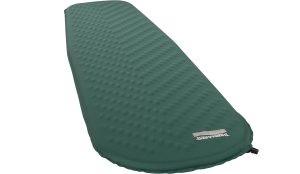 Therm-a-Rest Trail Lite Self-Inflating Sleeping Pad
Weight: 2.6 lbs (Large) | R-Value: 3.4 | Best use: Car camping, backpacking, tent camping
The Trail Lite is a self-inflating pad built from die-cut foam, giving you a comfortable night’s sleep without piling on extra weight during the day. Once inflated, it spreads out to cover a wide sleep area, which helps side sleepers avoid feeling squeezed onto a narrow strip.
With an R-Value of 3.4, this isn’t a full air mattress, but it delivers solid support for side sleeping. The manufacturer has made a real effort at a compact design, though it’s still a bit bulky, so you’ll likely want to strap it to the outside of your pack rather than burn valuable interior space.
Setup is easy thanks to the self-inflating design, and it packs back into its stuff sack without much fuss the next morning. It holds up well even on slightly rocky terrain, and the nylon shell offers some water resistance. It’s not something to rely on in a real storm, but it’s a helpful buffer if you’re caught off guard before getting camp set up.

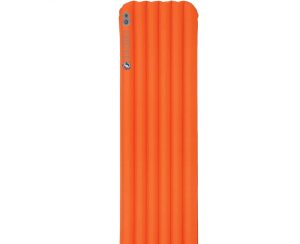 Big Agnes Insulated Air Core Ultra Sleeping Pad
Weight: 1.6 lbs | Best use: Moto-camping, lightweight backpacking
Built to keep you warm, the Air Core Ultra uses synthetic insulation along with larger air pockets on the outer edges to help keep you centered and prevent you from rolling off in the night. Rip-stop nylon on the top and bottom adds real durability, and the whole thing packs down impressively light. A repair kit and stuff sack are included in the box.
This pad isn’t self-inflating, but it inflates quickly and is comfortable once set up. Like most air-chamber pads, it’s more prone to pinhole leaks than foam alternatives, so that included repair kit is genuinely worth having on hand rather than an afterthought. It performs best on smooth, flat ground, and on rocky or uneven terrain the internal ridges can become noticeably less comfortable.
Despite the synthetic insulation, some campers in colder or more humid climates find it runs a bit cool, so pairing it with a warmer sleeping bag or a reflective liner can help offset that. Where it really shines is portability, since it rolls up into an extremely lightweight, compact package that’s easy to justify carrying on any trip.
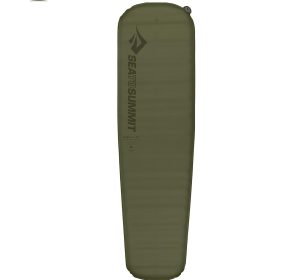 Sea to Summit Camp Plus Self-Inflating Foam Sleeping Mat
Weight: 2.7 lbs (Rectangular Regular) | R-Value: 4.3 | Best use: Camping, backpacking, scouting trips
This is one of the most thoughtfully designed pads on this list. Specifically for side sleepers. Sea to Summit’s Contour shape is deliberately widest at the point where your torso and elbows rest, which means you can roll onto your side and move around at night without your arm or hip sliding off the edge of the pad, a problem that plagues a lot of narrower designs.
At 3 inches thick with an R-Value of 4.3. It offers genuinely strong cushioning for hips and shoulders, along with enough insulation to handle all but the coldest ground conditions. The multi-function reversible valve makes inflation, deflation, and fine-tuning firmness straightforward, and the pad includes a field repair kit plus PillowLock patches if you also use a Sea to Summit pillow.
It’s a bit heavier than the ultralight options on this list, which makes it a better fit for car camping or shorter backpacking trips where comfort is the priority over shaving every possible ounce.
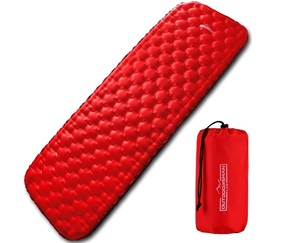 OutdoorsmanLab Ultralight Sleeping Pad
Weight: 16 oz | R-Value: 1.3 | Best use: Backpacking, ultralight hiking
Probably one of the lightest full-featured pads in this category, this one is built for anyone who values being compact and easy to carry above almost everything else. At 2 inches thick, it uses interconnected air cells that adjust to your body shape, and it’s built from ripstop 20D nylon with a TPU coating for durability.
Packed down, it’s smaller than an average water bottle and noticeably lighter too, which makes it a strong choice for backpackers covering serious distance day after day. It reaches full inflation in about 10 to 15 breaths and deflates in seconds, and the manufacturer backs it with a lifetime warranty.
The tradeoff for that low weight is warmth. With an R-Value of only 1.3, this pad is best suited to mild-weather trips rather than shoulder-season or winter camping. It’s also on the narrower side, so if you tend to move around a lot while side sleeping, double-check the width against your usual sleep position before buying.
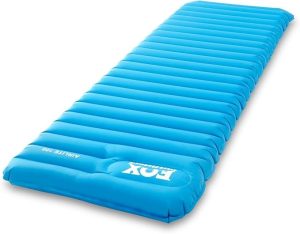 Fox Outfitters Airlite Sleeping Pad
Weight: 1.8 lbs | Best use: Camping, backpacking, hiking
The Airlite comes with a built-in pump to assist with manual inflation, and its air-tube system lets you dial in exactly how much air you want for your ideal comfort level. Diamond rip-stop materials give it solid durability for rougher terrain.
This pad makes some strong comfort claims, and it largely delivers, since the adjustable firmness genuinely helps you find your own optimal sleeping position. One thing to watch for is that it doesn’t have side rail pockets, so it’s a bit more prone to rolling off than pads with dedicated side rails, and it runs narrow.
The manufacturer doesn’t publish an R-Value for this one, and it doesn’t offer much in the way of insulation, so it’s best reserved for warmer-weather trips when the body can stay warm without much help from the pad. Thanks to its comfort and full-body support when inflated, it’s a solid pick for side sleepers who mostly camp in mild conditions.
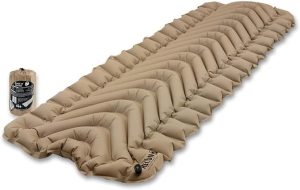 Klymit Static V Lightweight Sleeping Pad
Weight: 1.25 lbs | Best use: Hammock, cot, and ground sleeping
The Static V folds into a small, light, easy-to-carry package and includes support side rails specifically designed to keep you from rolling off in the night, which is a real plus for side sleepers. It’s backed by a lifetime warranty and comes with both a stuff sack and repair kit.
Klymit’s V-Chamber design body-maps to your shape regardless of whether you sleep on your side, back, or stomach, and it inflates manually in around 10 to 15 breaths, so there’s no pump to carry. It performs well on the ground and even in muddier conditions, but it doesn’t hold up as well on harder or rockier terrain, so it’s best used inside a tent rather than directly on rough ground.
The dynamic side rails give it a bit more give than most pads, which lets it mimic the feel of an actual bed more closely than most of the competition, a detail side sleepers in particular tend to appreciate.
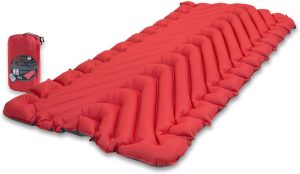 Klymit Insulated Static V Luxe Sleeping Pad
Weight: 2 lbs | R-Value: 5 | Best use: Cold-weather camping, backpacking
If you’re camping somewhere genuinely cold, this is the pad on this list built to handle it. At 3 inches thick with an R-Value of 5, the Static V Luxe uses Klymalite synthetic insulation inside the same V-Chamber body-mapping design found on the standard Static V, giving you both serious warmth and side-sleeper-friendly support in one package.
The extra thickness compared to the standard Static V makes a real difference for hip and shoulder pressure points, which matters more for side sleepers than almost any other sleep position. It includes a patch kit for field repairs, and while it’s heavier than the ultralight options here, that weight buys you genuine four-season versatility.
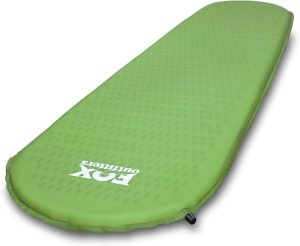 Fox Outfitters Ultralight Series Self-Inflating Camp Pad
Weight: 1.65 lbs | Best use: Hiking, tent camping
Made from durable, water-resistant polyurethane foam, this pad is built with a genuinely soft top layer that provides real cushioning and support. Its self-inflating design means it expands to full size as soon as you unpack it, with no pump or manual breaths required.
The foldable design packs down small for backpacking, and the water-resistant foam helps keep you dry even if the ground underneath is a bit damp. It’s a solid budget-friendly option if you want the convenience of self-inflation without paying Therm-a-Rest or Sea to Summit prices, though it doesn’t offer quite the same level of plush cushioning as the pricier picks on this list.
Important Features in a Great Sleeping Pad
Different sleeping pads serve different needs. Some are bulky but comfortable, while others are minimalist and easy to carry with a heavy pack over long distances. Some are ideal for family car camping, while others are purpose-built to insulate against genuinely icy conditions.
Making sure the pad you buy actually fits your needs will ultimately decide whether you’re happy with it. Even an objectively great sleeping pad can be a poor fit. If it’s used outside what its features are designed for. Here’s what to weigh before buying.
Know What You Need
Where will you actually be using the pad. Whether in the car, at an established campsite, on winter overnights. Or as extra comfort over rocky, uneven ground? Your answer here should drive most of your other decisions.
Prioritize Your Features
Most pads combine more than one feature, but it helps to decide upfront which ones matter most to you. The most common factors are size, insulation, cushioning, and weight, and how you weigh them should follow directly from the point above.
Weight
A great sleeping pad should be as light as reasonably possible. While still meeting your comfort and warmth needs. It should fold down into a genuinely compact package that doesn’t eat up backpack space. It’s worth comparing the packed size of a few different pads side by side before deciding, since this varies more than people expect.
Thickness Matters as Much as R-Value for Side Sleepers
Here’s a detail that often gets glossed over. R-Value measures how well a pad insulates you from cold ground. But for side sleepers specifically, pad thickness plays just as big a role in comfort. Side sleeping concentrates your body weight onto your hip and shoulder. Both of which will push straight through a thin pad and hit the ground if there isn’t enough cushioning underneath.
As a rule of thumb, side sleepers are generally more comfortable on pads at least 2.5 to 3 inches thick, regardless of R-Value.
That said, R-Value still matters for warmth. It refers to how effectively a pad resists heat flow away from your body. The floor conducts heat away from you even more effectively than cold air does. So a low R-Value pad can leave you cold at night even if the air temperature seems mild. R-Values are now reasonably standardized across manufacturers (the ASTM F3340 standard has been widely adopted since 2020), which makes it more reliable to compare pads across brands than it used to be.
Finding the Right Fit for Your Sleep Position
Back sleepers typically need a decent R-Value to stay warm. Since a large portion of the body is in direct contact with the pad. Side sleepers need a similar level of insulation. However with the added requirement of enough thickness to keep hips and shoulders from bottoming out, because a pad that’s warm but thin can still leave a side sleeper achy by morning.
Regardless of sleep position, a solid R-Value is essential for cold-weather camping, since it’s what keeps your body heat from bleeding out into the ground beneath you.
Types of Sleeping Pads
The sleeping pad market generally breaks down into three broad categories.
Air Pads
Air pads are usually the lightest option, which makes them popular for backpacking. Most require manual inflation, and it’s worth using a pump rather than your own breath when possible. Since breath moisture inside the pad can lead to mold in warm climates. Or frost issues in cold ones over repeated use.
Many air pads ship with their own pump. Or you can buy one separately, and most inflate quickly with minimal effort. They’re more prone to tears and punctures than foam pads. Though most manufacturers include repair kits, and fixing a small leak in the field is usually straightforward. As a general rule, the lighter the air pad, the more you’ll pay for it.
Closed-Cell Foam
These firmer pads are made from dense foam containing small, closed air cells. They’re a solid option for hikers since they’re lightweight and don’t require careful packing to protect them from punctures. They’re extremely hard to damage and tend to be very competitively priced.
The tradeoff is comfort. Since closed-cell pads offer noticeably less cushioning and support than air or self-inflating alternatives, and their rigid, non-compressible shape can make them awkward to strap onto a pack.
Self-Inflating
Self-inflating pads combine both other approaches, pairing an open-cell foam core with an air chamber. Typically, you release the valve and the pad begins to inflate itself. Sometimes with a few manual top-up breaths needed for full firmness.
These pads are a strong choice if you want real warmth. With a generous size without babysitting a full manual inflation process. They’re heavier than pure air mattresses but pack down reasonably compact and tend to be quite durable. Even if they can develop rips over time. Fortunately, they’re usually easy to patch. This is a great category for anyone willing to carry a bit more weight. All in exchange for meaningfully better comfort and easier setup.
The Conclusion
There’s a genuinely strong lineup of sleeping pads built with side sleepers in mind these days. So there’s no reason to settle for anything less than a solid night’s rest outdoors anymore.
Knowing the terrain you’ll be facing. How heavy your pack needs to stay. What kind of weather you’re heading into will tell you almost everything you need to choose the right pad. Beyond the gear itself, it’s worth thinking about how you’ll pair it with the rest of your sleep setup. So check out our guide to types of backpacks if you’re also reworking how you carry everything for a trip.
Trying more than one model in person can also make a real difference. Since different body types genuinely prefer different levels of inflation and different materials. A pad with a mountain of five-star reviews may still not be the right fit for how you personally sleep.
Have you slept on something great outdoors recently, or something genuinely awful? Tell us about it in the comments below.

If I had to recommend one from your list, it’ll be Wacool. I used it for a week-long camping recently and it was phenomenal. It is comfortable to sleep in and I did not have a problem with it. It is also light and easy to carry and pack. And, it is water resistant which is important for me.
We are glad you like it!
I have the Airline Sleeping Pad and I really love it. I bought it before I went to Europe for two months. It also includes a patch kit, which I did not need, thankfully. It is really cool and comfortable to use. I plan to bring it again to my upcoming travel adventures.
The patch kit can be helpful in a bind! This is great!
The Wacool self-inflating sleeping pad mat is affordable, comfortable, durable, lightweight, and abrasion resistant. Great choice, James.
Sometimes it is not about the money when shopping for a sleeping pad, but about the top-quality performance, versatility and durability. And you can get all these features with the Therm-a-Rest Trail Lite Mattress.