
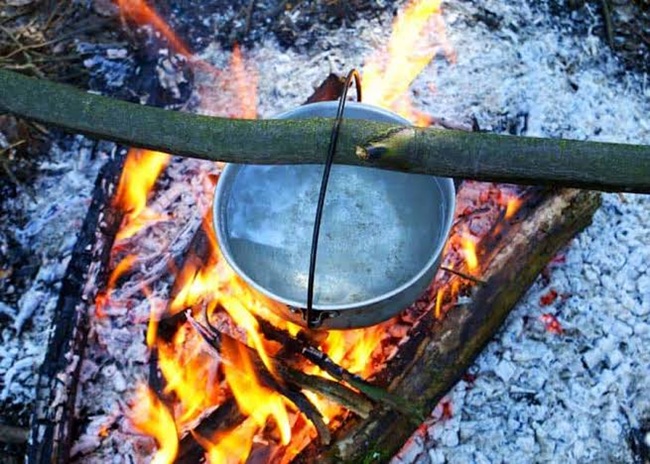
Yes, boiling water purifies it by killing bacteria, viruses, and parasites, which makes it one of the safest and simplest ways to treat questionable water in the wild. Bring the water to a rolling boil for one full minute, or three minutes above 6,500 feet (2,000 meters). The one thing boiling cannot do is remove chemical pollutants, heavy metals, or toxins, so it’s not a fix for chemically contaminated water.
Whether you’re brushing your teeth, cleaning utensils, or looking for a fresh drink, water is one of the most vital substances on earth. The human body is made up of roughly 50 to 65% water, so it’s no surprise we need it to survive. If you’re ever caught out with limited supplies and no backup plan, you’ll face the question every outdoor enthusiast eventually asks: does boiling water actually purify it?
You can survive weeks without food, but only days without water, and an adult should aim for at least 64 ounces a day under normal conditions. Survival experts estimate a person can scrape by on as little as 32 ounces a day when lost in the wild, though that’s survival, not comfort. To understand how your body takes up what you drink, see our guide on how long it takes to digest water.
Dirty, muddy, or cloudy water may not look appetizing, but it can be all that stands between you and dangerous dehydration. The good news is that boiling dramatically reduces your risk of nausea, vomiting, cramps, diarrhea, and potentially serious infections. Read on to learn how to tell when water is unsafe, the common myths to ignore, how to boil water correctly, and the best alternatives when you can’t light a fire.
How to Tell When Water Is Unsafe to Drink
When you’re breathing fresh mountain air and admiring untouched scenery, it’s hard to picture the millions of microorganisms in the water around you. You can’t always protect yourself from bugs, sun, or weather, but you can be deliberate about the water you drink.
Water is easily contaminated by chemicals, oils, sewage, and runoff, and any body of water in or near towns, suburbs, or farmland should be treated as suspect. Even on a remote trail, assume someone, or something, has been there before you. Wherever people and animals travel, they leave behind waste and contaminants, and animals defecate in and around water without a second thought.
Many of us are so used to safe tap water that we assume all water is drinkable. In the backcountry that assumption can ruin a trip or land you in the hospital. Unprotected sources include streams, ponds, rivers, lakes, cisterns, and poorly built wells. The marketing images of pristine spring, glacier, or rain-cloud water don’t reflect what’s safe to scoop up on the trail.
See also: How to Purify Water With Bleach: Clean Drinking Water in One Step
Even the most idyllic mountain stream needs treatment before it’s safe to drink. Boiling is one of the most effective and effortless ways to stay safely hydrated in the outdoors. And while flowing streams and rivers are no more “protected” than lakes or ponds, moving water is the better choice in an emergency, since stagnant water breeds mosquitoes and other disease-carrying insects and concentrates contaminants.
Common Myths About Safe Water
Several widespread beliefs about wild water are flat wrong, and a few can get you sick.
Myth: Rainwater is always clean. Rain can pick up airborne chemicals and pollutants, especially near urban or industrial areas. Drinking rain runoff from a roof or other surfaces adds another layer of contamination, so untreated rainwater isn’t automatically safe.
Myth: Clear, cold water is safe water. Microorganisms are invisible, so you cannot judge safety by appearance. Clear, icy, great-looking water can still be loaded with bacteria, viruses, protozoa, or parasites. For one gear option, see our review of the Sawyer Mini water filtration system.
Myth: You must boil water for a long time. You don’t. Many campers waste fuel boiling water for 10, 20, or even 30 minutes. A rolling boil for one minute is enough to kill the pathogens in your water, because they’re already destroyed well before and at the boiling point.
Why We Boil Untreated Water
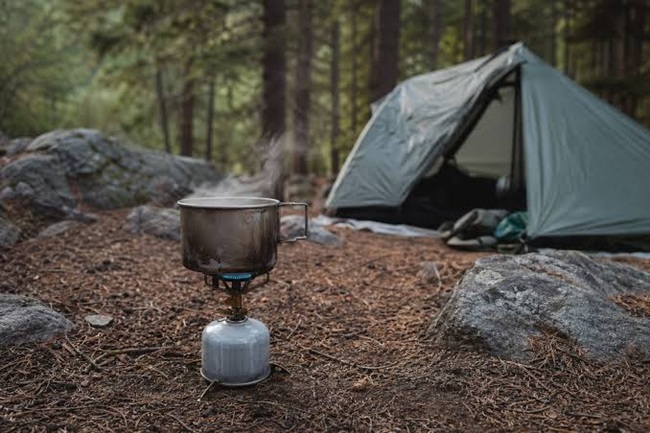
The water you drink at home is treated, and so is bottled water. Both go through multiple stages, including coagulation, flocculation, sedimentation, filtration, and disinfection, to make them safe for the public.
Out in the wild, you don’t have that infrastructure, so you have to make water safe yourself. Boiling works because sustained high heat kills the pathogens that cause waterborne illness, and it does so without any special chemicals or devices. All you need is a heat source and a container, which is why boiling is often the most practical and sustainable choice in the backcountry. Don’t cut corners when your health is on the line.
What You Need to Find and Boil Water
Before you can treat water, you have to find it and heat it. Here’s the gear that makes both easier.
Finding Water
- Tree-tapping kits work well if you’re staying put at one site for a few days.
- A small shovel or trowel lets you dig for water in dry riverbeds and low-lying areas.
- Tarps, tents, and even clothing can catch and funnel rainwater.
- Sponges and cloths absorb dew and condensation in the early morning.
- A length of rubber hose is an underrated tool for drawing water from otherwise hard-to-reach pockets.
- A survival straw filters bacteria and protozoa through a carbon element so you can drink directly from a source, though these aren’t practical for groups or long trips.
Boiling Containers
The most essential item to pack is a metal vessel, whether a canteen, pot, or cup. An affordable unlined aluminum or stainless steel bottle also works and is safe to heat. Carry more than one container if you’re traveling in a group or for several days. If boil speed matters, note that copper conducts heat better than stainless or aluminum, and a flat disc-bottomed pot heats more efficiently than a clad one. A lid speeds the boil and saves fuel by cutting evaporation.
Heat Sources
Boiling water is as simple as building a campfire or firing up a portable stove. An open fire needs tinder, kindling, and firewood, and it remains a reliable favorite for good reason. Alternatives include a propane or butane burner, a charcoal or propane grill, or a solar cooker.
Each has trade-offs. Tiny folding stoves often have low output and are better for reheating than a fast boil. Butane stoves are efficient but depend on canisters that add cost and weight. Solar cookers shine in warm, sunny climates but struggle otherwise. High-output propane burners can warp a thin pot bottom, and grills, while effective, are bulky and unreliable in bad weather. Match your heat source to your trip and conditions.
The Safe Way to Boil Water
Boiling is one of the safest pathogen-reduction methods for camping, hiking, backpacking, and mountaineering. So how long do you actually boil water to purify it? Bring it to a rolling boil and hold it there for one minute. Most disease-causing organisms are killed by the time water reaches about 185°F (85°C), and a rolling boil is well above that, so reaching a true boil gives you a built-in safety margin.
A few situations call for extra steps.
High Altitude (above 6,500 feet / 2,000 meters)
Air pressure drops at altitude, so water boils at a lower temperature. To compensate, hold your water at a rolling boil for three minutes rather than one, then let it cool before drinking.
Cloudy or Dirty Water
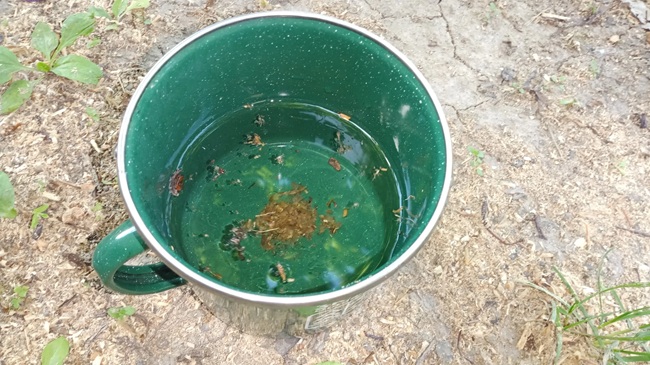
Water that’s muddy or full of particles should be cleared before boiling, not just boiled longer. Let it settle, then pour it through a cloth, coffee filter, or paper towel to remove the sediment, and then bring it to the standard rolling boil. Filtering first improves both safety and taste, and it stops debris from protecting pathogens during heating. Pack a few small cloths or coffee filters, since they weigh almost nothing.
Alternatives to Boiling
In a perfect world you’d always have clean bottled or filtered water. When you’re low on fuel or without a heat source, these methods keep your water safe.
Chemical Treatment
You can disinfect water with halogens such as iodine or plain, unscented household chlorine bleach. The main drawback is a chemical aftertaste, which can make kids reluctant to drink, so pack flavor additives to keep everyone hydrated. Note that iodine isn’t suitable for pregnant women, people with thyroid conditions, or anyone with an iodine sensitivity, and it shouldn’t be used continuously for more than a few weeks. For exact dosing, see our guide on how to purify water with bleach.
Filtration
A quality filter removes bacteria and protozoa with no wait time, and many include carbon elements that improve taste. The catch is that most filters do not remove viruses, so if you’re in an area with viral concerns, you’ll need to follow filtration with chemical disinfection to be fully protected. Always match your filter’s pore size to the threats, which means 1 micron or less for protozoa like Giardia and Cryptosporidium.
Ultraviolet (UV) Light
UV light, used widely in commercial treatment, can reduce pathogens in your bottle in as little as 60 to 90 seconds with no aftertaste. It works best in clear water, since cloudiness lets microbes hide from the light, so pre-filter murky water first. UV devices rely on batteries, so carry spares, and don’t lean on UV as your only method in case the device fails.
What Boiling Can and Can’t Do
Boiling is excellent against living threats but useless against chemical ones, and this distinction can save your life.
- Boiling removes: bacteria (E. coli, Salmonella), viruses (hepatitis A, norovirus), and protozoa (Giardia, Cryptosporidium).
- Boiling does NOT remove: chemical pollutants, pesticides, heavy metals like lead, fuel, or industrial runoff. In fact, boiling chemically contaminated water concentrates those toxins as the water evaporates, making it more dangerous, not less.
If you suspect a water source is chemically polluted, avoid it entirely and find another source. No amount of boiling will make it safe.
Frequently Asked Questions
Does boiling water make it safe to drink?
Yes, for biological contamination. A rolling boil for one minute kills bacteria, viruses, and parasites, making the water microbiologically safe. It will not remove chemicals, heavy metals, or toxins, so only boil water you believe is free of chemical pollution.
How long should you boil water to purify it?
Bring it to a rolling boil for one minute at normal elevations, or three minutes above 6,500 feet (2,000 meters), where lower air pressure means water boils at a cooler temperature. There’s no benefit to boiling for 10 minutes or more, which just wastes fuel.
Does boiling remove chemicals from water?
No. Boiling kills living pathogens but does not remove chemical contaminants, pesticides, or heavy metals, and it can actually concentrate them as water evaporates. Avoid chemically contaminated sources rather than trying to boil them clean.
Is cloudy water safe after boiling?
Boiling cloudy water kills pathogens, but it’s best to let the water settle and filter it through a cloth or coffee filter first, then boil. Pre-filtering improves safety and taste and removes sediment that can shield microbes.
What’s better, boiling or filtering water?
They solve different problems. Boiling kills everything biological but needs fuel and cooling time. Filtering is instant and improves taste but usually misses viruses. Many backpackers filter for convenience and carry a backup method like boiling or chemical drops for viral protection.
Can you drink rainwater without boiling it?
It’s risky. Rain can carry airborne pollutants, and runoff collected from roofs or surfaces picks up extra contaminants. Treat collected rainwater before drinking unless you’re certain of a clean collection surface.
Conclusion
The single most important takeaway is to assume all wild water is contaminated. From common bacteria to dangerous parasites, there are far too many ways to pick up a waterborne illness in the outdoors, and proper treatment is all that stands between you and days of misery.
Of all the methods available, none is more effective at killing biological contaminants than boiling, and it needs only heat and a container. Save fuel by remembering that a rolling boil for one minute is enough, with three minutes at high altitude. Just never forget boiling’s one limit: it does not remove chemical toxins, so steer clear of chemically polluted water entirely and always source from the cleanest water you can find.
Do you have a failsafe method for treating water, or a clever trick for finding it in the wild? Share it in the comments below.


What a great article Jerry! I like that you have listed the most common misconceptions about boiling water. This is especially important for those who love hiking and camping adventures like me. Of course I always bring with me clean water, but it is nice to know all of these just in case.
Thank you!
Research suggests that UV light can only be used to purify clear water and not foggy water. If the water is unclear, you should first consider using a pre-filter.