
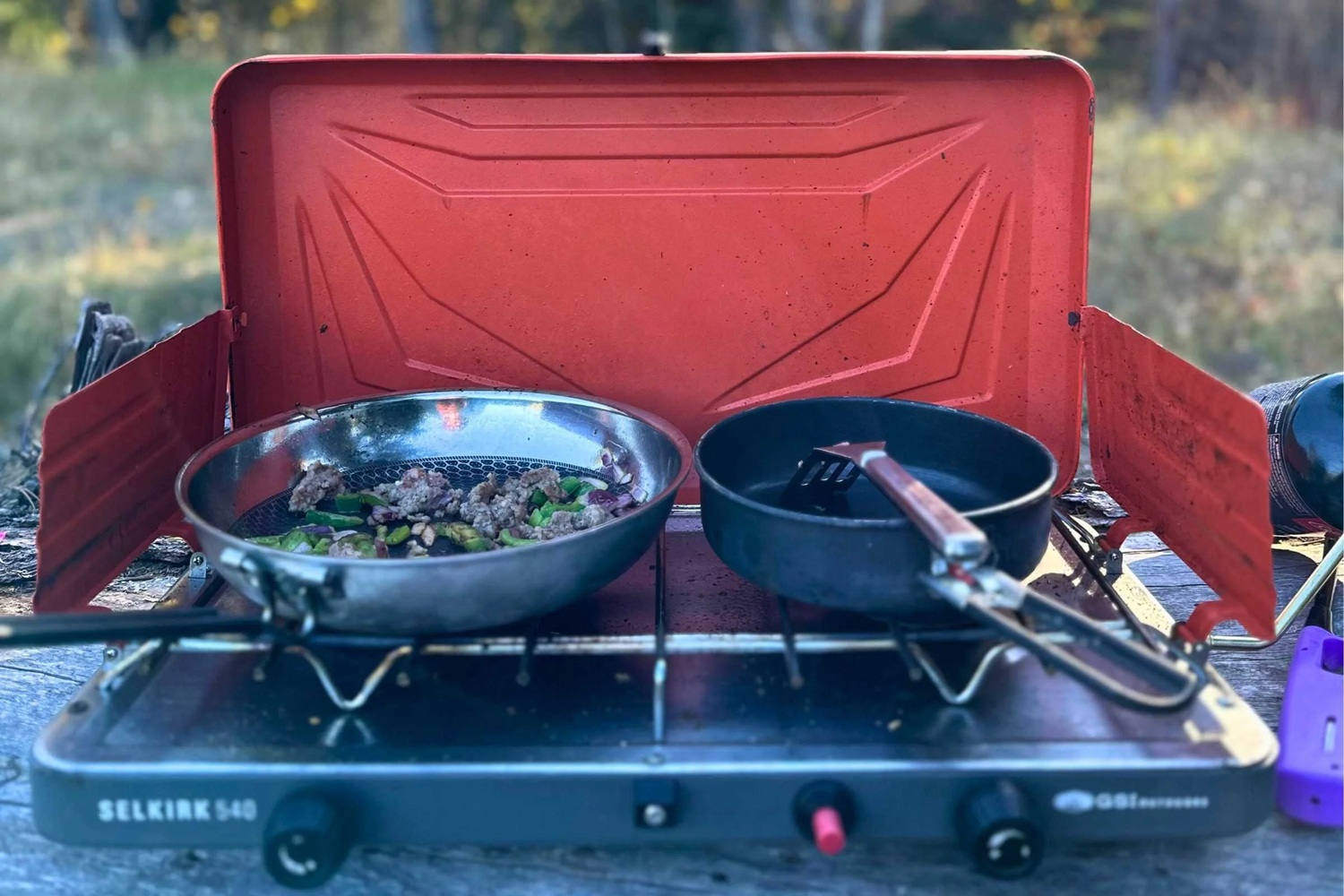
To pick the right camping stove, match it to how you camp: choose enough burners for your group, around 20,000 BTUs per burner for quick cooking, a fuel type that suits your climate (propane for convenience, liquid fuel for cold weather), and a stable, wind-resistant design you can actually carry and set up where you camp. Get those right and you’ll have a stove that feeds your group reliably for years.
Looking for the best camping stove for you and your family but not sure how to choose? This guide walks through every feature worth considering so you can pick a stove that fits your style. If you’d rather skip to specific recommendations, head to our roundup of the best camping stoves and take your pick. But if you want to understand what actually makes a great stove, keep reading, because getting this right the first time saves money and frustration later.
1. Decide How Many BTUs You Need
BTU stands for British Thermal Unit, and it’s the single most important number on a camp stove’s spec sheet. One BTU is the amount of energy needed to raise one pound of water by one degree Fahrenheit. A stove, though, is rated in BTUs per hour, which measures how much heat it puts out, so a higher BTU rating means more heat and faster cooking.
In practical terms, a stove rated at 30,000 BTUs per burner will boil water and heat food noticeably faster than one rated at 20,000. A lower BTU stove still gets the job done, it just takes longer. Higher output also handles large pots and bigger quantities of food with more ease, which matters if you cook for a group.
As a general guide, look for at least 10,000 BTUs per burner, with around 20,000 considered the sweet spot for most campers, and 30,000 or more worth it for larger families or when you want serious boiling power. Keep in mind that the headline BTU figure is a best-case number, and real output drops in wind, cold, or at altitude.
2. Choose the Right Number of Burners
Think about who usually comes along, and bear in mind your first trip may not reflect your typical group. Try to estimate your average, whether that’s three people, five, or seven, because the number of burners you need follows directly from the number of mouths you’re feeding.
If it’s just you, or you and one other person, a single burner is usually enough. For a group of seven or more, you’ll likely want three burners so you can cook multiple dishes at once. If you can’t easily predict your group size, a two-burner camping stove is the safest all-round choice, since it lets you boil and cook at the same time without being bulky.
3. Consider Wind Performance
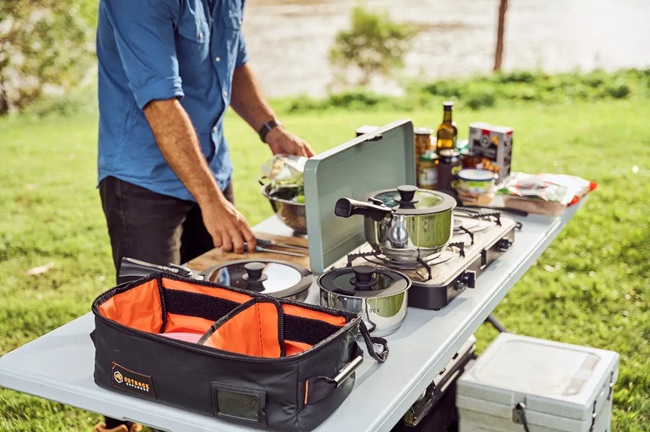
In open areas, strong wind can whip heat away before it ever reaches your pot, which makes a stove far less efficient and burns through fuel faster. Some designs handle wind better than others. Integrated canister stoves, which enclose the burner and pot together, perform well in wind, while open designs, solid-fuel tablets, and wood stoves struggle.
A windscreen is the simplest fix and is worth having, even though it’s an extra component to carry. One important safety point: never fully wrap a windscreen around an upright canister stove where the fuel canister sits directly under the burner. Trapping heat around the canister can cause it to overheat and, in the worst case, rupture. Windscreens are safe with remote-canister and liquid-fuel stoves where the fuel bottle sits off to the side, and many camp stoves include built-in fold-up wind panels designed for the job.
4. Pick the Right Type of Fuel
Fuel type shapes how convenient, affordable, and cold-tolerant your stove is. Here’s how the main options compare.
| Fuel | Pros | Cons | Best for |
|---|---|---|---|
| Propane (canister) | Cheap, easy to find, clean-burning, quick to connect, little waste | Pressure and output drop in cold and as the canister empties | Car camping, most families, 3-season use |
| Liquid fuel (white gas) | Consistent output start to finish, performs well in cold | Messy to refill yourself, pricier, needs priming | Cold weather, high altitude, expedition use |
| Butane/isobutane | Very light and compact | Poor in cold, canisters can be harder to recycle | Backpacking, warm-weather solo trips |
| Wood | Free fuel from your surroundings, no canisters to carry | Messy, slow to start, weather-dependent, smoky | Survivalists, ultralight minimalists |
Propane is the most popular choice for good reason. Tanks are easy to find and refill, clean-burning, quick to hook up, and produce little waste. The main drawback is that propane loses pressure and burns less efficiently as the canister runs low or the temperature drops.
Liquid fuel, usually white gas, is the better pick for cold climates because a pump-pressurized bottle delivers the same steady output from the first use to the last drop. The trade-offs are that you refill it yourself, which can be messy, and the fuel costs more.
Wood-burning stoves are the choice of hardcore hikers and survivalists. They’re messy and fiddly for casual users, but you spend little or nothing on fuel since you burn what’s around you. For most people who want a flame ready instantly, though, wood is the least convenient option.
5. Choose the Right Size and Weight
If you camp for long stretches or move around a lot, the weight and packed size of your stove matter. You need to carry it, store it, and set it up easily. Think not just about what fits in your vehicle or pack, but about where you’ll actually cook.
If you often camp without a table or flat surface, a freestanding stove with its own legs is a big advantage. If space is tight, a compact tabletop model that packs down small may suit you better. Spend a little time thinking about your travel style and match the stove to it, since a stove that’s too bulky to bring is no use at all.
6. Decide What Add-Ons You Need
Like a backyard grill, camping stoves come with a range of add-ons, from grill plates and griddles to other accessories, and some stoves include these in the box. It’s always better to have the option than to discover in the field that you’re missing a feature you wanted.
Some stoves offer both burners and a grill surface, giving you the grilling experience alongside easy everyday cooking. If you’re buying an add-on grill surface separately, make sure it actually fits the stove you choose, since accessories aren’t universally transferable between brands and models.
7. Don’t Overlook Stability
If you don’t want a cooked dinner tipped onto the dirt, pay close attention to stability. A stove with a wide, low base that sits firmly on the ground is the safest option, especially when you’re cooking large meals for a group in heavy pots.
Canister stoves aren’t a bad choice, but the taller upright types, where the burner and pot perch on top of the canister, are less stable and deserve extra care, since a knocked-over stove can cause burns or start a fire. A wide base, or a remote-canister design that sits low to the ground, gives you more peace of mind.
8. Set a Budget
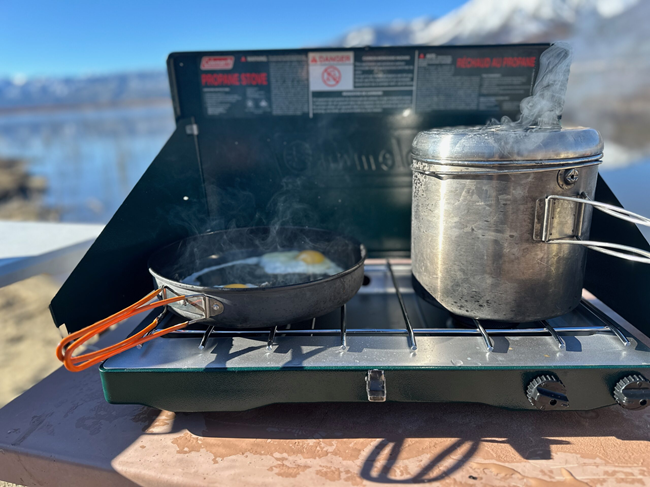
Price shouldn’t be your only deciding factor, but it does matter. Decide on a comfortable range before you start shopping, for example under $100, then focus your search on stoves that fit it. You can find a quality stove at almost any budget, and some cheaper models genuinely outperform pricier ones.
One of my personal favorites is the Camp Chef Everest two-burner stove, which punches well above its price with strong BTU output and solid build quality. The pickier you are about specific features, the higher your budget may need to climb, but if you just want a reliable stove to feed family and friends, you’ll find great options without spending a fortune. The key is knowing what you want before you start, so you don’t fall for something you can’t afford or don’t need.
Camping Stove Quick-Pick by Camper Type
| Camper type | Recommended setup |
|---|---|
| Solo / ultralight backpacker | Single-burner canister or integrated canister stove |
| Couple or small family | Two-burner propane tabletop stove |
| Large family or group | Three-burner, 30,000 BTU, freestanding stove |
| Cold-weather / expedition | Liquid-fuel (white gas) stove |
| Survivalist / off-grid | Wood-burning stove |
Frequently Asked Questions
How many BTUs do I need in a camping stove?
Aim for at least 10,000 BTUs per burner, with around 20,000 being the sweet spot for fast, efficient cooking. Go for 30,000 or more per burner if you cook for a large group or want rapid boiling. Remember real-world output drops in wind and cold.
How many burners does a camping stove need?
Match burners to your group. One burner suits solo or two-person trips, two burners handle most families and let you cook and boil at once, and three burners are best for groups of seven or more. When unsure, a two-burner stove is the safest all-round choice.
What fuel is best for a camping stove?
Propane is the most convenient for general car camping, as it’s cheap, clean, and easy to find. Liquid fuel (white gas) is better for cold weather and altitude because it delivers consistent output. Butane is lightest for warm-weather backpacking, and wood is for those who want fuel-free cooking.
Is propane or liquid fuel better for cold weather?
Liquid fuel is better in the cold. A pump-pressurized white gas stove maintains steady output in freezing temperatures, while propane and butane canisters lose pressure and burn weakly as the temperature drops.
Can I use a windscreen with a canister stove?
Only safely with remote-canister or liquid-fuel stoves where the fuel bottle sits away from the burner. Never fully enclose an upright canister stove where the canister sits under the burner, as trapped heat can overheat the canister and cause it to rupture.
How much should I spend on a camping stove?
You can find a quality two-burner stove for under $100, and several budget models rival pricier ones. Spend more only if you need specific features like high BTU output, a grill surface, or expedition-grade cold-weather performance.
Wrapping Up
Those are the key things to weigh when choosing your next camping stove. It’s a fair few considerations, but it’s a one-time job, and it’s far better to spend a little time researching than to end up with a stove that doesn’t fit your needs or falls apart after a season.
Finally, think about the cookware you’ll use. A full-size camping stove happily takes your normal pots and pans, but a smaller stove may need compact, purpose-made cookware that fits its narrower burner. If you’re after a small, single-person stove, I strongly recommend the Solo Stove Lite & Pot 900, so check out our Solo Stove Lite & Pot 900 review to learn more.
Have a camping stove you swear by, or a feature you wouldn’t go without? Share it in the comments below.