
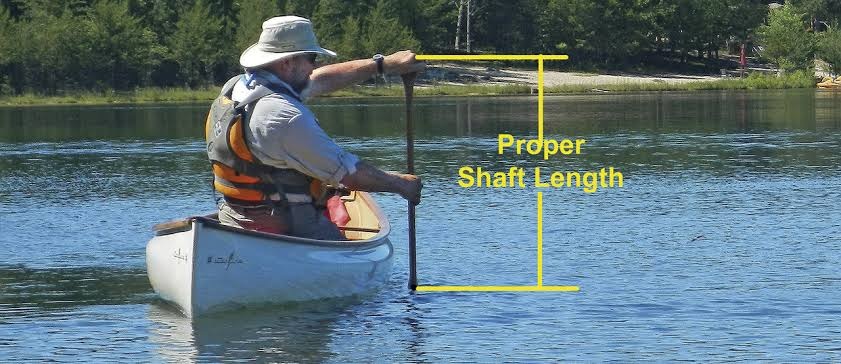
To size a canoe paddle, match the shaft length to your torso by measuring from your nose to the waterline while seated in the canoe, then add the blade length for the overall paddle size. A correctly sized paddle keeps your posture and stroke efficient, while one that’s too short or too long causes fatigue, poor balance, and strain. Straight-shaft paddles are sized this way, and bent-shaft paddles are sized about two to four inches shorter.
Buying a canoe is a great investment in a genuinely fun sport, but owning one is only the first step. Your paddle matters just as much as the boat, and getting the size right is crucial to how much you’ll enjoy your time on the water. A paddle is something you’ll use for years, so it’s worth choosing one that fits both you and your paddling style.
There are several ways to size a canoe paddle, and if you follow the guidance below you’ll end up with a far better experience. When a paddle is the wrong size, you lose power, your posture suffers, and your stroke breaks down. You don’t want to pull a muscle or injure yourself for the sake of a few minutes of measuring, so let’s start with how to size a paddle correctly.
How Do You Size a Canoe Paddle?
The core idea is simple: the shaft length should match your torso, not your overall height. Two people the same height can need different paddles if one has a longer torso. Here are three ways to find your size, depending on what you have on hand.
Scenario One: You Have a Canoe, on the Water
Sit in the canoe as you normally would, then measure the distance from your nose down to the waterline. That measurement is how long the shaft of your paddle should be, meaning the grip to the throat where the blade meets the shaft, not the overall length. Add the length of the blade to that shaft measurement and you have your overall paddle length. Simple.
Scenario Two: You’re in a Store, No Canoe or Water
Kneel or sit with your seat about six inches off the ground, roughly mimicking your position in the canoe, and hold the paddle upside down with the grip resting on the floor. The throat of the paddle, where the blade and shaft meet, should sit between your nose and your chin. If it’s hard to judge where the throat lines up on your face, have a friend check for you.
Scenario Three: You’re at Home With No Gear
This still works with a little care. Sit with your seat about six inches off the ground and measure from the floor up to your nose. That is your shaft length. Add the blade length (the part that goes in the water) and you’ll know what overall size to order.
This third option has the most room for error, so if you can, get to a store and size a paddle in person even if you plan to buy online. Every person has a unique build and different preferences, and until you’ve actually paddled with one you won’t know for certain whether it’s right for you. Because small differences in stroke style change how a paddle feels, numbers alone can’t tell the whole story, but one of these three methods will get you very close. If you want a starting point, see our picks for the best canoe paddles.
Choosing the Right Paddle Length
Once you know your ideal length, there’s a catch: paddles aren’t made in every size, and every manufacturer uses its own sizing increments. If your exact length isn’t available, you’ll need to compromise, or build your own if you’re handy with woodwork, as described in our DIY canoe paddle guide.
In most cases, if you’re stuck between sizes, go with the one slightly longer than your ideal length. A paddle that’s too short forces you to hunch and reach on every stroke, which leads to soreness, strain, and poor balance in the boat. A paddle an inch or two longer than ideal, on the other hand, is rarely a problem for most paddlers, since you can still balance and stroke properly.
For example, if your ideal measurement is 55 inches and you must choose between a 53-inch and a 56-inch paddle, pick the 56-inch. The only real downsides to a slightly longer paddle are that it may scrape the bottom in shallow water and it’s marginally heavier, neither of which matters much for typical flatwater use.
Bent-Shaft Paddle Sizing
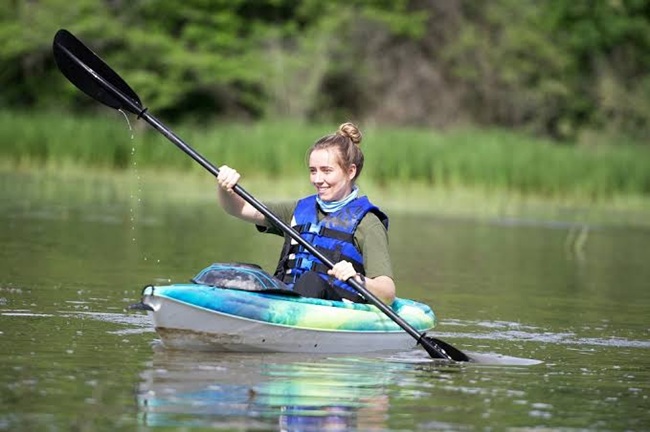
Bent-shaft paddles are sized differently, and this is where a lot of guides get it wrong. A bent-shaft paddle should be sized shorter than a straight-shaft paddle, not longer. The common rule of thumb is to go about two to four inches shorter than the straight-shaft length you measured, because the forward-angled blade and the more upright, cadence-style stroke change the geometry. If you started at a 56-inch straight paddle, you’d typically look at roughly a 52 to 54-inch bent-shaft paddle.
The name is a little misleading too, since “bent shaft” doesn’t mean the shaft itself is bent. It refers to the angle where the blade meets the shaft, usually between about 7 and 14 degrees. That angle lets you keep the blade closer to vertical through the power phase of the stroke, which maximizes forward power transfer and reduces the lifting of water at the end of the stroke. The result is more efficient propulsion, better endurance, and less fatigue over a long day. A bent-shaft paddle is ideal for flatwater, so if you mostly paddle still lakes or a lazy river, it’s well worth considering.
Other Factors to Consider
Once you’ve settled on length and whether you want a straight or bent shaft, you’re about halfway there. Several other design features affect how a paddle feels and performs, starting with what it’s made of. Good technique matters too, so it’s worth reading up on the correct way to paddle a canoe alongside choosing your gear.
Paddle Material
Wooden. A wooden paddle is a classic, beautiful to look at and pleasant to use. Most are built from laminated layers, which lets the maker combine different woods to balance strength and weight. The trade-off is upkeep, since wood needs occasional sanding and re-sealing, roughly once a year, and it’s somewhat more fragile, so look for a model with a reinforced blade tip to resist wear. Wooden paddles tend to be a little heavier than other options, but many paddlers happily accept that for the feel and the looks.
Aluminum and plastic. These usually pair a plastic grip and blade with an aluminum shaft. They’re inexpensive, rugged, and maintenance-free, and the plastic blade shrugs off impacts that would damage wood. They make a great budget choice and an excellent backup paddle to keep stowed in the canoe.
Fiberglass. Fiberglass paddles are less common on the lake, and they tend to be chosen by paddlers who want a tough, light, and stiff paddle and don’t mind paying for it. They’re more expensive and are often aimed at whitewater use. Like aluminum and plastic, they’re essentially maintenance-free and last a very long time unless seriously abused.
Carbon fiber. Worth knowing about as a modern option, carbon paddles are the lightest and stiffest available, which makes them a favorite for long-distance and performance paddling. They carry the highest price tag, but the weight savings over a full day are significant.
| Material | Weight | Durability | Maintenance | Best for |
|---|---|---|---|---|
| Wood | Heavier | Moderate | Yearly sanding/sealing | Classic feel, touring |
| Aluminum/plastic | Medium | Very high | None | Budget, backups, rentals |
| Fiberglass | Light | High | Minimal | Whitewater, performance |
| Carbon fiber | Lightest | High | Minimal | Long-distance, racing |
Shaft Diameter and Shape
Most people picture a round shaft, but an oval shaft is actually better. The oval shape fits the hand more naturally, and many paddles that aren’t oval along their whole length still have an oval grip section. If you plan to paddle often, an oval shaft is worth seeking out, since it reduces hand cramping and fatigue. It usually costs a bit more, and many higher-end wooden paddles are milled to a specific oval shape, which is ideal.
Grip Shape
The grip is the top of the paddle, opposite the blade, and there are two main styles to know.
Palm grip. Also called a pear or teardrop grip, this is the most common style. It’s large and comfortable in the hand and is best for flatwater paddling.
T-grip. Less common and shaped like a T, this grip lets you keep a tight hold and exercise precise blade control, which is why it’s favored for whitewater and adventure paddling. It’s less comfortable for long flatwater days.
Intended Use
Now that you know how to size a paddle and what the options are, match it to how you’ll actually use it. If you paddle often, for hours at a time or on touring trips, it’s worth investing in a quality paddle that’s light and easy to handle over a long day. If you’re more of a Sunday-afternoon paddler heading out with the kids for an hour before the bonfire, a set of inexpensive plastic paddles is plenty, and you won’t lose much if one goes overboard.
What Is the Best Wood for a Canoe Paddle?
The best wood for a canoe paddle is generally considered to be Sitka spruce, because it’s stiff, strong, and lightweight, which is exactly the combination you want. Western red cedar is another excellent lightweight choice and is widely used in laminated paddles. Hardwoods like maple and ash are very strong and durable, but they’re heavier and better suited to reinforcing edges and tips than to the whole blade, especially for beginners who will feel the extra weight over a long paddle. Spruce and cedar are lighter and easier to shape, which is why they dominate quality wooden paddles.
Frequently Asked Questions
How do I know what size canoe paddle I need?
Size the paddle to your torso, not your height. Sit in the canoe and measure from your nose to the waterline for the shaft length, then add the blade length for the overall size. A quick in-store check is to hold the paddle upside down while seated and confirm the throat sits between your nose and chin.
Should a canoe paddle be sized to height or torso?
Torso length, every time. Two people of the same height can need different paddles depending on how long their upper body is, which is why the nose-to-waterline (seated) measurement is the reliable method.
Are bent-shaft paddles sized shorter than straight paddles?
Yes. A bent-shaft paddle is sized about two to four inches shorter than the straight-shaft length you measured, because its angled blade and more vertical, high-cadence stroke change the geometry. Sizing one as long as a straight paddle leaves it too big and inefficient.
What is a bent-shaft paddle good for?
Flatwater. The blade angle (typically 7 to 14 degrees) keeps the paddle more vertical through the stroke, improving forward power transfer and reducing fatigue over long distances on lakes and calm rivers. It’s less suited to whitewater or technical maneuvering.
Is it better to have a canoe paddle too long or too short?
Slightly too long is far better than too short. A too-short paddle forces you to hunch and reach, causing strain and poor balance, while an extra inch or two of length is rarely an issue outside of very shallow water.
What is the best material for a canoe paddle?
It depends on your priorities. Wood offers a classic feel but needs upkeep, aluminum and plastic are cheap and nearly indestructible, fiberglass is light and stiff for performance, and carbon fiber is the lightest of all at a premium price. For the wood itself, Sitka spruce and western red cedar are top choices.
Wrapping Up
If at all possible, go to a store and handle the paddles you’re considering, because there’s no better way to get a feel for one. Better still, take a paddle out in your own canoe and try it on the water, where you’ll quickly learn whether it suits your stroke. Get the length right for your torso, pick the shaft style and material that match your paddling, and you’ll have a comfortable, efficient paddle that serves you for many seasons.
Have a paddle or a sizing tip that’s worked well for you? Share it in the comments below.

Daniel is a gear freak when it comes to hiking, climbing and camping. He went to REI Outdoor School to meet new people and learn best practices. Don’t even try to argue with him about the latest backpack or ice axe, he tried most of them. Daniel’s dream is to climb Mount Everest.
This article is super helpful. I thought that I had been figuring out what size I needed fine, but there are factors to take into here that I had never even thought about, such as the shaft diameter. Will most types and lengths of paddle be offered in both regular and oval shapes, or do oval diameters tend to be used in specific types?
I think Greg you must take into consideration your particular need. Oval shafts are better and easier to use, with some paddles which are not oval in shape have a section that is oval for better grip. When you plan to be out on your canoe a lot – and paddling for hours, then oval shapes are your best option – try it out!
I remember my first time trying to paddle a canoe I was pretty awkward but once I got it down, it was really pretty fun. I enjoy canoeing,I could probably do it all day. Except I have to work and stuff. Always getting in the way of having fun! And I agree, Greg, the oval shape is best.
Canoeing is really relaxing. I found that once I was able to pick a good size and shape paddle for my grip I was able to go for hours and hours, a couple days in a row. It was really good exercise and very relaxing. It’s something I could probably do daily if I lived on a lake. Absolutely love canoeing.
It’s a great workout – your arms and abs will thank you for it! I also love the scenery and peacefulness of just rowing your way on the water. My brother lives near a magnificent lake and the view is majestic! I often see him as often as I can.
He also made me a canoe paddle as one of his DIY projects and it was amazingly good! Of course, he has to sand it and seal it once a year or so but it’s a classic piece of gear!
I also love canoeing and good company! If we all live near a lake, we’ll all be happy and relaxed. 🙂
Hi Tyler! It seems a lot of users prefer the oval shape since it can be handled with ease. When you’re a newbie, paddling takes a little getting used to, but you’ll soon get the hang of it.
The right shape will also help you get accustomed to the rhythm faster. My brother used to say that rowing is just like dancing. You need to find your groove, improve on it and just dance ( in this case paddle up!).