
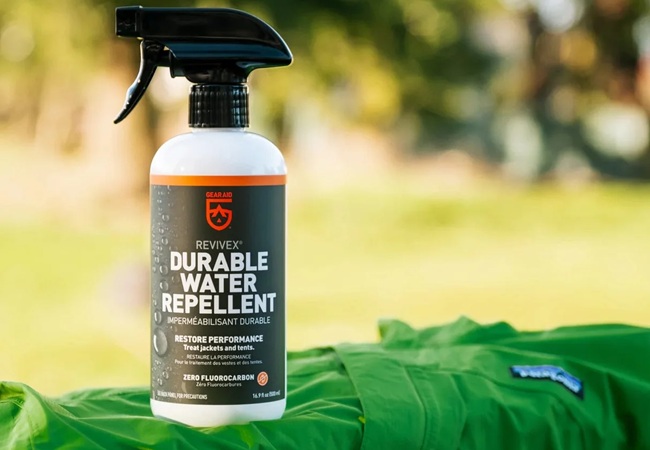
“Gore-Tex spray” is a catch-all term for a durable water repellent (DWR) treatment you spray onto the outside of a Gore-Tex garment when rain stops beading and starts soaking in. Gore does not sell its own branded spray. Its official care guidance tells owners to wash the garment, reactivate the existing DWR with heat, and only then apply a DWR product of their choice as either a pump-spray or a wash-in.
That distinction matters because the product you buy, the way you apply it, and even what is legally available have all changed since 2025. Nearly every consumer DWR treatment sold today is PFAS-free, which works well but behaves differently from the old fluorocarbon chemistry. This guide covers what DWR does, why your shell wets out, how to wash and re-treat it properly, and which products are worth carrying.
Editors note: Article was updated July 2026
What Does DWR Actually Do?
DWR is a microscopically thin coating on the outer face fabric that lowers surface tension so water beads up and rolls off instead of soaking into the weave. It is not what makes your jacket waterproof. The membrane underneath does that job, and the DWR exists to keep the face fabric dry so the membrane can keep breathing.
When the DWR fails, the outer fabric absorbs water and becomes saturated. The membrane still blocks liquid water, so you are not leaking, but the wet face fabric blocks the vapour path and your sweat has nowhere to go. It condenses on the inside, your base layers get damp, and you feel cold and clammy. Most people describe this as a leaking jacket when it is actually a breathability failure.
Wetting Out vs Leaking
| Symptom | Likely cause | Fix |
|---|---|---|
| Face fabric looks dark and soaked, inside feels clammy | DWR has failed and the jacket is wetting out | Wash, heat activate, reapply DWR |
| Damp patches only at shoulders, hips and cuffs | DWR abraded by pack straps and wear | Spot treat those panels with extra spray |
| Water coming through a specific seam or hole | Delaminated membrane or failed seam tape | Repair patch or manufacturer warranty claim |
| Inside wet after hard effort in cold air | Condensation from output exceeding breathability | Vent more, slow down, add a wash and re-treat anyway |
Why Does Gore-Tex Stop Repelling Water?
DWR wears off. Body oils, sunscreen, insect repellent, campfire smoke, trail dust, detergent residue and the abrasion of pack straps all degrade it, and grime alone is enough to stop water beading even when the coating is technically intact. That is why the first step is always a wash rather than a spray, since applying DWR over dirt seals the dirt in and wastes the product.
Heat is the second half of the story. Factory DWR can often be revived without any new product at all, because a 20 minute tumble dry on a warm setting realigns the coating and restores beading on a jacket that only needed cleaning. Reach for spray only when washing plus heat no longer brings the beading back.
What Changed in 2025 and 2026: The PFAS Shift

If you last bought a waterproofing spray five years ago, the product on the shelf now is chemically different. Fluorocarbon DWR, the long-chain chemistry that made older jackets shrug off rain and oil for years, is being removed from consumer gear by regulation and by the brands themselves.
California banned textile articles with intentionally added PFAS from January 1, 2025, and New York banned PFAS in apparel on the same date, with outdoor apparel for severe wet conditions phased in from January 1, 2028. France went further from January 2026, banning the manufacture, import and sale of PFAS-containing textiles, footwear and consumer waterproofing agents, with fines attached. Denmark’s limit on total fluorine in clothing and footwear takes effect July 1, 2026, and Maine, Vermont, Connecticut, Colorado, Washington and Minnesota are phasing in their own rules through 2032. California and New York alone are large enough that most brands reformulated globally rather than run two supply chains.
Gore moved in the same direction with its ePE membrane, which it describes as PFAS-free in the sense of being made without intentionally added PFAS, with a note that trace amounts may remain. Next-generation Gore-Tex laminates pair that membrane with a PFAS-free DWR. Arc’teryx, for example, switched its entire Gore-Tex range in Australia and New Zealand to ePE from March 1, 2026.
What This Means for You in Practice
- PFC-free DWR wets out sooner. Expect to re-treat more often than you did with older gear, particularly on high-wear panels.
- It repels water, not oil. Fluorine-free chemistry does not shed sunscreen, cooking grease or DEET, so keeping the fabric clean matters far more than it used to.
- Heat activation is more important. PFC-free coatings respond well to the post-wash tumble dry, and skipping it leaves performance on the table.
- Old stock is not a bargain. A discounted fluorocarbon spray may be unsellable in your state or country, and it is the chemistry regulators are removing for good reason.
- Care is now a performance factor. A well maintained PFC-free shell outperforms a neglected fluorocarbon one, so the washing routine below is not optional housekeeping.
How Gore-Tex Is Actually Built
The original Gore-Tex membrane is expanded polytetrafluoroethylene, usually written as ePTFE, a stretched polymer film riddled with roughly 1.4 billion pores per square centimetre. Gore’s long-standing claim is that those pores are around 20,000 times smaller than a water droplet but about 700 times larger than a water vapour molecule, which is why liquid rain stays out while sweat vapour passes through. The newer ePE membrane is expanded polyethylene with a comparable pore structure and comparable performance, and it is thinner, lighter and made without intentionally added PFAS.
The membrane never works alone. In a three-layer garment it is bonded between an outer face fabric that takes the abrasion and carries the DWR, and an inner scrim that protects the membrane from body oils and wear. Two-layer and 2.5-layer constructions use a hanging liner or a printed coating instead, which is lighter and cheaper but less durable. Whichever construction you own, the spray only ever goes on the outside, since treating the inside does nothing useful and can block the fabric’s ability to move moisture. If you are weighing membranes against each other, our Hyvent vs Gore-Tex comparison covers how the alternatives stack up.
Spray-On or Wash-In: Which Should You Use?
Use a spray-on for anything with a mesh liner, insulation or a wicking inner face, and a wash-in for unlined shells where you want complete, even coverage.
| Spray-on DWR | Wash-in DWR | |
|---|---|---|
| Best for | 2-layer and 2.5-layer jackets, insulated shells, garments with mesh liners, boots, packs, tents | Unlined 3-layer hardshells, gloves, overtrousers |
| Coverage | Outer fabric only, you control the high-wear areas | Every surface including the inside |
| Risk | Missed patches if applied carelessly | Can reduce wicking on mesh or fleece liners |
| Field use | Practical, a pump bottle travels well | Needs a washing machine or a soaking tub |
| Typical cost | Around US$12 to US$25 per bottle, treating one to six jackets by size | Similar per bottle, treats one to three garments |
A pump-action bottle is preferable to an aerosol. It gives finer control over placement, wastes less product, and avoids the propellants that make aerosols an environmental and inhalation problem.
How to Wash Gore-Tex Before You Spray It
Washing is the step people skip and the step that does most of the work. Gore’s own care instructions are specific.
- Prep the garment. Close the main zip, pocket zips and pit zips, fasten storm flaps and Velcro tabs, and loosen the cuff and hem drawcords.
- Wash warm with liquid detergent. Use a warm cycle around 40°C (105°F) on a permanent press setting, ideally in a front loader, with a small amount of liquid detergent or a dedicated technical wash such as Nikwax Tech Wash or Gear Aid Revivex Pro Cleaner.
- Avoid the residue makers. No powder detergent, no fabric softener, no conditioner, no stain remover, no chlorine bleach and no dryer sheets. All of them leave a water-attracting film that mimics DWR failure.
- Rinse twice. A second rinse clears detergent residue that would otherwise defeat the treatment you are about to apply.
- Dry, then heat activate. Line dry or tumble dry warm and gentle, then run a further 20 minutes in the dryer to reactivate the DWR. If you cannot tumble dry, iron the dry garment on a warm setting with no steam, with a towel or cloth between the iron and the fabric.
- Test it. Sprinkle water on the shoulders and forearms. If it beads and rolls, you are finished and no spray is needed. If it soaks in, move on to reproofing.
Wash more often than feels necessary. A shell worn regularly benefits from a wash every ten to twelve days of use, and dirt is the single most common reason a jacket appears to have failed.
Special Cases
Down-insulated Gore-Tex. Do not dry clean, because the solvents strip natural oils from the down and destroy loft. Machine wash cold with a mild detergent or a down-specific cleaner in a front loader, then tumble dry on low with a few dryer balls until every clump has broken up, which can take several hours.
Garments with wool or silk panels. These usually carry a dry clean only label. Ask the cleaner for a clear distilled solvent rinse and a spray-on water repellent applied afterwards, then revive the DWR with 20 minutes on low heat at home.
Stains. Pre-treat the area with a technical cleaner or a pre-wash product, gently working it in with a soft brush, then wash immediately as above. Repeat rather than escalating to a harsher chemical.
Legacy Shakedry garments. These have an exposed membrane on the outer face and should not be tumble dried or treated with DWR at all. Wash gently and line dry.
How to Apply Gore-Tex Spray
Application takes ten minutes of active work and a few hours of drying.
- Start with a clean garment. Wash it first using the routine above. Applying DWR over dirt or detergent residue is the most common reason a re-treatment fails.
- Check whether your product wants damp or dry fabric. Nikwax TX.Direct Spray-On goes onto a clean, wet garment. Several solvent-free competitors, including Gear Aid Revivex, are applied to clean fabric that is dry. The bottle overrides any general advice, including this article.
- Hang it and spray the outside only. Work from about 15cm away in overlapping passes, covering the whole outer face evenly. Never spray the inside.
- Double the high-wear zones. Shoulders, upper back, hood, chest where a pack strap crosses, and the last few centimetres of the sleeves take the most abrasion and lose DWR first.
- Wipe off the surplus. Two minutes after application, remove excess with a damp cloth so the fabric is evenly wetted rather than dripping, especially around zips and laminated trims.
- Dry and heat activate. Air dry or line dry, then tumble dry for 20 minutes on a warm gentle setting. Where the care label rules out a dryer, iron warm with no steam through a cloth. Some wash-in products call for a longer 45 to 60 minute tumble on medium heat, so follow the label.
- Retest the beading. Sprinkle water on the panels you treated. Even beading means the job worked. Patchy beading means a missed area and a quick second pass.
Applying this in camp is possible with a pump bottle, and it will get you through a wet afternoon, but the result is weaker without heat. Treat field application as a stopgap and repeat the full process at home.
How Often Should You Reapply?
Reapply when water stops beading after a wash and a heat cycle, which for most regular users falls somewhere between every six and twelve months. Heavy use, frequent washing, abrasive pack straps and PFC-free chemistry all shorten that interval, while a jacket worn a dozen times a year may go two seasons.
Go by the beading test rather than the calendar. Re-treating a jacket that still sheds water adds nothing, and every unnecessary application is product and money spent for no gain.
Using DWR Spray on Boots, Gloves and Other Gear
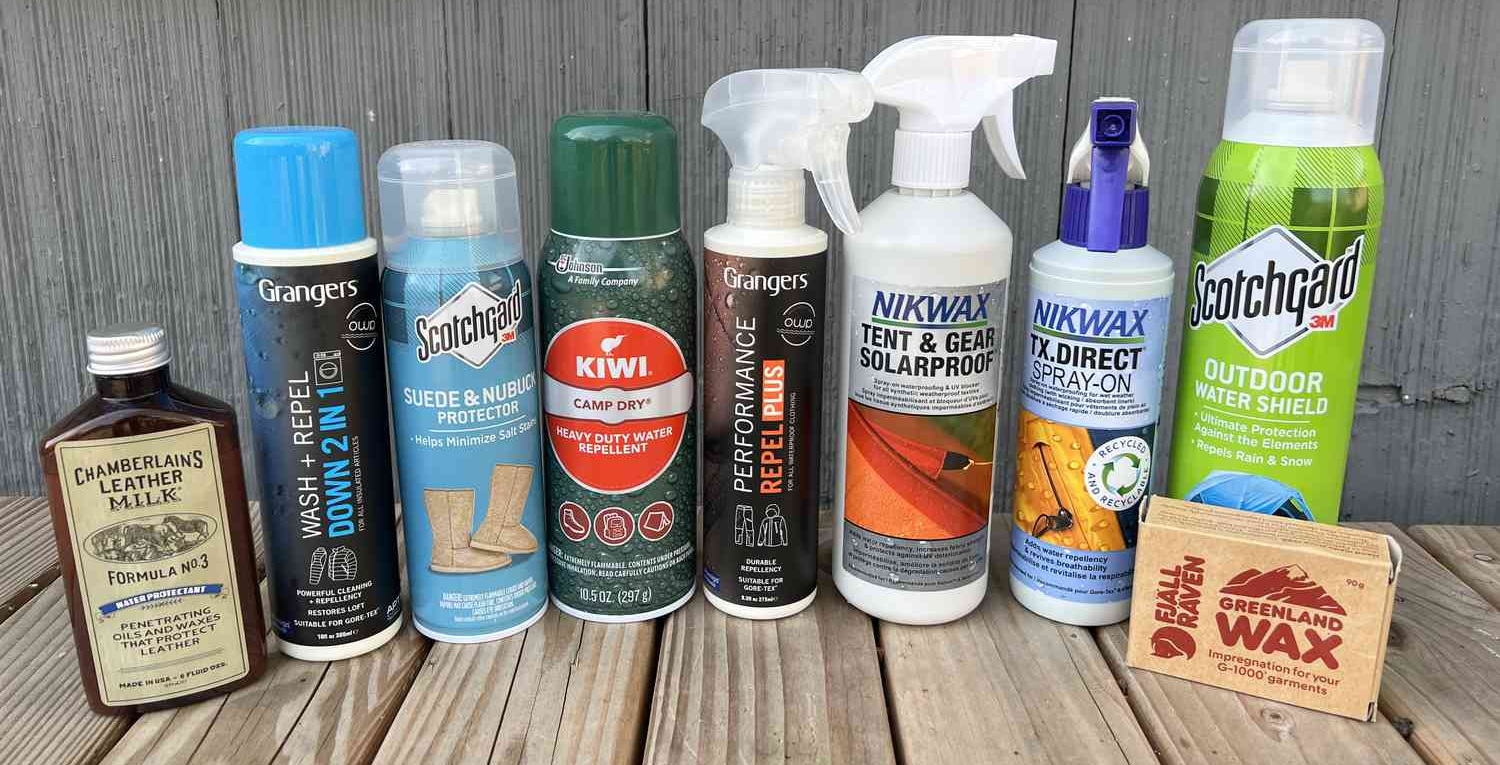
Footwear. Gore-Tex lined boots lose their outer water repellency long before the membrane fails, and mud left to dry in the fabric accelerates it. Brush off the dirt, rinse, and treat while damp with a footwear-specific product, since leather, nubuck, suede and fabric uppers each want different chemistry and a general garment spray is a poor substitute. Never dry boots against a heater or a fire, because that cracks midsoles and adhesives. Our guide to choosing waterproof hiking boots covers what to look for when re-proofing no longer helps.
Gloves. Gloves lose DWR fast because they are constantly in contact with wet rock, poles and snow. Spray-on works better here than wash-in, and the fingertips and the back of the hand need the most attention.
Packs, tent flys and gaiters. DWR spray restores beading on nylon that has gone absorbent, though a tent fly with a failing polyurethane coating on the inside needs seam sealing or replacement rather than a topical spray.
Ski and snowboard outerwear. Chairlift seats, snow contact and sunscreen make ski kit one of the fastest DWR killers, so plan on a wash and re-treat at the start of every season.
Mistakes That Ruin Water Repellency
- Washing with regular powder detergent, or with fabric softener in the drawer.
- Storing a shell damp or compressed at the bottom of a pack between trips.
- Spraying over dirt, then concluding the product does not work.
- Skipping the tumble dry that activates the coating.
- Treating the inside of the garment as well as the outside.
- Drying boots or shells on a radiator, in front of a fire, or in direct hot sun.
- Assuming a wet inner surface means the membrane has failed, when nine times out of ten it is condensation caused by a saturated face fabric.
Which DWR Products Work on Gore-Tex?
Gore does not endorse a single brand, but the products below are the ones consistently recommended for Gore-Tex fabrics, and all are PFAS-free.
| Product | Type | Best for |
|---|---|---|
| Nikwax Tech Wash | Cleaner | The pre-wash step for any Gore-Tex garment |
| Nikwax TX.Direct Spray-On | Spray, applied to wet fabric | Lined and insulated jackets, air-dries to full performance |
| Nikwax TX.Direct Wash-In | Wash-in | Unlined hardshells needing complete coverage |
| Grangers Performance Repel Plus | Spray | General shell re-proofing, PFC-free |
| Gear Aid Revivex Durable Water Repellent | Spray, non-aerosol | Gore-Tex jackets, bibs, waders and drysuits |
| Gear Aid Revivex Pro Cleaner | Cleaner | Pre-wash and stain pre-treatment |
Prices sit broadly in the US$12 to US$25 range per bottle depending on size, with a small bottle treating one or two jackets and a large one covering four to six. Confirm current pricing and availability before you buy, since PFAS rules have reshaped what is stocked in some regions.
Frequently Asked Questions
Does Gore actually make a Gore-Tex spray? No. Gore makes membranes and laminates, not consumer waterproofing sprays. Its care guidance tells owners to use a DWR product of their choice in either pump-spray or wash-in form, which is why third-party brands like Nikwax, Grangers and Gear Aid are the practical answer.
Can I spray a Gore-Tex jacket without washing it first? You can, but it mostly wastes the product. DWR bonds to clean fibres, and spraying over trail dirt, sunscreen or detergent residue seals the contamination in and leaves you with the same wetting-out problem.
Is my jacket leaking or just wetting out? If the outer fabric looks dark and saturated and the inside feels clammy after exercise, it is wetting out and the fix is a wash, heat and reproof. If water enters at one specific point such as a seam or an abrasion hole, that is a genuine leak needing repair or a warranty claim.
Is PFAS-free DWR as good as the old fluorocarbon version? For water repellency in normal recreational use, close enough that most hikers will not notice. It is measurably worse at repelling oils and it wets out sooner under sustained rain, so it needs more frequent washing and re-treatment.
How often should I wash a Gore-Tex jacket? More often than most people do. Every ten to twelve days of active use is a reasonable rhythm, and a proper wash with liquid technical detergent plus a 20 minute tumble dry restores beading on its own surprisingly often.
Can I use Gore-Tex spray on boots and gloves? Use garment DWR spray on fabric gloves and fabric gaiters. Boots do better with a footwear-specific product matched to the upper material, since leather, nubuck and suede all need different treatments from a synthetic mesh upper.
Will DWR spray clog the membrane and stop breathability? No, when applied correctly. Modern water-based treatments coat the fibres of the outer fabric rather than filling the membrane pores, and breathability generally improves after re-treatment because the face fabric is no longer saturated.
Can I apply it while camping? Yes, with a pump bottle and a dry couple of hours. The coating will be weaker than a heat-activated one, so treat it as a field repair and redo the full wash and dry cycle at home.
Get the Rest of Your Wet-Weather Kit Right
A re-proofed shell only works as part of a system. If your base and mid layers hold water, no amount of DWR will keep you comfortable, so pair this routine with the advice in our guides to choosing hiking rain gear, the best hardshell jackets for women and hiking gear essentials. Staying dry is also a safety issue rather than a comfort one, since a saturated shell in wind is one of the fastest routes to hypothermia, which is covered in our hiking safety guide.
Your next step: run the beading test on your shell tonight. Sprinkle water on the shoulders, and if it soaks in, wash and heat activate before you spend anything on spray.
Have you found a DWR treatment that lasts on your gear, or one that let you down? Share what has worked in the comments.

Daniel is a gear freak when it comes to hiking, climbing and camping. He went to REI Outdoor School to meet new people and learn best practices. Don’t even try to argue with him about the latest backpack or ice axe, he tried most of them. Daniel’s dream is to climb Mount Everest.
To be completely honest, this is the first time I have heard about Gore Tex and you really got me curious. I am thinking of getting the spray because I have a coupe of hiking trips coming up. It will surely help me save more money in the long run.
It sure will!
I have used Gore Tex spray ever since a friend of mine introduced it to me and I can tell you that it is really effective. And you are right, it really works on every water-repellency types of outwear, which is of course awesome. I can’t stop recommending it actually.
We agree!